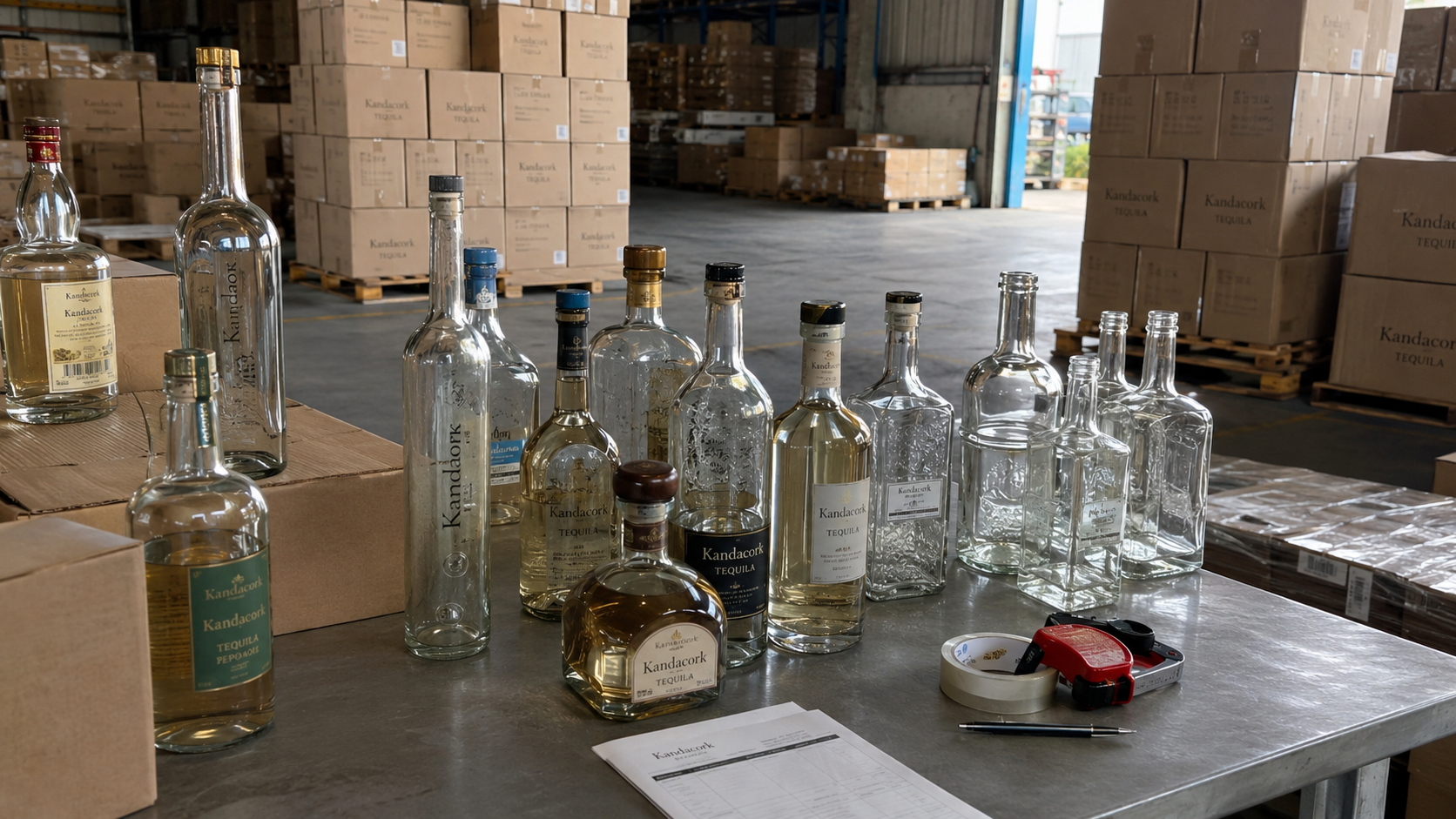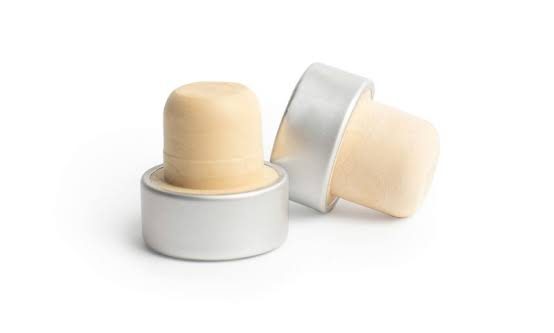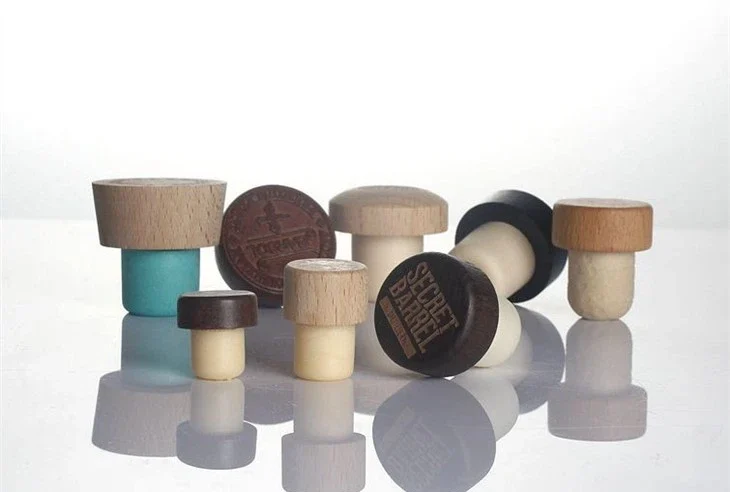
Anti-refill closures are designed to support brand protection and controlled dispensing for spirits bottles. This guide explains the main structure, pour control features, tamper-evident elements, bottle compatibility and production checks buyers should review.
What Are Non-Refillable Closures for Spirits Bottles?
Non-refillable closures, also called NRF closures, anti-refill caps, or non-refillable liquor bottle caps, are designed to make bottle refilling difficult after the original product has been opened. The consumer can pour the spirit out normally, but the internal closure structure restricts reverse filling.
A standard cap mainly seals the bottle. A tamper-evident closure shows whether the bottle has been opened. A non-refillable closure adds another layer of security by helping prevent the original bottle from being refilled with counterfeit, diluted, or lower-value liquid.
Most non-refillable closure systems use an internal insert, pourer, valve, fitment, ball mechanism, or flow-control chamber. These components are engineered to support normal pouring while resisting unauthorized refilling. For premium spirits, this helps protect the liquid, the packaging, and the brand promise.
Why Spirits Brands Use Non-Refillable Closures
Spirits brands use non-refillable closures because bottle reuse and refill fraud can damage product trust. When a genuine bottle is refilled with unauthorized liquid, consumers still see the original label, cap, glass shape, and decoration. If the taste, aroma, alcohol strength, or safety of the liquid is compromised, the original brand may be blamed.
The need is especially clear in higher-value spirits and complex routes to market. Importers, distributors, bonded warehouses, bars, hotels, clubs, duty-free shops, and travel retail channels all create extra handling points. Secure anti-refill caps help reduce risk after the product leaves the filling line.
Global organizations have also highlighted the broader risk around illicit and counterfeit alcohol. The OECD research on illicit alcohol explains how counterfeit products can misuse registered trademarks and deceive consumers, while INTERPOL Operation Opson reporting shows why fake food and drink enforcement remains a serious international concern.
Non-refillable closures cannot solve every anti-counterfeiting problem alone, but they are a practical packaging-level measure. When combined with visible tamper evidence, secure bottle design, controlled distribution, and authentication tools, they help make unauthorized reuse harder and easier to detect.
How Non-Refillable Closures Work
A non-refillable closure is usually a multi-component system. Each part contributes to sealing, anti-refill protection, tamper evidence, pouring quality, or brand presentation.
Outer Cap or Shell
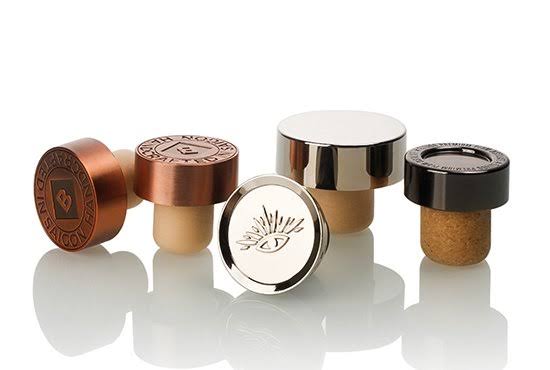
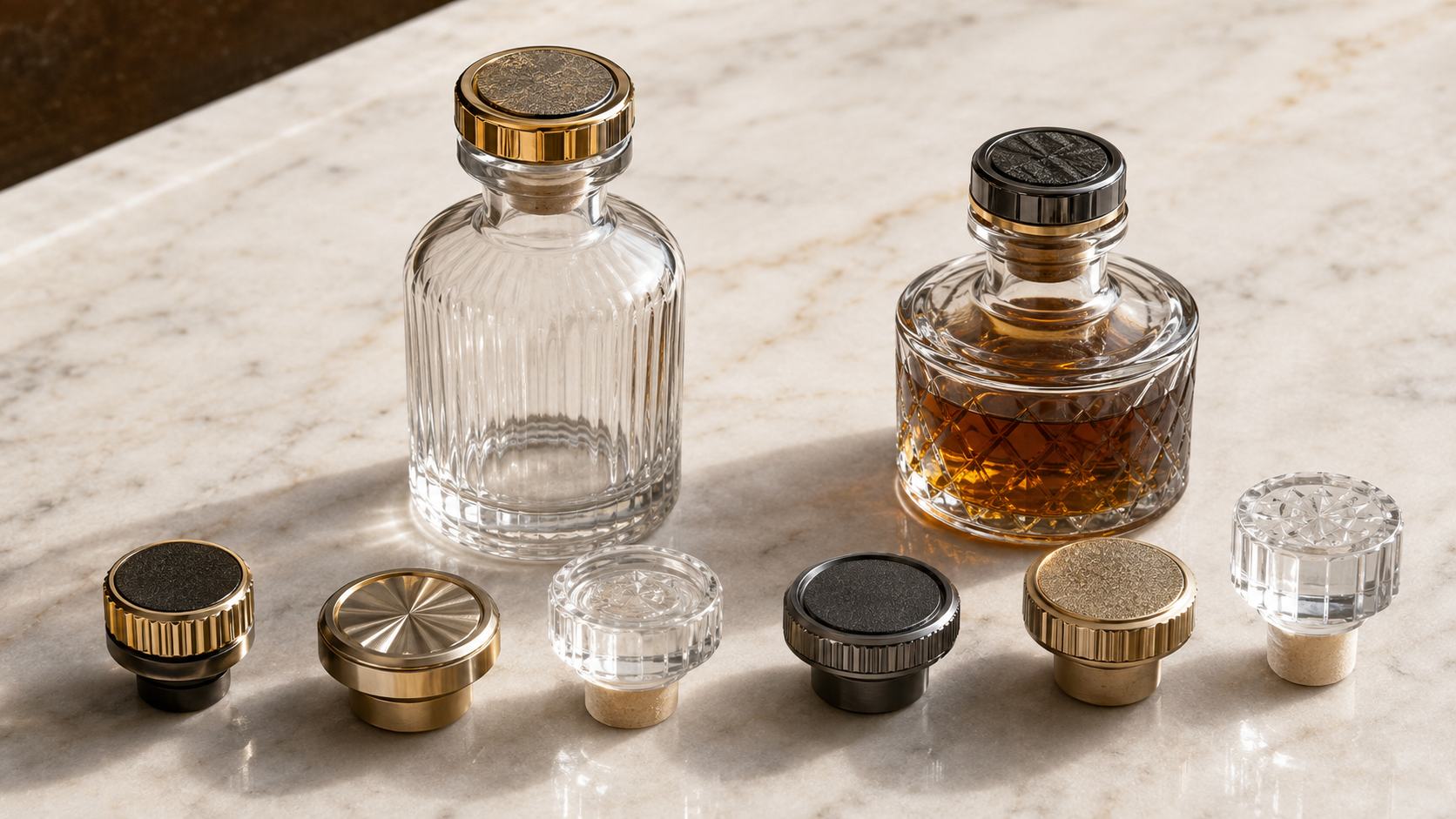
The outer cap is the visible part of the closure. It may be made from aluminum, plastic, composite materials, or a combination of materials. For premium spirits, this component plays an important role in shelf impact and brand identity.
Common decoration options include color matching, sidewall printing, top-disc printing, embossing, debossing, hot stamping, metallic effects, matte finishes, gloss finishes, textured surfaces, and capsule integration. A luxury whisky bottle may require a brushed metallic cap, while a modern vodka or gin brand may prefer a clean matte closure. A tequila or mezcal bottle may need a more sculptural cap profile to support a craft or premium story.
Internal Pourer or Valve Insert
The internal insert is the core anti-refill component. It allows liquid to flow out of the bottle while limiting liquid from flowing back in. Depending on the structure, this part may include a one-way valve, ball system, nozzle, flow-control channel, plastic fitment, or internal pourer chamber.
This component must be engineered carefully. If the insert restricts flow too much, consumers may experience slow pouring or uneven dispensing. If the insert is too loose, the anti-refill function may be weak. If it does not match the bottle neck bore correctly, leakage, poor retention, or unstable pouring may occur.
Tamper-Evident Band, Sleeve, or Bridge
Tamper evidence helps show whether the bottle has been opened. This may be achieved through a break-away band, tear-off strip, security bridge, shrink sleeve, capsule, or visible fracture feature.
Tamper evidence and non-refillability are related but not identical. A tamper-evident closure shows first-opening evidence. A non-refillable closure helps prevent refilling after opening. Packaging guidance such as CETIE guidance on metal caps recognizes that closures can perform several roles beyond sealing, including tamper evidence, anti-refill protection, dispensing control, anti-drip performance, and brand communication.
Sealing Interface
The sealing interface is the contact area between the closure and bottle neck. It affects leakage resistance, product stability, capping performance, and consumer handling.
Important factors include neck finish, sealing land, bore diameter, bead height, thread profile, closure diameter, liner material, insert retention, application torque, ROPP roller settings, and capping pressure. A closure can look attractive in a sample photo but still fail in production if the neck finish or capping setup is not validated.
Types of Non-Refillable Closures for Liquor and Spirits Bottles
Different spirits projects require different closure structures. The best choice depends on bottle design, filling equipment, target market, brand positioning, and required security level.
ROPP Non-Refillable Closures
ROPP means roll-on pilfer-proof. A ROPP closure is typically made from aluminum and applied by rollers that form the thread and tamper-evident band around the bottle neck. ROPP non-refillable closures are widely used for whisky, vodka, rum, tequila, brandy, liqueurs, and export spirits because they support high-speed filling lines, reliable application, and strong visible security.
This option is suitable when a brand needs production efficiency, tamper evidence, clean commercial appearance, and anti-refill protection in one structure. Kandacork can support ROPP closure systems with custom aluminum shells, internal pourer inserts, color matching, side printing, top embossing, and premium finishing.
Non-Refillable Screw Caps
Non-refillable screw caps provide a familiar open-and-close experience while integrating hidden anti-refill functionality. They may use aluminum, plastic, or composite outer structures.
This option is useful for spirits brands that want easy resealing, consumer-friendly handling, and flexible decoration. It may suit liqueurs, ready-to-drink spirits, specialty liquors, private-label spirits, and selected premium products. The key technical factor is torque control. If application torque is too low, sealing may be weak. If torque is too high, opening may feel difficult.
Snap-On Non-Refillable Closures
Snap-on non-refillable closures are applied by pressing the closure onto a compatible bottle neck. They can be useful for specific bottle formats, promotional spirits, market-specific packaging, and closure systems that require fast application.
The main advantage is application simplicity. The main challenge is precision fit. The bottle neck and closure geometry must match closely to ensure insert retention, tamper-band consistency, opening performance, and anti-refill reliability.
Capsule-Compatible NRF Systems
Some premium spirits brands want the appearance of a traditional capsule or decorative neck cover while still using anti-refill protection. In these projects, an internal NRF insert or security closure may be covered by capsules and shrink sleeves.
This structure is often used for premium rum, tequila, cognac, brandy, gin, whisky, and gift-pack spirits. It allows the product to maintain a refined shelf presentation while adding hidden anti-refill functionality.
Non-Refillable Closure Comparison Guide
| Closure option | Best for | Security level | Key buyer consideration |
|---|---|---|---|
| Standard screw cap | Basic resealing needs | Low | Does not prevent refilling unless combined with an NRF system |
| Tamper-evident cap | First-opening evidence | Medium | Shows opening but may not stop bottle refilling |
| ROPP non-refillable closure | High-volume spirits and export liquor | High | Requires suitable ROPP capping equipment and neck finish |
| Non-refillable screw cap | Premium resealable spirits and liqueurs | High | Requires torque control and insert compatibility |
| Snap-on anti-refill cap | Specific bottle formats and fast application | Medium to high | Requires precise neck-fit validation |
| Capsule-covered NRF system | Luxury spirits and gift packaging | High | Requires closure, insert, and capsule compatibility |
This comparison helps buyers understand that “secure closure” can mean different things. A basic tamper-evident cap may be enough for some products, but premium spirits often need anti-refill protection, sealing reliability, controlled pouring, and strong brand decoration together.
Buyer Decision Framework
| Buyer priority | Recommended closure direction |
|---|---|
| High-speed spirits filling | ROPP non-refillable closure |
| Premium resealing experience | Non-refillable screw cap |
| Luxury shelf appearance | Capsule-compatible NRF system |
| Fast closure application | Snap-on anti-refill cap |
| High refill-risk market | NRF closure with tamper evidence and optional authentication support |
| Strong brand decoration | Aluminum or composite closure with printing, embossing, or hot stamping |
| Controlled pouring | Non-refillable pourer cap with tested insert and flow-control design |
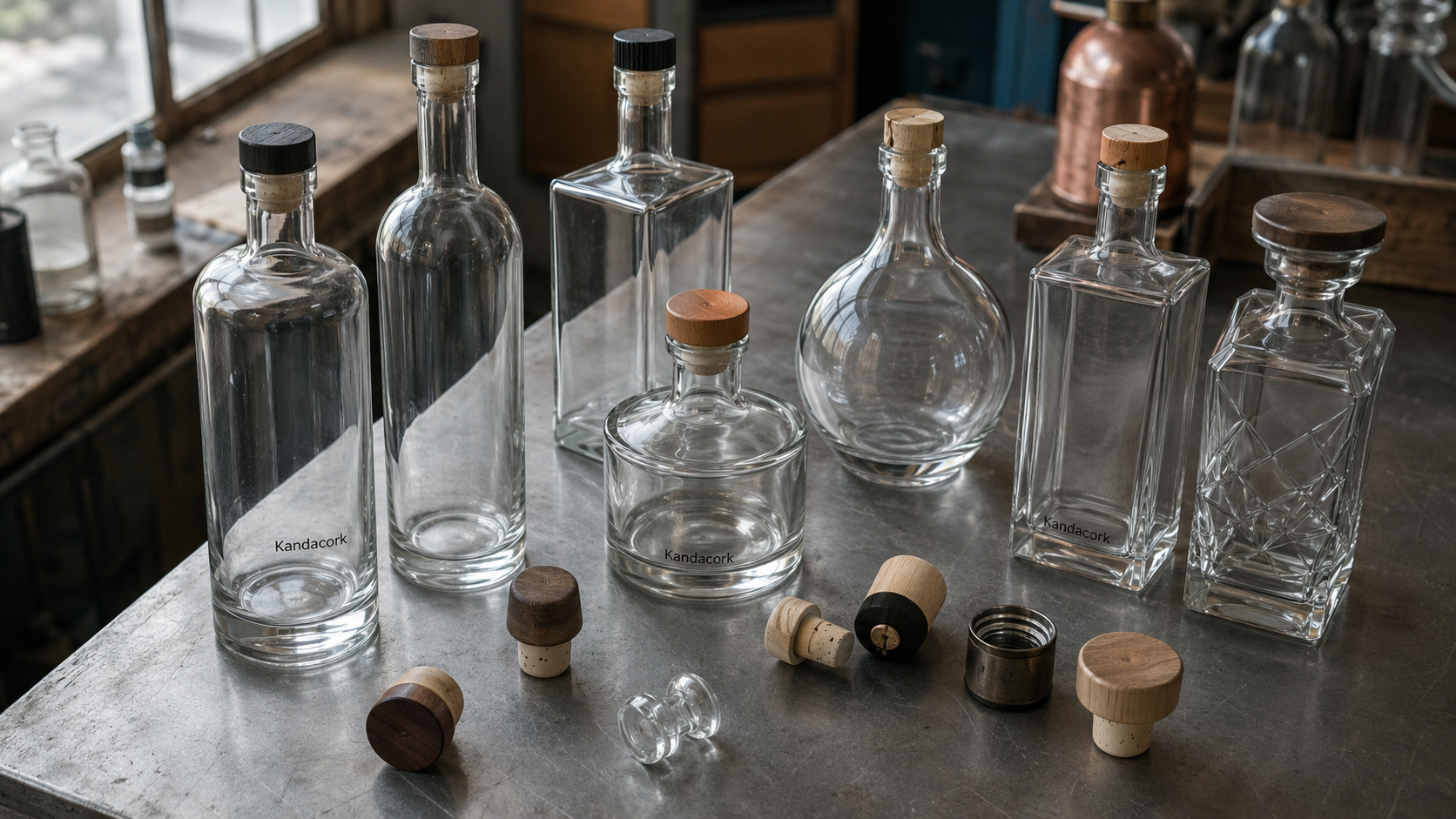
For buyers developing custom spirits bottle projects, the closure should be reviewed together with glass weight, neck finish, shoulder shape, fill volume, label area, carton structure, and target retail channel. A bottle and closure that are designed together usually perform better than a cap selected only after the bottle mold has been finalized.
Example: Choosing a ROPP Non-Refillable Closure for Export Whisky
An export whisky brand may choose a ROPP non-refillable closure because it combines efficient production, visible tamper evidence, premium decoration, and stronger refill resistance. This is useful when the bottle will pass through importers, distributors, bonded warehouses, duty-free retailers, hotels, restaurants, or other trade channels before reaching the final consumer.
In this scenario, the buyer should first confirm the glass bottle’s neck finish and ROPP compatibility. The closure supplier should review the neck drawing, bore diameter, bead profile, sealing surface, and cap dimensions before sampling.
The next step is to test the internal pourer or valve insert. The whisky should pour smoothly without excessive dripping, splashing, or air blockage. At the same time, the insert should resist reverse filling under realistic misuse conditions.
The filling line also needs validation. ROPP roller settings, application pressure, cap height, pilfer-band formation, and opening force should be reviewed before bulk production. If the bottle is intended for export, the buyer should also confirm packaging documentation, material expectations, and transport performance.
This example shows why custom anti-refill caps for liquor bottles should be selected through technical validation, not only visual preference.
Non-Refillable Closures vs Tamper-Evident Closures
A tamper-evident closure shows whether a bottle has been opened. A non-refillable closure helps prevent the bottle from being refilled after opening.
If the main concern is first-opening evidence, a tamper-evident cap may be enough. If the main concern is refill fraud, counterfeit reuse, diluted alcohol, or unauthorized bottle recovery, non-refillable closures for spirits bottles provide stronger protection.
For premium spirits, export markets, duty-free channels, and hospitality distribution, many brands choose a combined structure: visible tamper evidence outside and anti-refill control inside.
How to Choose Non-Refillable Closures for Spirits Bottles
Choosing the right non-refillable closure should begin with the bottle, not the closure catalog. The closure must match the bottle neck, filling method, product type, design goals, and security requirement.
Check the Bottle Neck Finish
Buyers should provide a technical bottle drawing or physical sample before confirming a closure. Important measurements include outer diameter, bore diameter, bead height, thread profile, sealing surface, neck height, shoulder shape, and tolerance range.
Even a small mismatch can cause leakage, poor opening feel, inconsistent tamper evidence, weak insert retention, or unstable pouring.
Match the Filling Line
Different closures require different capping methods. ROPP non-refillable closures require suitable ROPP capping heads and roller settings. Screw-cap NRF systems require controlled application torque. Snap-on closures require controlled downward pressure. Capsule systems may require heat-shrink or capsule application equipment.
Before mass production, the closure should be tested on the actual filling line or a closely equivalent production setup.
Review Pouring Experience
Security should not damage usability. Consumers expect the bottle to open cleanly, pour smoothly, reseal properly, and feel natural in the hand.
During sampling, review pour speed, air return, dripping, splash control, repeat pouring, and the first-opening experience. For bars and restaurants, controlled pouring can also support service efficiency.
Align the Closure With Brand Identity
The closure should match the bottle, label, carton, and price tier. Premium packaging often depends on the harmony between glass structure, cap finish, label texture, and outer carton. If the bottle will use coating, screen printing, hot foil, decals, badges, or neck charms, the closure should be reviewed together with bottle decoration and branding support before artwork approval.
Kandacork Closures can also support custom shell finishes, logo placement, knurling, ribbing, cap height, top-disc layout, and sidewall design and finish options for premium spirits, private-label liquor, and export packaging projects.
Technical Specification Checklist for Buyers
Before requesting samples or confirming production, prepare the technical details below.
| Specification item | Why it matters |
|---|---|
| Bottle drawing | Confirms neck finish, height, bore, and tolerance |
| Physical bottle sample | Allows real fit, sealing, and appearance checks |
| Neck bore diameter | Determines insert and pourer compatibility |
| Bead height and neck profile | Affects snap fit, retention, and tamper evidence |
| Thread profile | Affects screw-cap or ROPP closure application |
| Sealing surface | Influences leakage resistance and liner performance |
| Closure diameter and height | Affects appearance and application setup |
| Liner or insert material | Supports sealing, alcohol compatibility, and food-contact expectations |
| Application torque | Important for screw-cap opening and sealing performance |
| ROPP roller setting | Critical for thread forming and pilfer-band performance |
| Target alcohol strength | Helps evaluate material compatibility with spirits |
| Filling-line speed | Affects closure application stability |
| Pour-flow target | Helps define insert and valve design |
| Tamper-band break behavior | Supports visible first-opening evidence |
| Export market | Influences documentation, compliance, and security expectations |
This checklist helps reduce sampling delays, technical mismatches, and quotation uncertainty. It also helps the closure supplier recommend a structure that matches real production conditions instead of only visual preferences.
Technical Testing Before Bulk Production
Non-refillable closures for spirits bottles should be tested before mass production. A closure that looks correct on the bottle may still fail during filling, shipping, storage, or consumer use.
Neck-fit verification confirms that the closure fits the bottle neck consistently across production tolerances. Leak testing checks whether the bottle remains sealed in upright, inverted, and horizontal positions. For export projects, testing should also consider temperature changes and transport conditions.
Opening force testing confirms that consumers can open the bottle comfortably while the tamper-evident feature breaks clearly. Anti-refill function review evaluates whether the internal insert, valve, or pourer system resists reverse filling under realistic misuse conditions.
Pour-flow testing reviews speed, dripping, splashing, air return, and repeated serving performance. Capping-line trials confirm whether the closure can be applied consistently on real filling equipment. Transport simulation checks vibration, carton pressure, temperature variation, humidity, and handling conditions.
Industry, Material, and Compliance Considerations
Closure materials, liners, inserts, coatings, and decorative components should be reviewed according to the target market and intended product contact. In the United States, 21 CFR 177.1210 addresses closures with sealing gaskets for food containers, making food-contact review an important part of closure selection for beverage packaging.
For premium export products, brands may also consider digital authentication, serialization, QR-code verification, or track-and-trace support. The GS1 Global Traceability Standard provides a useful reference point for organizations designing traceability systems across supply chains.
Sustainability can also affect closure and bottle decisions. Lightweight glass, recycled-content glass, mono-material thinking, decoration coverage, and recyclability targets should be balanced against premium appearance and filling-line performance. For brands that want coordinated bottle, closure, and export packaging support, integrated spirits packaging support can help align technical and commercial decisions across the finished pack.
Common Problems in Non-Refillable Closure Projects
Many closure problems happen when buyers approve a sample based only on appearance. Non-refillable closures are technical components, not simple decorative caps.
Common issues include leakage after transport, unstable insert retention, inconsistent tamper-band break, weak anti-refill performance, difficult opening, slow pouring, dripping, capsule wrinkling, poor color matching, and production-line stoppage.
Another frequent issue is selecting the lowest-cost cap without considering total cost. A cheaper closure may become expensive if it causes leakage, filling delays, customer complaints, rejected shipments, or brand damage.
A better approach is to validate fit, function, appearance, and production performance before bulk ordering. This is especially important for premium spirits, export liquor, duty-free packaging, and private-label spirits programs.
Custom Non-Refillable Closures From Kandacork Closures
Kandacork Closures provides custom non-refillable closures for spirits bottles, helping brands combine security, shelf appeal, and production compatibility.
Available solutions may include ROPP non-refillable closures, anti-refill screw caps, snap-on security closures, internal pourer inserts, valve systems, tamper-evident bands, capsule-compatible NRF systems, aluminum caps, plastic caps, composite structures, and decorative finishing.
For projects that also require bottle development, accessories, decoration-ready surfaces, or matched secondary packaging, Kandacork Glass Packaging can support a wider packaging view so the bottle, closure, decoration, and packing method are considered together.
For new bottle projects, Kandacork Closures can review the bottle design and recommend suitable closure structures. For existing bottles, the team can evaluate current closure samples, neck drawings, leakage issues, capping problems, or anti-refill requirements before suggesting an improved solution.
What Information Is Needed for a Quote?
To quote custom non-refillable closures for spirits bottles accurately, prepare clear project information before contacting the supplier.
Useful details include bottle drawing, physical bottle sample, neck finish dimensions, existing closure sample, spirit category, alcohol strength, bottle capacity, fill volume, target market, sales channel, required security level, preferred closure type, cap material, finish style, logo artwork, order quantity, annual forecast, filling-line equipment, capping method, packing requirements, and delivery schedule.
The more complete the information, the faster Kandacork Closures can confirm feasibility, recommend a closure structure, prepare samples, and support production planning. Buyers who are comparing bulk non-refillable liquor caps, OEM non-refillable closure supply, or anti-refill closures for tequila bottles, whisky bottles, and other spirits can request a custom closure review with drawings, samples, and project targets.
FAQs
What does NRF closure mean?
NRF means non-refillable. An NRF closure is designed to allow liquid to pour out while making it difficult to refill the bottle after opening.
What are non-refillable closures for spirits bottles?
Non-refillable closures for spirits bottles are anti-refill cap systems used on whisky, vodka, rum, gin, tequila, brandy, cognac, liqueurs, and other spirits. They help protect bottles from unauthorized refilling and counterfeit reuse.
Are non-refillable closures required for all spirits bottles?
No. They are most useful for premium spirits, export products, duty-free bottles, high-risk markets, and channels where bottle reuse or refilling is a concern.
What is the difference between tamper-evident and non-refillable closures?
A tamper-evident closure shows whether a bottle has been opened. A non-refillable closure helps prevent the bottle from being refilled after opening.
Can non-refillable closures be customized?
Yes. Non-refillable closures can be customized with colors, logo printing, embossing, debossing, hot stamping, matte or gloss finishes, capsule integration, and premium top designs.
Can non-refillable closures be used on existing bottles?
Yes, but the bottle neck must be checked first. The supplier should review the neck finish, bore diameter, sealing surface, bead profile, and application method before confirming compatibility.
What is a ROPP non-refillable closure?
A ROPP non-refillable closure is an aluminum roll-on pilfer-proof cap combined with an internal anti-refill insert or pourer system. It is commonly used for spirits bottles that need tamper evidence and anti-refill protection.
Do non-refillable closures affect pour quality?
They can affect pour quality if the insert is not designed correctly. A good NRF closure should provide security while maintaining smooth pouring, controlled flow, and minimal dripping.
What tests should be done before mass production?
Important tests include neck-fit verification, leak testing, opening force testing, anti-refill function review, pour-flow testing, capping-line trials, transport simulation, and final appearance approval.
What information should I send for a quote?
Send the bottle drawing, physical sample, neck finish dimensions, spirit category, alcohol strength, target market, closure style, security requirement, order quantity, and filling-line information.
Conclusion
Non-refillable closures for spirits bottles help brands protect product integrity, reduce refill fraud, improve tamper evidence, and strengthen market confidence. For premium spirits, export programs, duty-free retail, hospitality channels, and private-label liquor projects, the right closure can protect the product long after it leaves the filling line.
The best anti-refill closure is not chosen by appearance alone. It must match the bottle neck, sealing requirement, filling equipment, security level, pouring experience, and brand design.
Kandacork Closures supports custom non-refillable closure projects for whisky, vodka, rum, gin, tequila, mezcal, brandy, cognac, liqueurs, and other spirits. With clear drawings, physical samples, market requirements, and filling-line information, buyers can move from concept to a secure, attractive, and production-ready closure system with fewer risks and faster approval.