Quick Answer: Why Bar-Top Stopper Fit Problems Happen
Bar-top stopper fit problems usually happen when the stopper shank does not match the bottle’s real internal neck diameter, bore depth, neck shape, material compression, or filling conditions. To prevent leaks, pop-up, tight insertion, and inconsistent pull force, spirits brands should test bottle samples, confirm shank size, measure the bore profile, and approve closures before bulk production.
For distilleries, spirits brands, private label buyers, importers, distributors, bottlers, and packaging procurement teams, stopper fit affects leakage prevention, shelf appeal, bottling efficiency, consumer opening feel, and repeat order reliability.
Need to confirm stopper fit before bulk orders? Send your bottle drawing, neck size, spirit type, target shank material, and order quantity to Kandacork Closures for a bar-top stopper fit review.
What Is a Bar-Top Stopper?
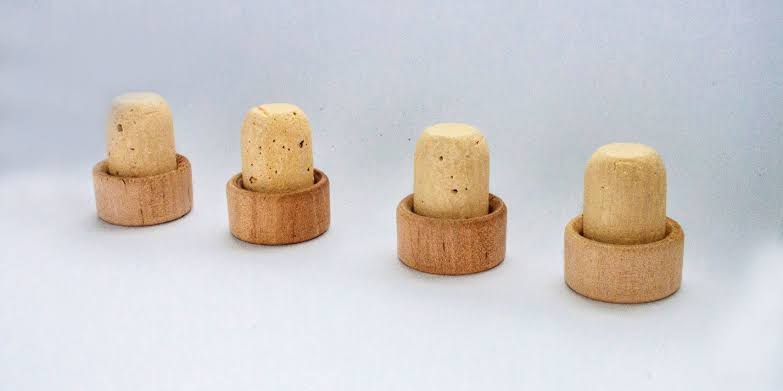
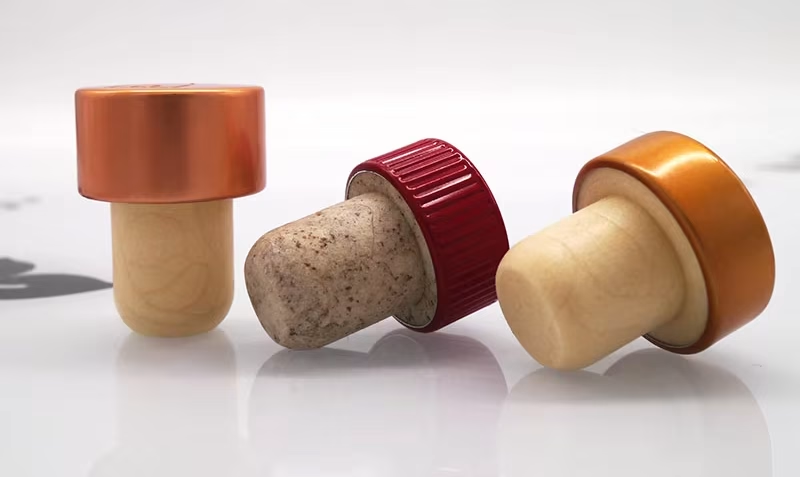
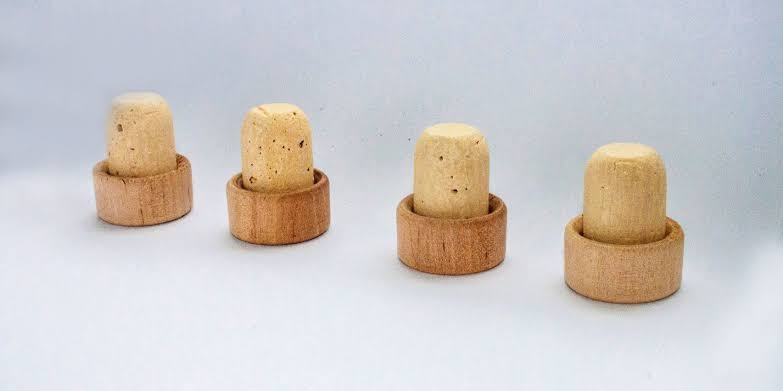
A bar-top stopper, also called a T-top closure, T-stopper, or cork stopper, is commonly used for spirits bottles. It has two main parts: the visible top and the sealing shank.
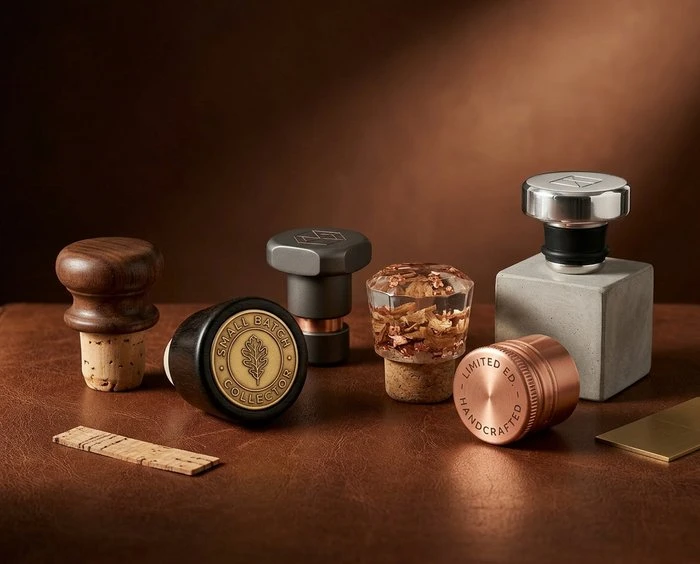
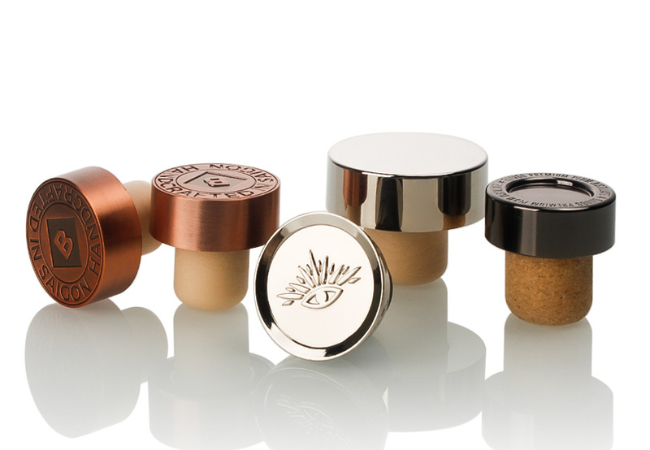
The top, sometimes called the head or cap, may be made from wood, plastic, aluminum, glass, zamac, ceramic, or another decorative material. This visible part supports brand identity through engraving, printing, embossing, debossing, color matching, varnishing, polishing, or custom shaping.
The shank is inserted into the bottle neck and creates the seal through compression and friction against the inner glass wall. It may be made from natural cork, micro-agglomerated cork, synthetic cork, or a hybrid material.
For buyers comparing closure structures, materials, and fit-review options, Kandacork Closures offers custom bar-top stoppers for spirits bottles with wood, aluminum, plastic, glass, synthetic, and Zamak top options matched with cork or synthetic shanks.
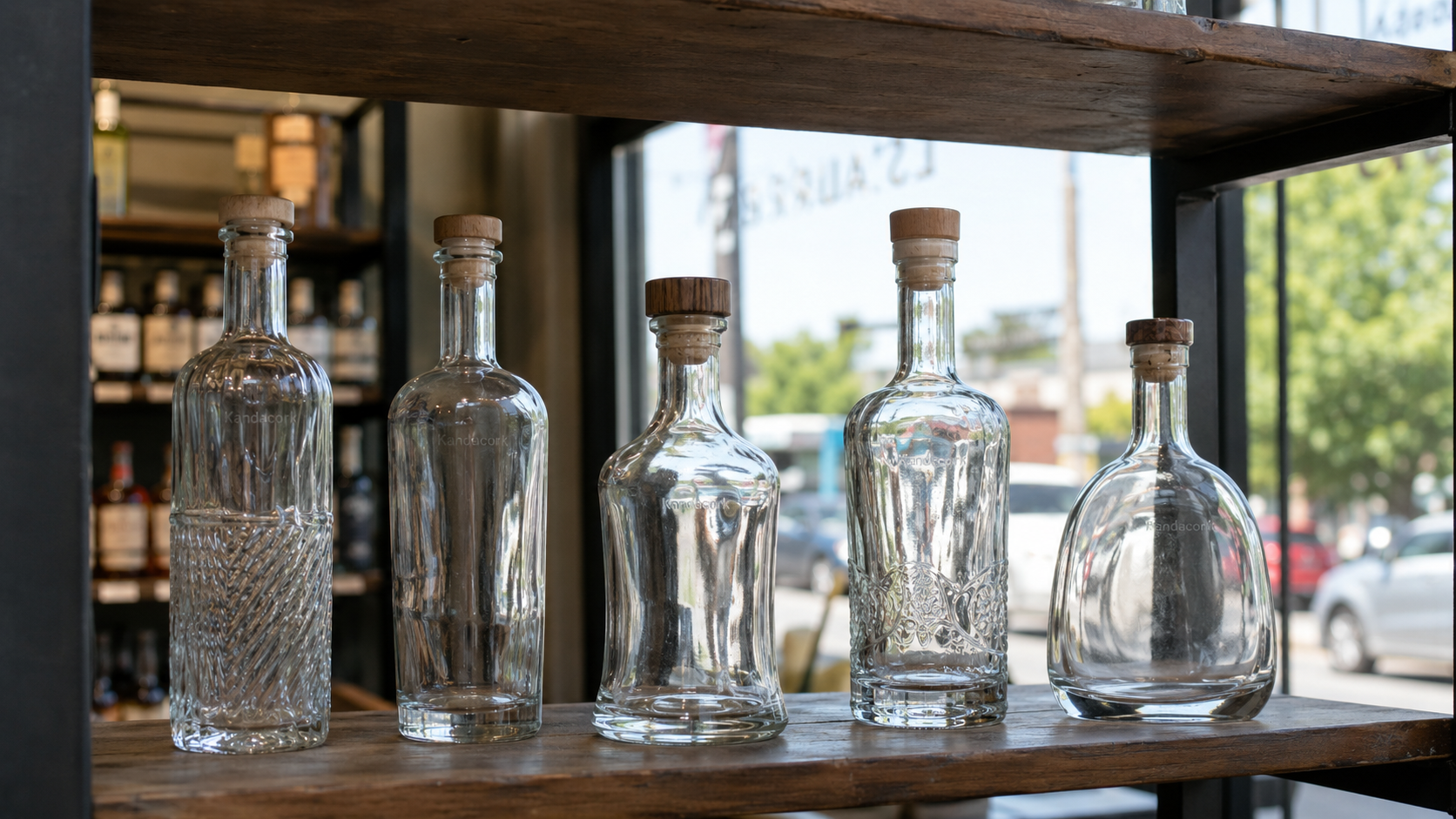
A reliable bar-top closure depends on the relationship between the bottle neck and the stopper shank. Internal bore diameter, bore depth, neck ovality, shank diameter, material recovery, insertion force, extraction force, alcohol compatibility, and transport conditions can all influence final fit.
Common Bar-Top Stopper Fit Problems
The fastest way to solve bar-top stopper fit problems is to diagnose the symptom first. A loose stopper, tight stopper, pop-up, and shipping leak may look similar at first, but they often have different technical causes.
| Fit Problem | Common Symptoms | Likely Causes | How to Avoid It |
|---|---|---|---|
| Loose stopper | Easy pull-out, spinning top, weak reseal | Shank too small, bottle bore too large, poor recovery | Measure real bore, test larger shank, confirm extraction force |
| Stopper too tight | Difficult insertion, cork shaving, high seating force | Shank too large, narrow bore, pinch point | Measure bore at multiple depths, test smaller shank |
| Stopper pops up | Closure rises after filling, uneven seating | Low headspace, trapped air, temperature change, excessive compression | Test actual fill level, headspace, liquid, and storage conditions |
| Leakage in cartons | Wet cartons, stained labels, alcohol loss | Weak compression, short sealing area, shipping vibration | Run inverted, vibration, and temperature-cycle tests |
| Inconsistent fit | Some bottles fit well, others fail | Bottle tolerance, stopper tolerance, mixed glass batches | Test bottles from the real production batch |
A professional closure project should not rely only on catalogue dimensions. It should combine measurement, material comparison, sample testing, and quality control review.
Loose, Tight, Pop-Up, and Leakage Problems Explained
A loose stopper usually means the shank does not create enough compression against the bottle’s internal wall. This may happen because the shank diameter is too small, the real bottle bore is larger than expected, or the material does not recover well after insertion. For spirits brands, a loose closure can lead to weak reseal, leakage, carton damage, and customer complaints.
A tight stopper may seem safer, but it can create production and consumer problems. If the shank is too large, operators may need excessive insertion force. If the bottle has a hidden pinch point inside the neck, the stopper may enter the mouth but fail to seat correctly. Tight fit can also cause cork shaving, uneven seating, or a difficult opening experience.
Stopper pop-up usually appears after filling. The closure may rise immediately, slowly lift during storage, or create pressure under a capsule or tamper band. Common causes include trapped air, low headspace, high fill level, temperature change, product expansion, or excessive shank compression.
Leakage is the most visible fit failure. It can cause wet cartons, label staining, alcohol loss, retailer complaints, and rejected shipments. For export spirits, leak risk can increase during heat exposure, vibration, long-distance shipping, or pressure changes. That is why upright storage, inverted testing, vibration testing, and temperature cycling should be part of sample approval.
Bar-Top Stopper Size Guide: 18.5 mm vs 21.5 mm Bottle Necks
Many spirits packaging guides use a simple starting rule: the stopper shank is often about 1 mm larger than the bottle’s internal neck opening. This allows the shank to compress against the glass and create holding force.
| Bottle Neck Opening | Common Starting Shank Size | Buyer Notes |
|---|---|---|
| 18.5 mm | Around 19.5 mm | Common for many spirits bottles; confirm with samples |
| 21.5 mm | Around 22.5 mm | Common for larger cork-mouth spirits bottles |
| Custom bore | Custom shank size | Requires drawing review and physical fit testing |
This size guide is helpful, but it should not be treated as a universal rule. A 19.5 mm shank may not perform the same in every 18.5 mm bottle. The correct fit depends on bore profile, material compression, shank height, extraction force, liquid type, and transport conditions.
For buyers preparing a new closure sourcing project, this bar-top closure sizing and supplier guide can help connect shank size, material choice, sample approval, and bulk order planning.
Not sure whether you need a 19.5 mm, 22.5 mm, or custom shank? Request sample testing before production.
Why the 1 mm Rule Is Only a Starting Point
The 1 mm rule is useful because it gives buyers an easy starting point. However, many bar-top stopper fit problems happen because bottle necks and stopper materials are more complex than one diameter measurement.
The internal bore diameter is the key measurement for closure fit. Buyers should confirm the real inner diameter of the bottle neck instead of relying only on nominal terms such as “18.5 mm bar top” or “21.5 mm cork mouth.”
Bore depth also matters. If the usable sealing area is too short, the stopper may not hold securely. If the shank is too long, it may bottom out, deform, or sit too high.
A pinch point is another common hidden issue. This narrower section inside the bottle neck may not be visible from the outside, but it can create high insertion force, poor seating, or cork damage.
Ovality and conicity can also affect closure performance. Ovality means the bottle neck is not perfectly round. Conicity means the bore is tapered. Both can cause uneven compression, inconsistent pull force, or leakage risk.
Material behavior is equally important. Natural cork, micro-agglomerated cork, and synthetic cork do not compress and recover in exactly the same way. The same shank diameter may feel different depending on material density, hardness, surface finish, and recovery behavior.
Why Pull-Out Force Changes
Pull-out force, also called extraction force, changes because a stopper does not seal by diameter alone. It depends on shank compression, glass contact area, material friction, and recovery pressure after insertion.
A slightly larger shank may increase compression. A longer shank may increase contact area. A softer material may insert more easily but recover differently. A harder material may feel secure but require higher insertion force. This is why two stoppers with the same nominal diameter can perform differently in the same bottle.
For this reason, the best practice is to use the 1 mm rule as a starting point, then confirm the final closure through bottle sample testing.
Natural Cork vs Synthetic Cork vs Micro-Agglomerated Cork
Stopper material choice can affect sealing performance, appearance, consumer feel, cost, and order consistency. The best material depends on bottle design, spirit type, brand positioning, storage conditions, and target market requirements.
| Shank Material | Advantages | Fit Considerations | Common Use Cases |
|---|---|---|---|
| Natural cork | Premium feel, elasticity, traditional appearance | Natural variation, grade selection, recovery behavior | Whisky, brandy, rum, craft spirits |
| Micro-agglomerated cork | Stable structure, cork appearance, controlled cost | Density and binder system affect compression | Premium and mid-range spirits |
| Synthetic cork | Dimensional consistency, clean appearance, large-batch stability | Hardness, recovery, alcohol compatibility | Vodka, gin, tequila, private label spirits |
| Hybrid shank | Custom balance of fit, cost, and appearance | Requires supplier engineering support | Custom closure projects |
Natural cork often supports a classic premium image. Synthetic cork can provide strong dimensional consistency for large orders. Micro-agglomerated cork offers a balance between cork character and production stability.
For high-proof spirits, botanical spirits, liqueurs, or export products, the closure should be tested with the actual liquid before bulk approval.
Kandacork 6-Step Bar-Top Stopper Fit Review
Kandacork Closures recommends treating stopper selection as a fit-review process, not only a product selection process. The goal is to reduce leakage, pop-up, tight insertion, and inconsistent pull force before bulk production.
Step 1: Bottle Drawing Review
Start with a technical drawing from the bottle supplier. The drawing should include neck finish type, internal bore diameter, bore depth, tolerance information, and any relevant bottle mouth specifications.
Step 2: Physical Bottle Sample Check
Drawings are helpful, but physical bottles show real production behavior. Send several sample bottles to the closure supplier, preferably from the actual production batch or mold.
Step 3: Bore Profile Measurement
Measure the bottle opening and several internal points below the lip. This helps identify tapering, ovality, and pinch points that may not be visible from outside the bottle.
Step 4: Shank Material Comparison
Compare natural cork, micro-agglomerated cork, synthetic cork, or hybrid shank options based on brand positioning, dimensional consistency, compression recovery, and alcohol-contact requirements.
Step 5: Insertion and Extraction Feel Test
Insertion force affects bottling efficiency. Extraction force affects leakage resistance and consumer experience. A good stopper should be secure enough to seal but not so tight that it frustrates the user.
Step 6: Leak and Transport Condition Review
Test approved samples under realistic conditions. Include upright storage, inverted testing, vibration, temperature cycling, and carton observation before confirming bulk production. For projects with higher leakage risk, Kandacork Closures can support sealing and leakage testing for caps and stoppers before bulk approval.
Common Purchasing Mistakes That Cause Stopper Fit Problems
Many stopper fit problems begin during purchasing, not during production. Buyers can reduce risk by avoiding decisions based only on catalogue size or unit price.
| Buyer Mistake | Possible Result | Better Action |
|---|---|---|
| Ordering by nominal neck size only | Loose or tight closure | Measure the real internal bore |
| Testing only one bottle | Batch inconsistency | Test bottles from the production batch |
| Testing only one shank size | Missed fit range | Compare two or three nearby shank diameters |
| Using water-only testing | Missed product compatibility risk | Test with the actual spirit where possible |
| Ignoring fill level and temperature | Pop-up or leakage | Test real filling and storage conditions |
| Choosing by price only | Repeat order inconsistency | Evaluate QC, tolerance, and sample support |
For private label spirits, export orders, or new bottle designs, these mistakes can become expensive. A short fit review before bulk production is usually faster and safer than correcting leakage after filling.
Food-Contact and Compliance Checklist
Bar-top stopper materials should be suitable for food and beverage contact. For EU projects, buyers should consider the general safety principles of Regulation (EC) No 1935/2004 for food-contact materials, which requires food-contact materials not to endanger human health or cause unacceptable changes in food composition, taste, or odor.
For U.S. projects, buyers should review applicable FDA food-contact rules, including 21 CFR §177.1210 for closures with sealing gaskets. Spirits brands should also consider market-specific import, labeling, and packaging requirements.
Before confirming bulk orders, buyers should request food-contact documentation, material statements, batch traceability, supplier quality records, and sensory neutrality support where applicable. Compliance review should happen before production, especially for export spirits, private label programs, and distributor-led sourcing projects.
Supplier Capability Scorecard for Packaging Buyers
A good bar-top stopper supplier should help buyers reduce fit risk before mass production. The supplier should be able to support drawing review, physical sample testing, material comparison, decoration development, quality control, and repeat order consistency.
| Evaluation Item | Why It Matters | What Buyers Should Ask |
|---|---|---|
| Bottle drawing review | Prevents wrong shank selection | Can you review technical drawings before sampling? |
| Physical sample testing | Confirms real-world fit | Can you test our actual bottles before bulk production? |
| Bore measurement support | Identifies hidden fit risks | Can you measure the internal bore at multiple depths? |
| Material options | Matches brand and performance needs | Do you offer natural, synthetic, and micro-agglomerated cork shanks? |
| Dimensional tolerance control | Reduces batch inconsistency | What shank diameter tolerance do you control? |
| Head alignment QC | Protects premium shelf appearance | How do you inspect top alignment and bonding? |
| Compliance support | Helps import and market approval | Can you provide food-contact documentation? |
| Pre-production samples | Reduces bulk order risk | Can we approve samples before mass production? |
| Repeat order consistency | Supports long-term supply | How do you control consistency across repeat orders? |
This scorecard is especially useful for distilleries, private label buyers, importers, distributors, and bottlers comparing closure suppliers for long-term packaging programs.
Fit Priorities by Spirits Category
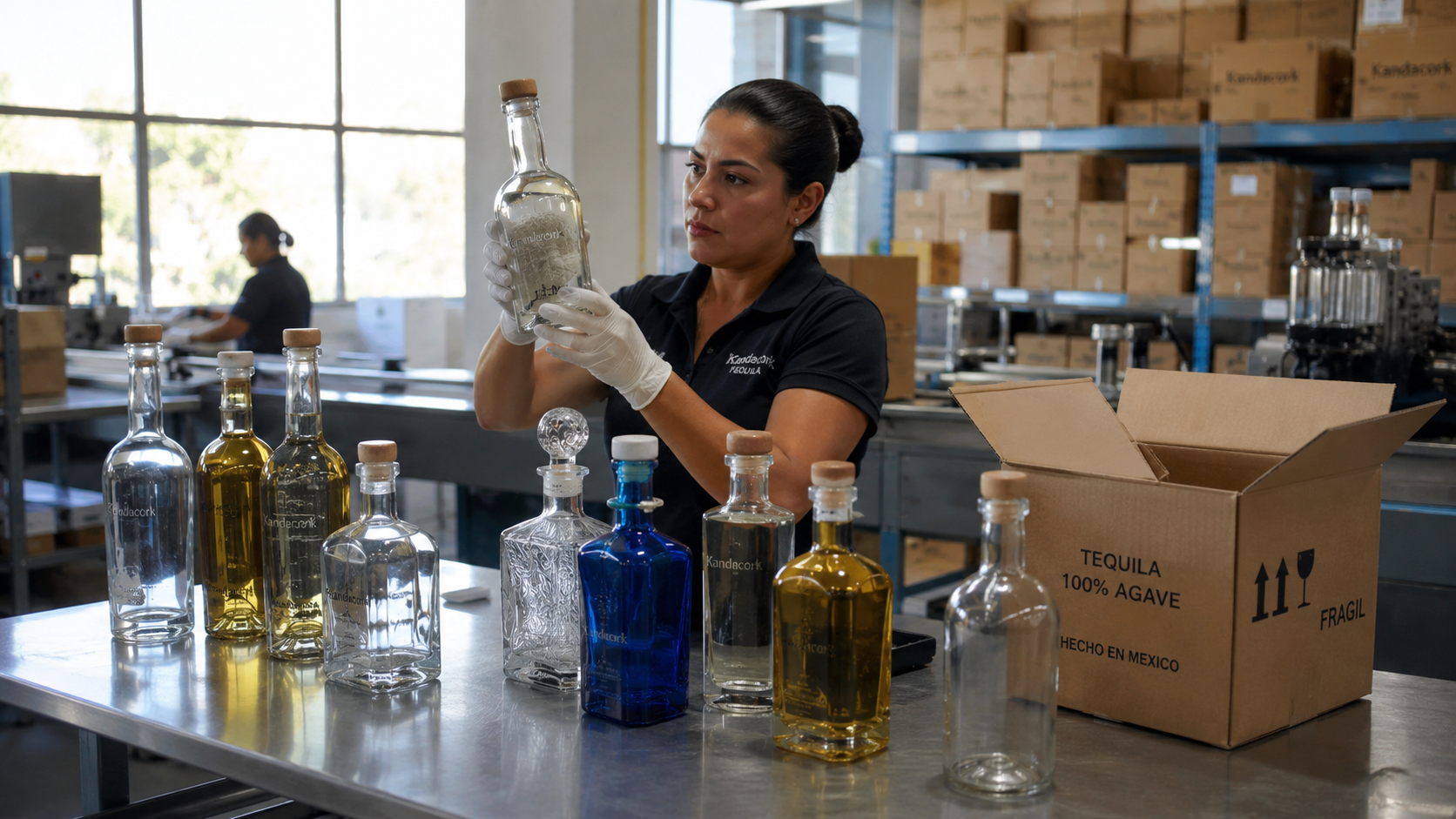
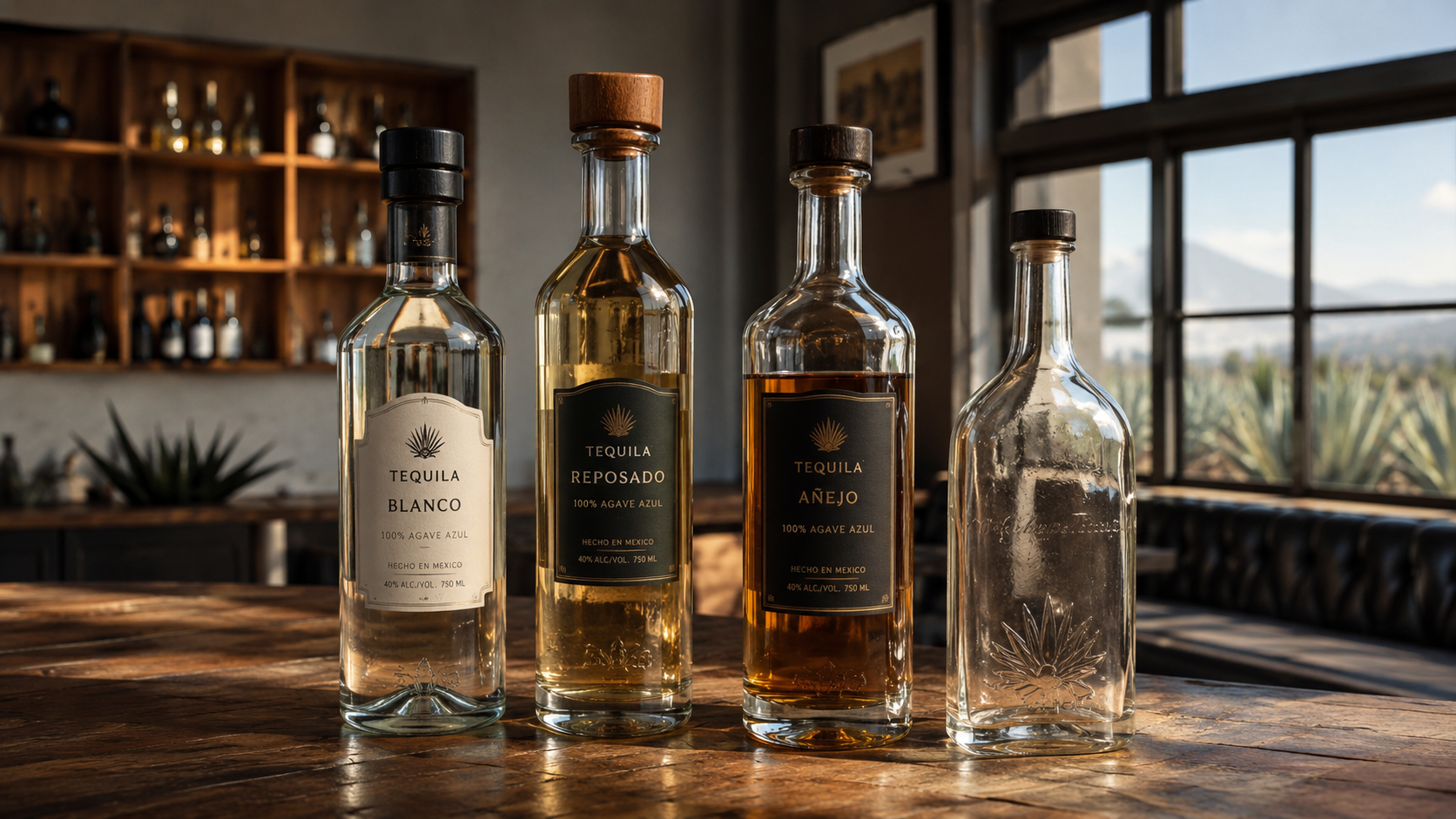
Different spirits categories may require different fit priorities. Whisky and bourbon projects often focus on premium pull feel and may use wood tops with natural or micro-agglomerated cork shanks. Vodka and private label spirits often prioritize batch consistency and clean modern closure design. Gin brands should consider odor neutrality and compatibility with botanicals or oils. Tequila and mezcal projects should check decorative top weight, head alignment, and transport stability. Rum and liqueur projects should test sugar, aroma, viscosity, and long-term product compatibility.
This category view should not replace technical testing. It helps buyers define the right starting point before requesting samples. If the stopper is part of a wider bottle, decoration, carton, and export packaging plan, buyers may also review a complete custom spirits packaging solution to align the bottle structure, closure system, decoration method, and shipment format.
How Kandacork Closures Supports Fit Review and Custom Orders
Kandacork Closures supports spirits brands and packaging buyers that need reliable bar-top stopper fit, custom branding, and production-ready closure solutions.
For custom projects, Kandacork Closures can support natural cork, micro-agglomerated cork, synthetic cork, and hybrid shank options. Top materials may include wood, aluminum, plastic, glass, zamac, ceramic, and other custom decorative choices.
Branding options can include logo engraving, printing, embossing, debossing, color matching, surface finishing, and custom top shapes. The key benefit is not only decoration. It is the ability to match visual design with practical fit performance.
For buyers comparing appearance, opening feel, and stopper structure, this guide to wooden bar-top stopper materials can help explain how head material, shank type, finish, and bottle fit work together in premium spirits packaging.
To request a more accurate recommendation, share your bottle drawing, real neck size, bottle samples if available, product type, target material, branding requirements, sample needs, and expected order quantity.
Bar-Top Stopper Fit Checklist Before Requesting a Quote
Before contacting a supplier, prepare the following details:
Bottle volume and shape.
Bottle supplier and technical drawing.
Neck finish type.
Measured internal bore diameter.
Bore depth.
Number of bottle samples available.
Target shank material.
Target top material.
Preferred branding method.
Product type and alcohol strength.
Fill level and filling temperature.
Storage and shipping conditions.
Target market or import requirements.
Sample quantity.
Bulk order quantity.
Expected repeat order plan.
The more information buyers provide at the beginning, the easier it is to recommend the right shank size, material, and sample testing plan.
FAQ
Why does my bar-top stopper leak?
A bar-top stopper usually leaks because the shank is too small, the bottle bore is larger than expected, the sealing area is too short, or the shank material does not recover enough after compression.
Why does my bar-top stopper feel loose?
A stopper feels loose when the shank does not create enough compression against the inner bottle wall. This may come from wrong shank diameter, bottle neck variation, poor material recovery, or insufficient sealing depth.
What size stopper fits an 18.5 mm bottle neck?
Many 18.5 mm bar-top bottle necks start with a 19.5 mm shank, but the final size should be confirmed with bottle samples, bore measurement, and extraction force testing.
What size stopper fits a 21.5 mm bottle neck?
Many 21.5 mm bottle necks start with a 22.5 mm shank. However, the correct size depends on actual bore diameter, bore depth, neck profile, shank material, and required opening feel.
How do I prevent bar-top stopper fit problems before bulk orders?
Send bottle drawings and physical samples to the closure supplier. Measure the real bore, test several shank sizes, check insertion and extraction force, and run leak tests before confirming bulk production.
Conclusion: Prevent Fit Problems Before They Reach the Bottling Line
Bar-top stopper fit problems are easier to prevent before production than to fix after filling, packing, and shipping. A closure that leaks, pops up, fits too tightly, or varies from bottle to bottle can damage product quality, delay shipments, and weaken brand trust.
Treat stopper selection as a technical packaging decision. Confirm the real bottle neck dimensions, compare shank materials, test physical samples, check extraction force, and evaluate supplier quality control before placing a bulk order.
Share your bottle drawing, product type, target material, branding requirements, and order quantity to request samples or a quotation from Kandacork Closures.