Opening Answer
Bottle neck tolerances affect closure fit because small variations in neck inner diameter, thread profile, sealing land, bead position, and finish height change how a stopper, screw cap, or ROPP closure seals. When bottle and closure tolerances stack up in the wrong direction, the result can be leakage, loose fit, hard insertion, unstable torque, poor pull-out force, or tamper-evident failure.
For spirits brands, distilleries, bottlers, private label buyers, importers, distributors, and packaging buyers, closure fit is not just a size-matching task. It affects production efficiency, shelf appearance, shipping safety, consumer opening experience, and brand trust.
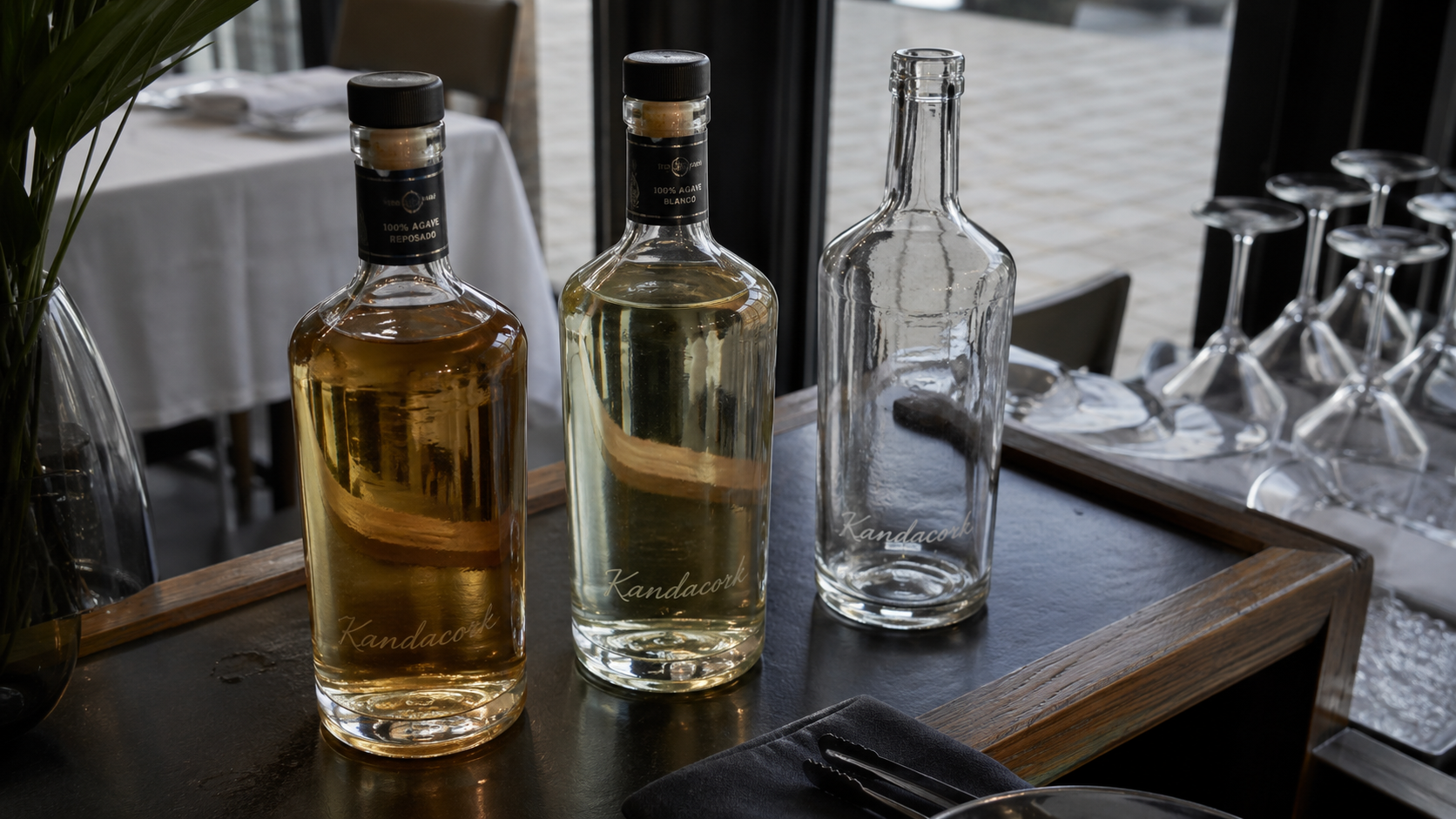
Kandacork Closures helps buyers review bottle samples, technical drawings, closure materials, decoration plans, and production requirements together, so fit risks can be solved before bulk ordering. For projects involving custom spirits bottle closures, early fit validation can prevent costly production delays.
Why Closure Fit Is a Tolerance Problem, Not Just a Size Problem
Many buyers begin with a simple question: “What closure size fits this bottle?” That question is useful, but incomplete.
A closure must do more than match a nominal finish code. It must seal reliably, apply correctly, open smoothly, reclose properly, and remain consistent across real production bottles. A bottle may meet its technical drawing, but actual neck dimensions can still vary because of glass forming, mold cavities, tooling wear, cooling behavior, batch changes, and supplier production controls.
This is why a stopper or cap that works on one sample may fail during filling-line trials or bulk production. The real issue is often not the nominal size. It is whether the closure can perform across the bottle’s full tolerance range.
If you already have bottle samples or drawings, Kandacork Closures can help review stopper, screw cap, or ROPP fit before mass production through its cap and neck compatibility support.
Before You Request Closure Samples
Before requesting stopper or cap samples, prepare the bottle drawing, several physical bottles, neck finish type, target closure style, spirit ABV, filling method, decoration requirements, and estimated order quantity.
This helps the supplier recommend a closure that matches both technical fit and commercial requirements. It also reduces trial-and-error sampling, shortens approval time, and improves quotation accuracy.
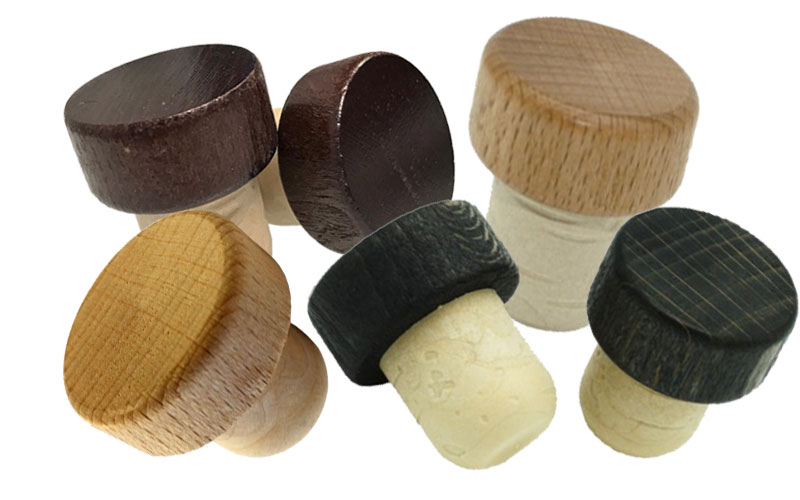
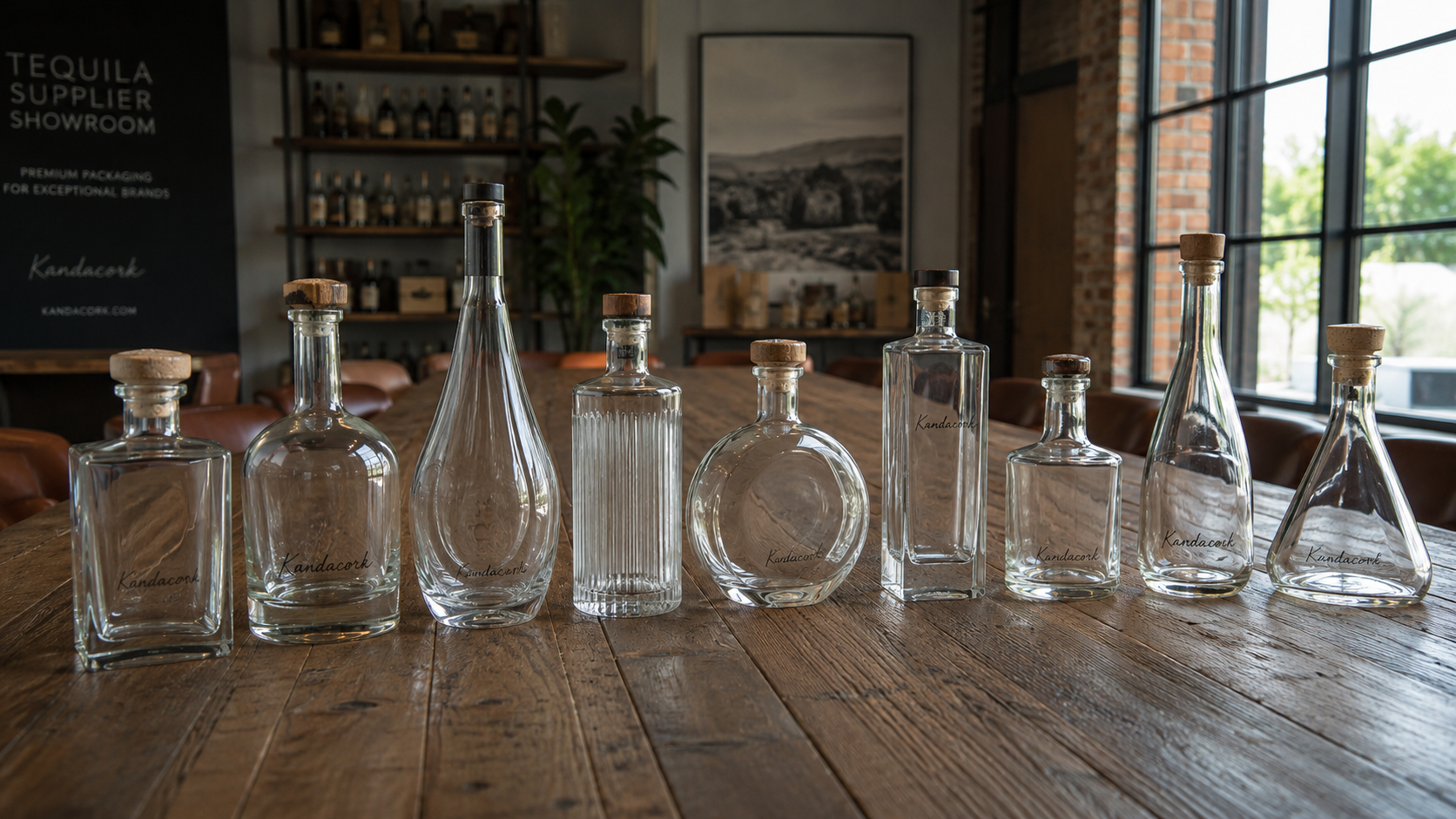
For brands comparing bar-top stoppers, screw caps, synthetic stopper samples, or ROPP cap fitting support, this preparation step is especially important. If the bottle itself is still being developed, coordinating the closure review with custom spirits bottle development can help avoid mismatch between glass design, neck finish, decoration, and final closure performance.
What Are Bottle Neck Tolerances?
Bottle neck tolerances are the acceptable dimensional variations in the bottle neck and finish. These may include the bore, outer diameter, thread profile, finish height, bead, sealing land, and top surface.
In simple terms, tolerances define how much a real bottle may differ from the nominal drawing while still being considered acceptable.
For closure buyers, the important point is this: an acceptable bottle does not automatically guarantee acceptable closure performance. A bottle can stay within its glass specification but still create leakage, loose fit, hard insertion, inconsistent cap height, or unstable torque if the selected closure is not matched to the real neck range.
Bottle Neck Tolerance Diagram
A useful bottle neck tolerance diagram should show the dimensions that most directly affect spirits closure performance: T dimension, E dimension, I dimension, S dimension, H dimension, sealing land, stopper shank compression, and ROPP bead area.
Recommended image alt text:
Bottle neck tolerances diagram showing T, E, I, S, H dimensions, sealing land, stopper shank compression, and ROPP bead area for spirits bottle closures.
This visual should appear near the dimension explanation to help buyers understand how technical measurements connect to real closure fit.
Key Neck Dimensions That Affect Closure Fit
T Dimension
The T dimension is the outside diameter across the thread or finish. It affects screw cap thread engagement, cap application, and liner compression. If the T dimension is too large, the cap may be difficult to apply. If it is too small, the cap may feel loose or fail to seal consistently.
E Dimension
The E dimension is the outside diameter of the neck excluding the thread. The relationship between T and E helps define thread depth. Inconsistent E dimension can cause poor cap seating, unstable torque, or uneven cap height.
I Dimension
The I dimension is the inner diameter of the bottle opening, also called the bore. It is usually the most important dimension for bar-top stoppers, T-corks, synthetic corks, natural corks, glass stoppers, pourer inserts, and plug-style closures.
If the bore is too large, the stopper may feel loose. If it is too small, insertion force may be too high.
S Dimension
The S dimension relates to the distance from the top sealing surface to the thread start. It affects where a threaded closure begins to engage and how evenly it seats after application.
H Dimension
The H dimension is the height of the neck finish. It affects cap skirt coverage, ROPP forming, tamper-evident band position, capsule alignment, and final visual appearance.
Sealing Land
The sealing land is the surface where the closure liner, plug, or sealing feature meets the bottle. Even if the main dimensions are correct, a rough, chipped, uneven, or contaminated sealing land can cause leakage.
What Is Tolerance Stack-Up in Bottle and Closure Fit?
Tolerance stack-up happens when several acceptable variations combine in a way that creates a poor final fit.
A bottle may be within its tolerance. A closure may also be within its tolerance. But if the bottle is at one end of the range and the closure is at the opposite end, the final package may fail.
| Bottle condition | Closure condition | Likely result |
|---|---|---|
| Bore at high limit | Stopper shank at low limit | Loose stopper or low pull-out force |
| Bore at low limit | Stopper shank at high limit | Hard insertion or glass stress risk |
| Finish height too high | Cap skirt too short | Cap sits high or looks misaligned |
| Thread outside diameter low | Cap thread tolerance loose | Low torque or leakage risk |
| Sealing land uneven | Liner too firm | Incomplete seal or seepage |
| Neck slightly oval | Rigid stopper shank | Uneven compression or leaning stopper |
| Bead position inconsistent | ROPP bridge not matched | Tamper band break failure |
This is one of the main reasons a closure may pass a hand-fit test but fail in bulk production. One sample rarely represents the full bottle tolerance range.
Why a Closure Fits the Sample but Fails in Production
A closure can fit the first sample but fail in production because the sample may not represent the full manufacturing range.
Glass bottles can vary by mold cavity, production batch, supplier, forming condition, and finish control. Closures also have their own manufacturing tolerances. When both components shift in the wrong direction, a stopper may become loose, a screw cap may leak, or a ROPP cap may fail during application.
Production also adds variables that hand testing does not show. Filling-line speed, capping head setup, application torque, temperature change, alcohol exposure, transit vibration, and secondary packaging can all affect final closure performance.
For this reason, buyers should test several bottles, not one perfect sample. They should also test closures under conditions that are close to real filling and shipping.
Closure Types Most Sensitive to Bottle Neck Tolerances
Different spirits closures respond to neck variation in different ways. Buyers should not evaluate every closure with the same test method.
| Closure type | Most critical neck dimension | Main fit risk | Best validation method |
|---|---|---|---|
| Bar-top stopper | I dimension and bore roundness | Loose fit, hard insertion, leaning top | Pull-out force and insertion test |
| Natural cork | Bore, cork grade, humidity | Variable opening feel or inconsistent seal | Conditioning and pull-out test |
| Synthetic cork | I dimension | Over-compression or weak sealing pressure | Multi-bottle bore test |
| Screw cap | T, E, S, H, sealing land | Leakage, cross-threading, unstable torque | Application and removal torque test |
| ROPP cap | Finish height, bead, thread area | Bridge failure, spinning cap, poor forming | Filling-line trial |
| Glass stopper | Bore and stopper geometry | Rattling, poor seal, breakage risk | Physical sample fit test |
| T-cork | I dimension and finish height | Uneven seating or inconsistent reclosure | Fit test across multiple bottles |
For stopper-style closures, the I dimension is usually the first measurement to check. For screw caps and ROPP caps, thread geometry, finish height, sealing land, torque, and line setup become equally important.
How Bore Tolerances Affect Cork and Synthetic Stopper Fit
Bar-top stoppers, natural corks, synthetic corks, plastic shanks, and T-corks all depend heavily on bore control.
The stopper must compress enough to seal, but not so much that insertion becomes difficult or the bottle neck is stressed. It should also seat at a consistent height, maintain suitable pull-out force, and create the intended premium opening feel.
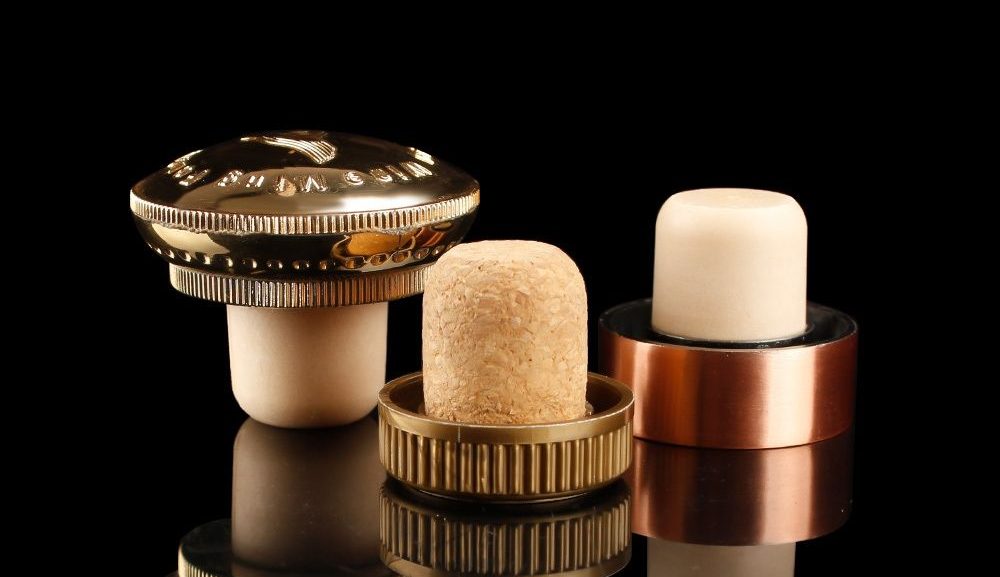
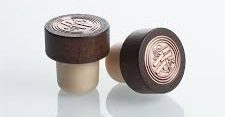
Buyers comparing cork and engineered shank options can use a technical guide such as cork shank vs synthetic shank for bar-top stoppers to better understand how material choice affects compression, consistency, and opening experience.
| Material | Advantage | Tolerance risk |
|---|---|---|
| Natural cork | Premium feel and traditional appearance | Natural variation, humidity sensitivity, inconsistent compression |
| Synthetic cork | More predictable dimensions and controlled compression | Still depends on accurate bore matching |
| Plastic shank | High repeatability and design flexibility | Requires correct geometry and material hardness |
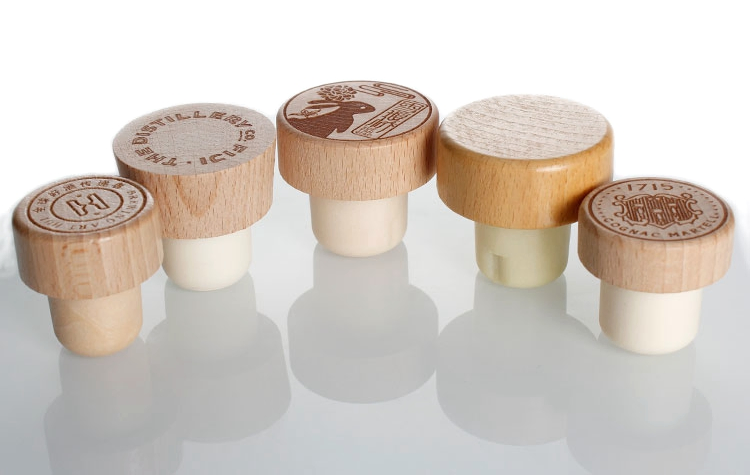
| Wood-top stopper | Strong shelf appeal and custom branding | Head weight and shank fit must be balanced |
| Glass stopper | Premium appearance | Requires precise bore and stopper geometry |
For premium spirits, poor stopper fit is both a functional and visual problem. A loose stopper, leaning top, uneven insertion height, or inconsistent opening feel can reduce perceived product quality even before the bottle is opened.
How Bottle Neck Tolerances Affect Screw Caps and ROPP Caps
Screw caps depend on thread engagement, liner compression, application torque, and removal torque. If the thread profile, neck diameter, finish height, or sealing land is inconsistent, the cap may cross-thread, sit high, leak, or open with unstable torque.
ROPP caps are even more dependent on the bottle finish. A roll-on pilfer-proof closure is formed around the finish during application. The bottle must support correct thread forming, skirt contact, tamper band position, bridge control, and liner sealing.
Common ROPP problems include spinning caps, broken bridges, uneven cap height, rough opening, and leakage. These issues should be tested with the actual bottle, cap, liner, capping head, and line conditions together.
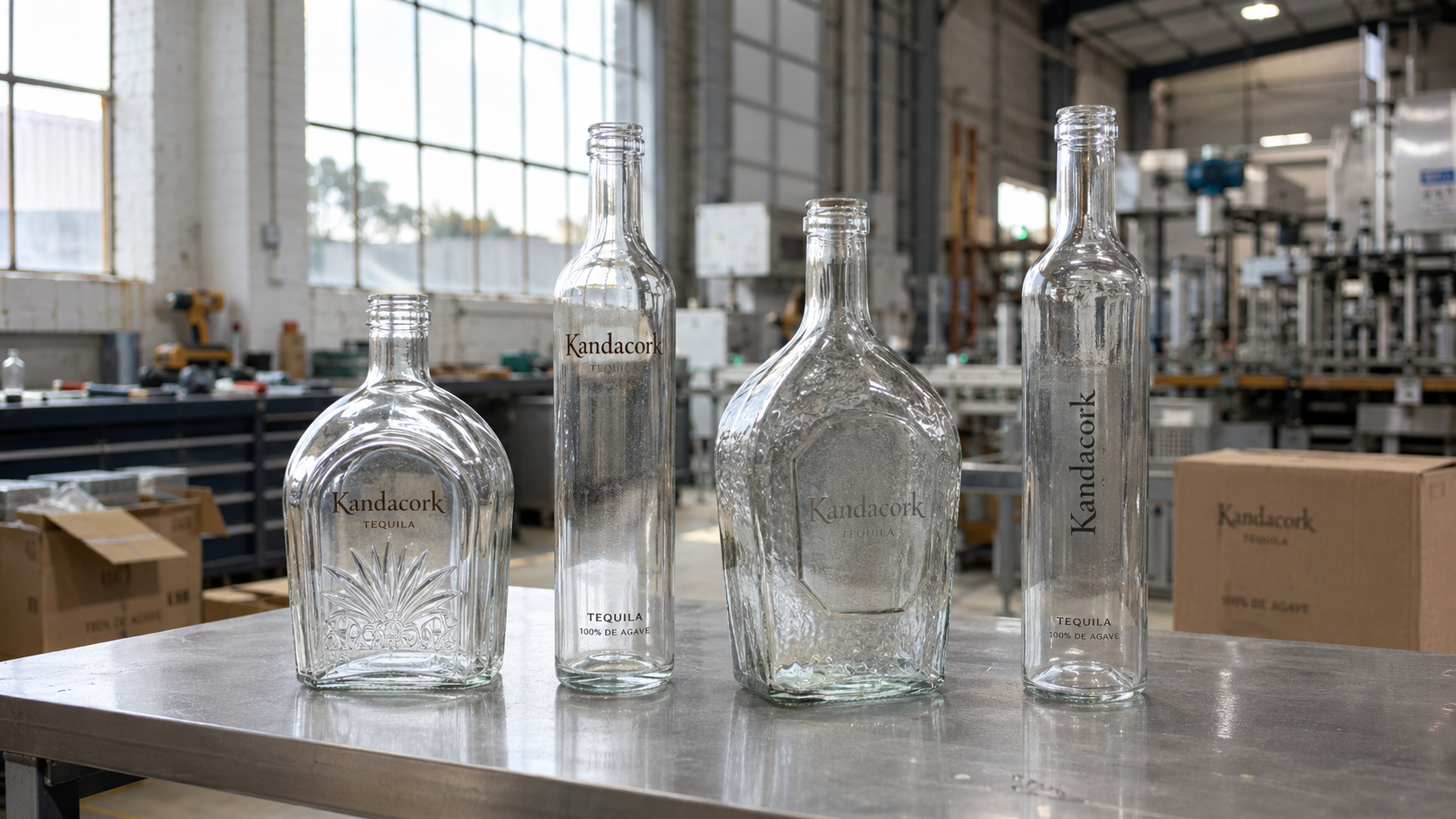
For screw cap and ROPP projects, hand testing is not enough. Application torque, removal torque, leakage, and filling-line performance should be checked before bulk closure approval. For threaded projects, a deeper review of screw cap thread finish matching can help buyers understand why nominal diameter alone is not enough.
Common Closure Fit Problems and Technical Causes
| Fit problem | Possible bottle neck tolerance cause | Possible closure cause | Recommended action |
|---|---|---|---|
| Stopper feels loose | Bore is too large or out-of-round | Shank diameter too small or material too soft | Test larger shank or different material |
| Stopper is hard to insert | Bore is too small | Shank too large or high-friction coating | Test insertion force and adjust shank |
| Stopper leans | Bore is oval or finish is uneven | Decorative top too heavy or shank too short | Review shank length and top balance |
| Cap leaks | Sealing land uneven or finish height inconsistent | Liner mismatch or low torque | Test liner compression and torque |
| Cap sits high | Thread start or H dimension variation | Closure thread mismatch | Compare bottle drawing and cap specification |
| Cap cross-threads | T or thread profile variation | Cap thread design mismatch | Test with production capping setup |
| ROPP cap spins | Bead or thread area not suitable | Incorrect cap or capping head setup | Run filling-line trial |
| Tamper band fails | Bead position inconsistent | Bridge design unsuitable | Test pilfer-proof performance |
| Capsule wrinkles | Neck or closure height inconsistent | Capsule size mismatch | Test closure and capsule together |
| Opening feel varies | Bottle and closure tolerances stack up | Material or torque variation | Test multiple samples from different batches |
This table helps buyers connect visible packaging problems with likely technical causes and purchasing actions.
Spirits Closure Fit Testing Checklist
Before confirming bulk closure orders, buyers should test both fit and function. The right test depends on the closure type, filling method, and export requirements.
| Test | Applies to | What it confirms |
|---|---|---|
| Dry fit test | All closures | Basic seating and visual alignment |
| Insertion force test | Stoppers, corks, T-corks | Whether the closure is too tight |
| Pull-out force test | Stoppers, corks, T-corks | Whether the closure is too loose |
| Application torque test | Screw caps, ROPP caps | Whether the closure applies within target range |
| Removal torque test | Screw caps, ROPP caps | Consumer opening experience |
| Inverted leakage test | All closures | Seal reliability |
| Alcohol compatibility check | Cork, liner, plastic shank | Material resistance to spirits |
| Filling-line trial | Screw cap, ROPP, high-volume projects | Real production performance |
| Capsule or secondary packaging check | Decorated closures | Visual and dimensional compatibility |
For export or premium projects, temperature exposure and transport simulation may also be needed.
Before confirming production, send bottle samples for closure matching and pre-production testing.
Practical Procurement Scenarios
Premium Whisky Stopper Feels Loose After a Glass Batch Change
A whisky brand approves a wood-top stopper using one bottle sample. In the next glass batch, the bore shifts toward the larger tolerance limit. The stopper still fits, but pull-out force drops. The solution is to test bottles from multiple batches and adjust shank diameter or material compression before bulk production.
ROPP Cap Bridge Breaks Inconsistently on the Filling Line
A private label project changes bottle suppliers. The ROPP cap looks correct during hand review, but some tamper-evident bridges break unevenly on the line. The cause may be finish height, bead geometry, cap specification, or capping head setup. A production-like line trial is needed.
Screw Cap Passes Hand Testing but Leaks After Shipping
A spirits importer approves hand-applied screw cap samples. After export shipment, leakage appears in cartons. Possible causes include low application torque, poor liner compression, uneven sealing land, temperature change, or vibration. Torque and leakage testing should be part of approval.
Standards and Technical References Buyers Should Know
Technical references help buyers, bottle suppliers, closure suppliers, and bottlers use a shared language when discussing neck finish, torque, sealing, and closure validation.
| Entity | Buyer Use |
|---|---|
| ISBT Threadspecs | Helps align beverage finish terminology with suppliers |
| CETIE finish data sheets | Supports glass finish and closure discussions |
These references do not replace physical testing, but they make technical communication more precise during supplier comparison, sample approval, and troubleshooting.
Closure Supplier Evaluation Scorecard
When comparing closure suppliers, price per piece should not be the only decision factor. Supplier capability can reduce risk before bulk ordering.
| Evaluation item | Why it matters | Score |
|---|---|---|
| Reviews bottle drawings | Confirms nominal finish and tolerance range | /5 |
| Tests physical bottle samples | Validates real-world closure fit | /5 |
| Measures multiple bottles | Checks batch and mold variation | /5 |
| Adjusts shank diameter or material | Reduces loose fit or hard insertion | /5 |
| Advises liner or torque requirements | Improves screw cap sealing | /5 |
| Supports ROPP line-trial review | Reduces forming and tamper-band risk | /5 |
| Provides pre-production samples | Avoids bulk-order failure | /5 |
| Coordinates decoration and fit | Prevents visual and functional mismatch | /5 |
| Troubleshoots leakage or fit issues | Supports production problem-solving | /5 |
| Maintains bulk production consistency | Protects long-term packaging quality | /5 |
A technically capable supplier can often save more money than a low-cost supplier that only quotes from a size chart.
Red Flags When Choosing a Closure Supplier
A closure supplier may not be suitable for a technical spirits packaging project if they only recommend a size from a catalog without asking for bottle samples or drawings.
Watch for these warning signs:
The supplier only checks the nominal neck finish code.
The supplier does not ask for physical bottle samples.
The supplier cannot explain tolerance range or shank compression.
The supplier cannot provide pre-production samples.
The supplier does not ask about spirit ABV or filling method.
The supplier ignores capsules, ROPP application, or decoration compatibility.
The supplier cannot support leakage, torque, or loose-fit troubleshooting.
These red flags matter because closure fit problems usually appear after sampling, filling, shipping, or display. A supplier that understands fit validation can help prevent costly packaging rework.
What to Send When Requesting Samples or a Quotation
A complete RFQ helps the closure supplier recommend the right option faster.
Send the following information when requesting samples or a quotation from Kandacork Closures:
Bottle drawing in PDF or CAD format.
Several physical bottle samples.
Photos of the bottle neck and full bottle.
Target closure type.
Current closure problem, if any.
Neck inner diameter and outer diameter, if available.
Spirit category and alcohol strength.
Filling and capping method.
Capsule, sleeve, carton, or gift box requirements.
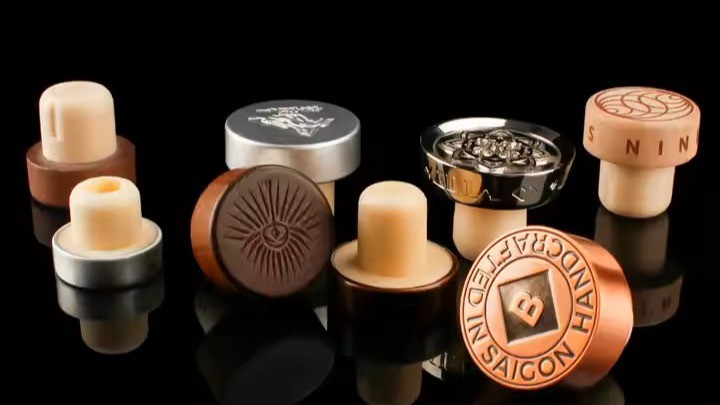
Logo, top, color, and decoration expectations.
Estimated order quantity.
Launch timeline and sample approval deadline.
Export market and transport conditions.
Clear information reduces guesswork. It also helps Kandacork Closures recommend whether a bar-top stopper, synthetic cork, natural cork, screw cap, ROPP cap, or custom decorative closure is the best fit for the bottle.
Why Kandacork Closures Reviews Bottle and Closure Fit Together
Kandacork Closures supports spirits brands, distilleries, bottlers, private label buyers, importers, distributors, and packaging buyers with closure matching for real packaging projects.
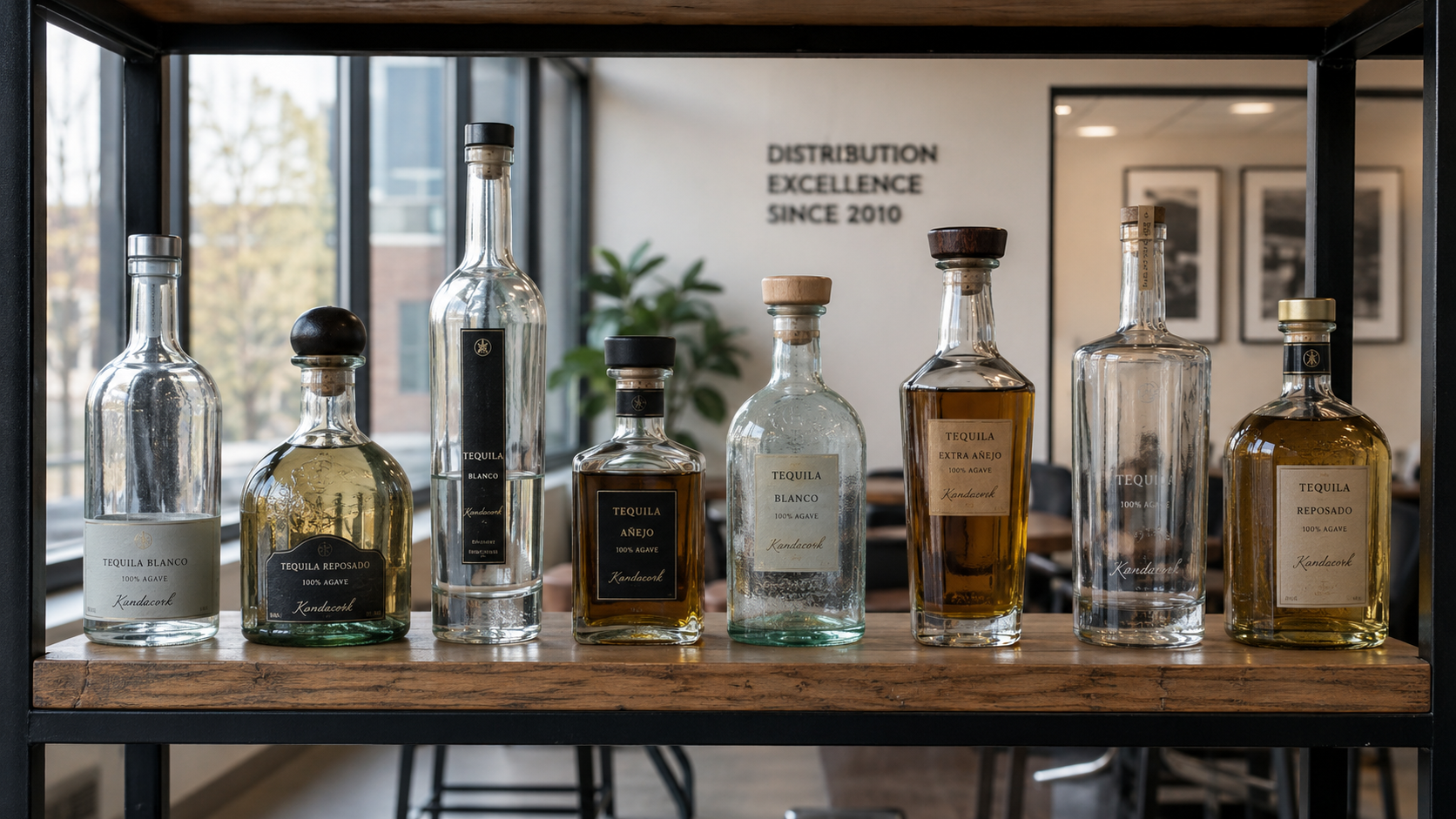
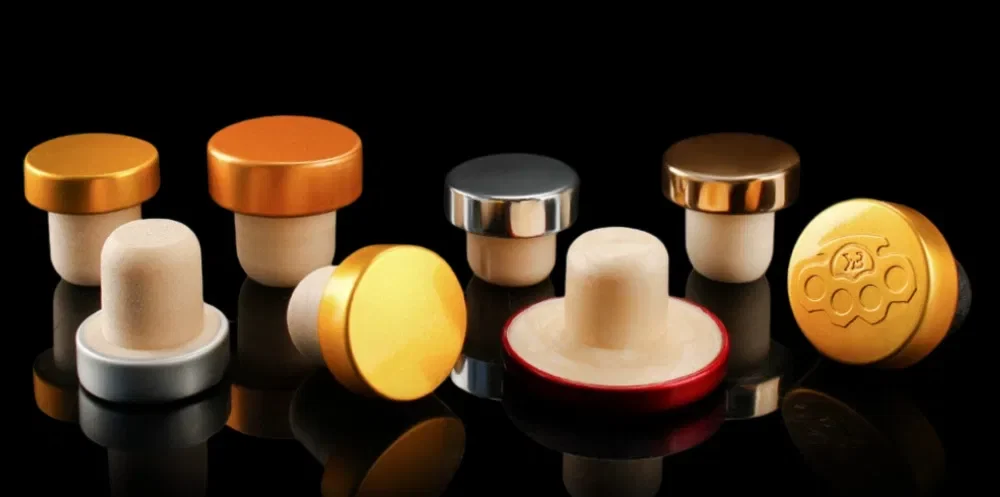
Instead of treating a stopper or cap as an isolated component, Kandacork Closures reviews how the closure interacts with the actual bottle neck, filling method, decoration plan, and production requirement. This approach is useful for custom spirits bottles, premium bar-top stoppers, wood-top closures, synthetic corks, natural corks, screw caps, ROPP caps, and decorated closure programs.
The goal is simple: reduce closure risk before bulk production.
Conclusion
Bottle neck tolerances directly affect closure fit, sealing performance, production efficiency, and consumer experience. A closure that matches the nominal size may still fail if the real bottle neck varies outside the closure’s working range.
For spirits packaging, the safest approach is to evaluate the bottle and closure together. Review the drawing, measure real samples, test the closure material, check fit across several bottles, and confirm performance before bulk ordering.
Request closure samples or a quotation from Kandacork Closures with your bottle drawing, physical samples, closure type, decoration requirement, and expected order quantity.
FAQ
What bottle neck dimension matters most for stopper fit?
For stopper fit, the inner diameter of the bottle neck is usually the most important dimension. It controls how the stopper shank compresses inside the bore. Finish height, sealing land quality, insertion depth, and stopper material also affect performance.
Why does a stopper fit one sample but not another bottle?
This usually happens because of bottle neck tolerances. Bottles from different molds, cavities, or production batches may have small dimensional differences. Those differences can change insertion force, pull-out resistance, and sealing performance.
Why does a closure leak even when the neck finish matches?
A closure can leak even when the neck finish matches because nominal size matching does not guarantee sealing performance. Leakage may come from bore variation, uneven sealing land, liner mismatch, low application torque, stopper compression loss, or tolerance stack-up between the bottle and closure.
Can I approve a closure based only on a bottle drawing?
No. A bottle drawing is important, but physical samples are also necessary. Drawings show nominal dimensions, while real samples reveal bore condition, surface finish, roundness, and actual closure behavior.
What causes a spirits closure to leak?
Leakage may be caused by a loose stopper, poor liner compression, uneven sealing land, incorrect torque, bore variation, closure material mismatch, damaged finish, or tolerance stack-up between the bottle and closure.
How many bottle samples should be tested before ordering closures?
Testing only one bottle is risky. Buyers should test several samples, ideally from different bottle batches or mold cavities. For high-volume or premium projects, a broader sample set gives a better view of real production variation.
What should I send to Kandacork Closures for closure matching?
Send the bottle drawing, several physical bottles, neck measurements if available, target closure type, spirit category, ABV, filling method, decoration requirements, order quantity, and timeline. This helps Kandacork Closures recommend a better closure solution and prepare meaningful samples.