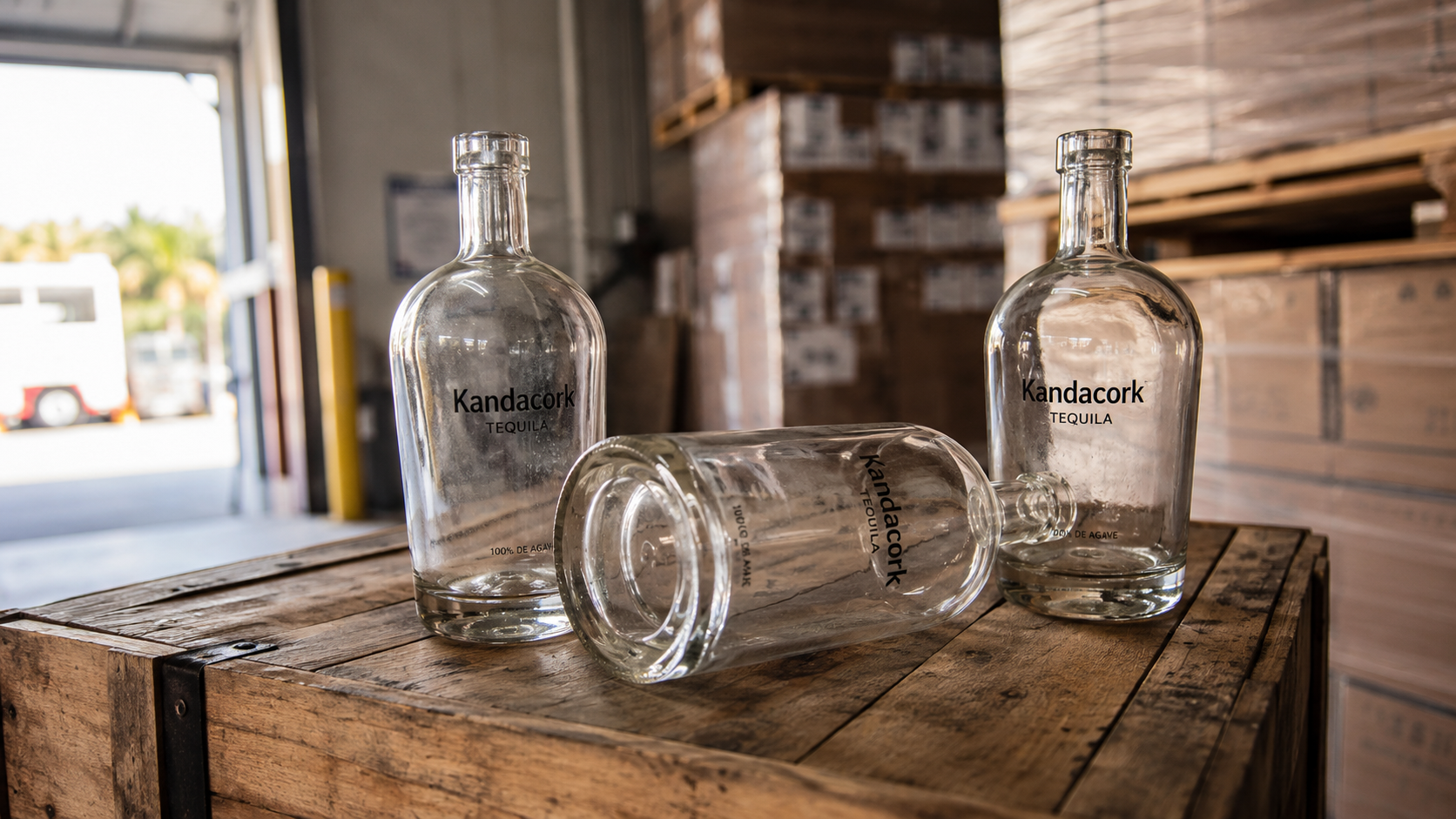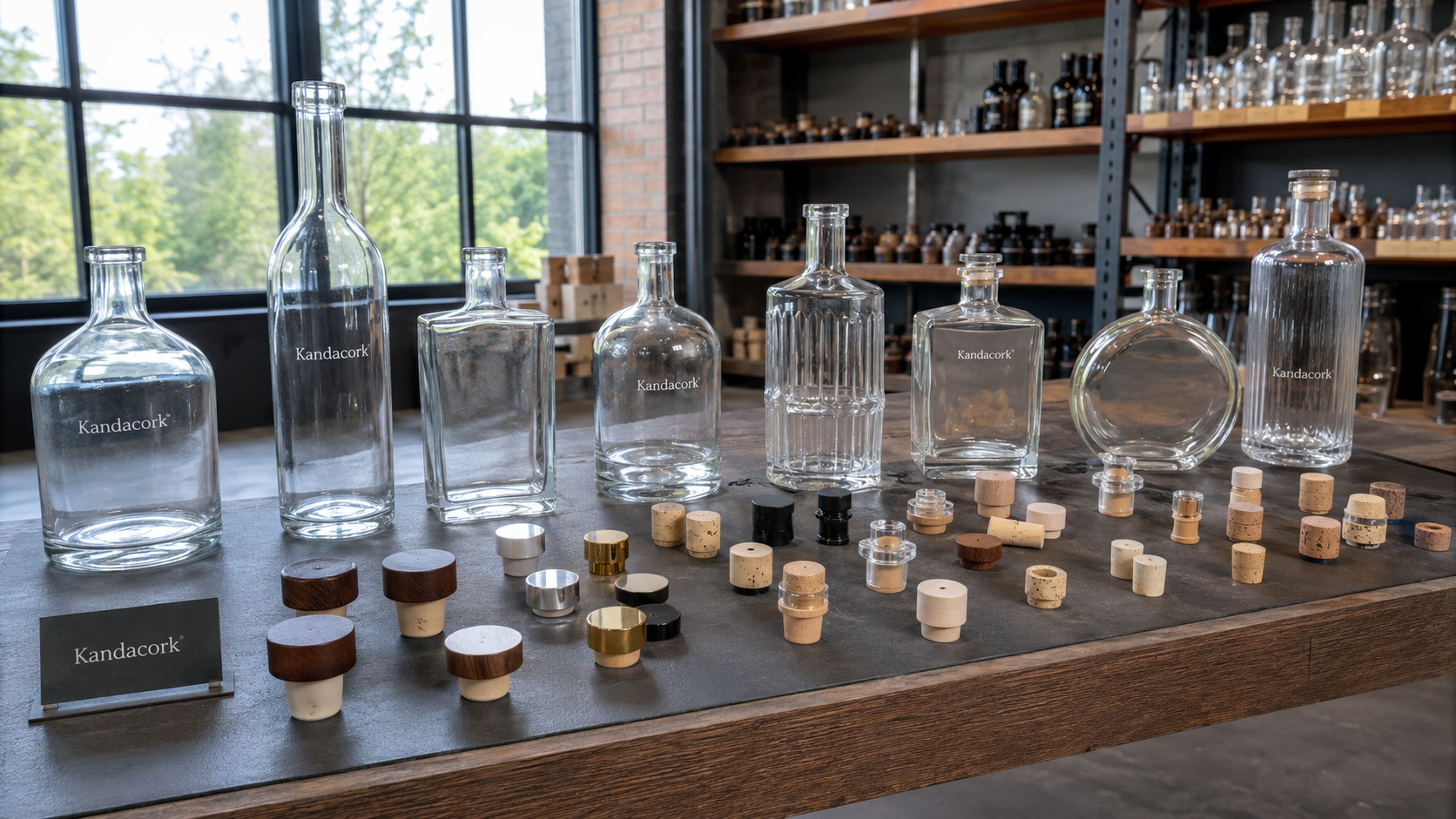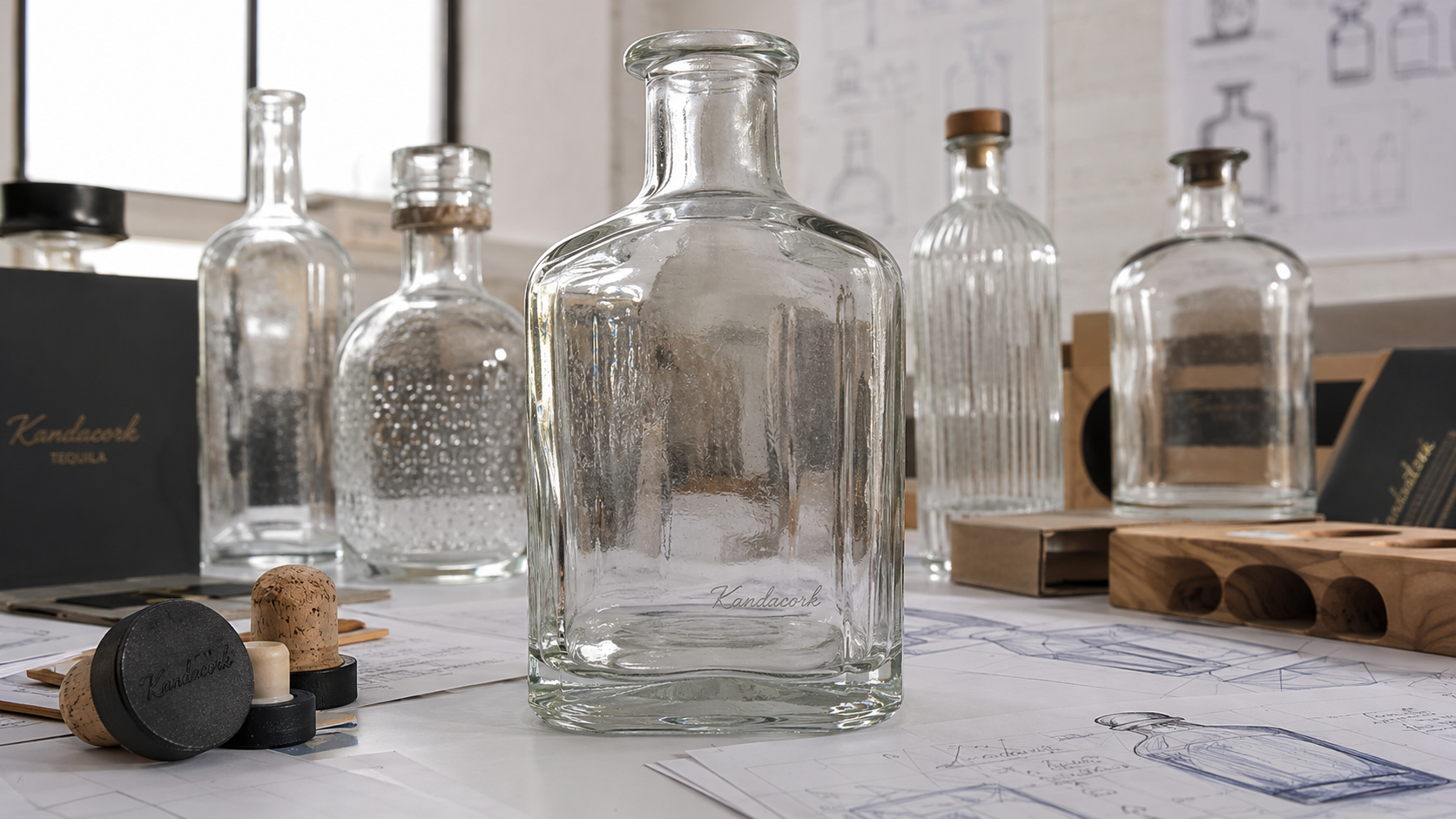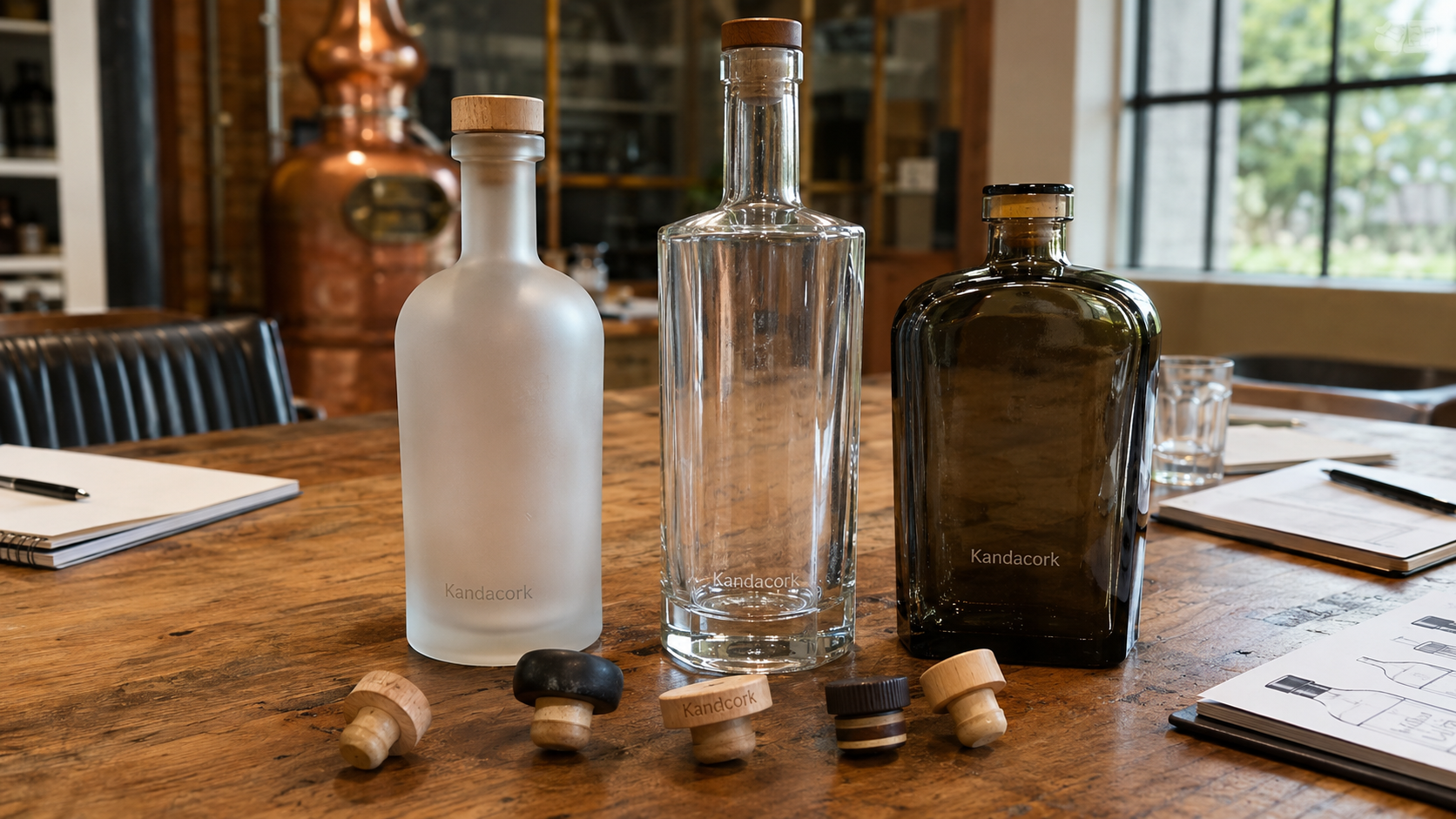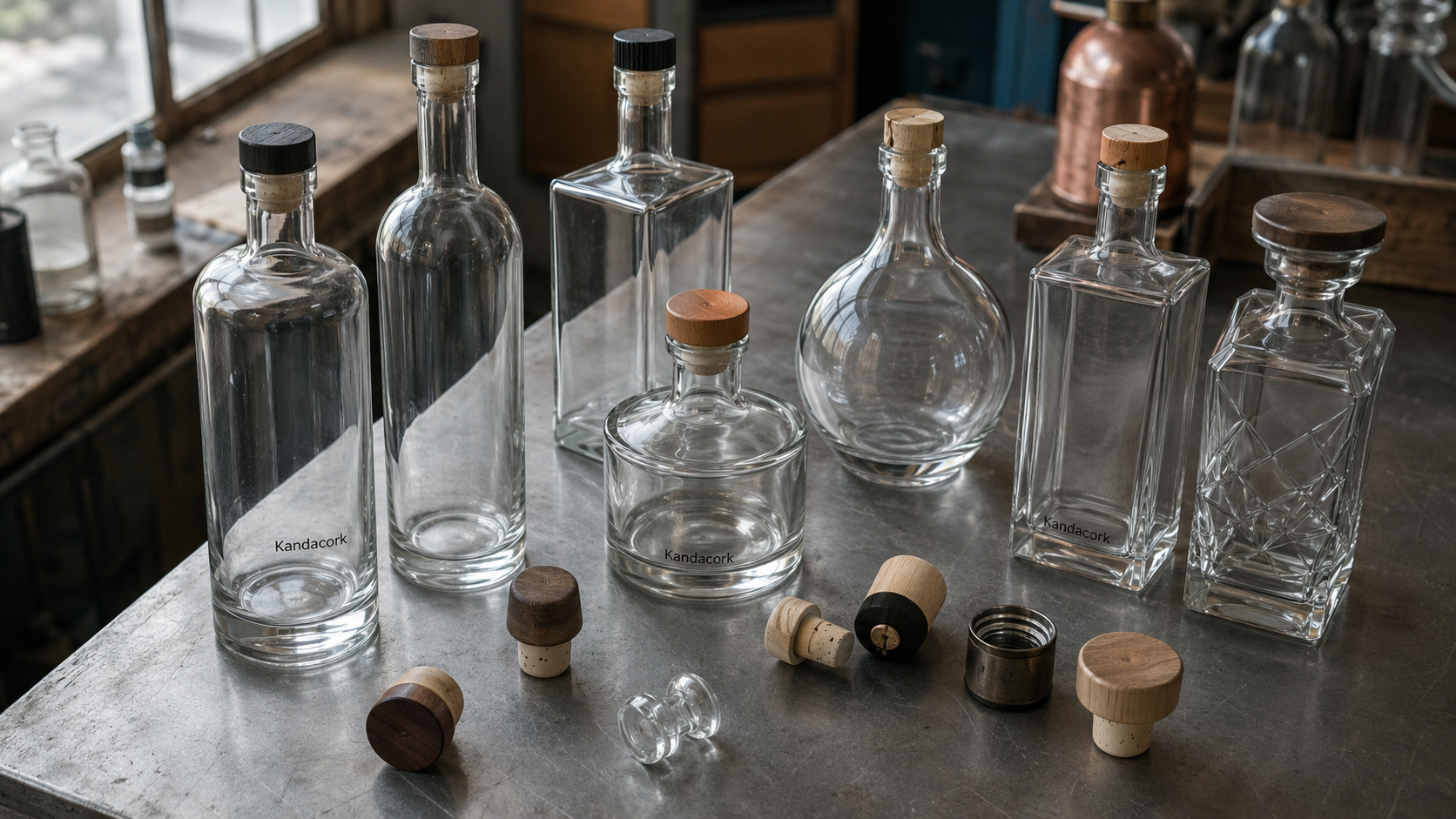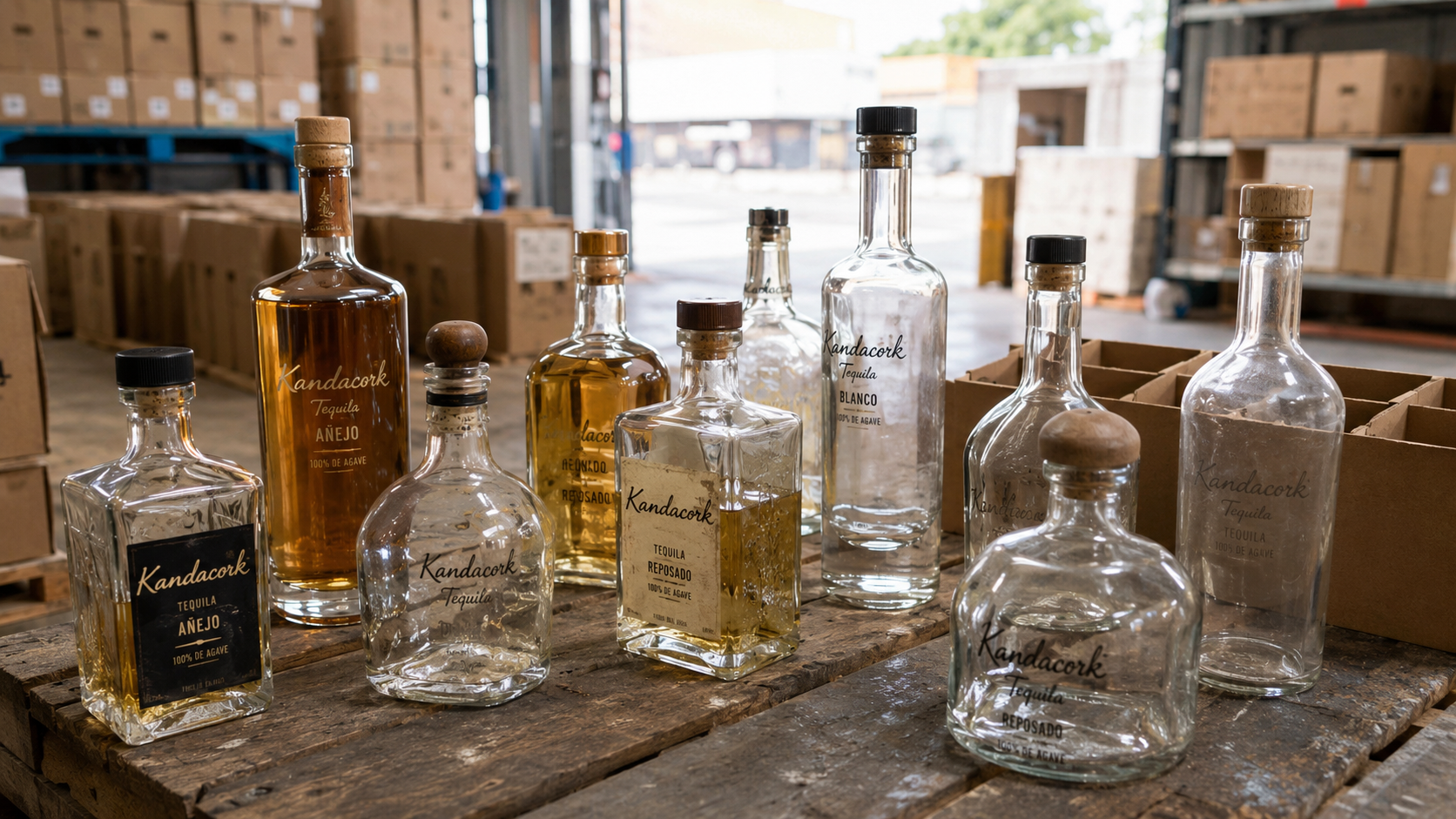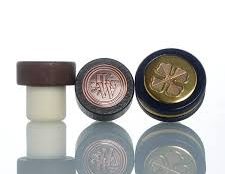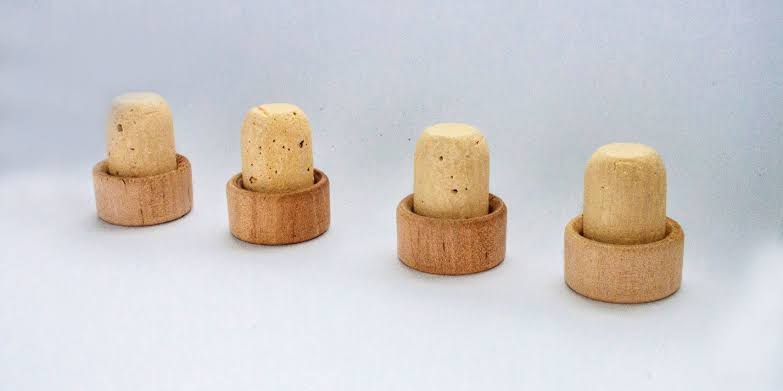
A bottle and closure that fit during an initial sample review are not necessarily ready for production.
A reliable spirits bottle closure compatibility checklist should verify the controlled bottle drawing, dimensional tolerances, closure construction, product-contact materials, mechanical performance, leakage resistance, filling-line operation, supplier controls, and final production samples.
This guide is intended for spirits brands, distilleries, bottlers, private-label buyers, importers, distributors, and packaging teams that already have a bottle and one or more proposed closures. It explains how to validate the combination before approving samples, conducting a line trial, or placing a bulk order.
Buyers still comparing closure formats can first review Kandacork’s range of custom spirits bottle closures and stoppers to identify suitable bar-top, screw-cap, ROPP, decorative, or dispensing options.
Direct answer: Do not approve a closure from nominal neck size or one hand-fitted sample. Approval should be based on controlled drawings, tolerance-range components, actual product testing, measurable acceptance criteria, and a production-line trial.
What Should a Spirits Bottle Closure Compatibility Checklist Include?
Before approving a bottle and closure combination, confirm that:
- The controlled bottle drawing and tolerance range are available.
- The closure dimensions, construction, and materials are documented.
- Worst-case dimensional combinations have been evaluated.
- Product-contact suitability has been reviewed.
- Mechanical acceptance criteria have been defined.
- Leakage, aging, transport, and line testing are complete.
- Supplier controls and change-notification procedures are acceptable.
- The final specification and production samples are approved.
These checks turn closure approval from a subjective fit assessment into a documented packaging decision.
1. Define the Product and Packaging Conditions
Start with the packaged spirit rather than the closure catalog.
A neutral vodka, botanical gin, high-sugar liqueur, flavored spirit, and cream-based product may interact differently with closure materials. Alcohol content, sugar, acids, botanical oils, flavor compounds, storage time, and temperature can affect liners, stopper shanks, adhesives, coatings, and dispensing inserts.
Document the following project information:
| Requirement | Information to record |
|---|---|
| Product category | Whisky, vodka, gin, rum, tequila, brandy, liqueur, RTD, or another beverage |
| Alcohol content | Actual alcohol by volume |
| Formulation | Sugar, acids, botanical oils, flavors, colors, or particles |
| Filling process | Filling temperature, fill height, and closure-application timing |
| Shelf life | Planned commercial storage period |
| Distribution | Retail case, pallet, parcel, e-commerce, or export container |
| Target market | Destination countries and applicable product-contact requirements |
| Consumer use | Opening, resealing, controlled pouring, or anti-refill function |
Water can support preliminary leakage screening. Final compatibility testing should use the actual product or a technically justified representative formulation.
Define the intended opening experience
The packaging team should also agree on how the closure should perform for the consumer.
Questions may include:
- How much opening force is acceptable?
- Should a bar-top stopper produce a noticeable release?
- Must the closure be easy to reseal?
- Is visible tamper evidence required?
- Does the package need controlled pouring?
- Will a heavy closure top affect handling or brand positioning?
These requirements should be recorded before testing begins. Otherwise, a technically sealed package may still be rejected because its opening force, seating position, or resealing performance does not match the intended brand experience.
Buyers that have not yet selected a closure system should first review how to choose the right cap, liner, and seal before beginning compatibility approval.
2. Verify the Bottle-Neck Drawing and Tolerance Stack
The controlled bottle drawing is the foundation of compatibility testing.
Descriptions such as “18.5 mm bar top,” “28 mm screw finish,” or “standard ROPP neck” identify a general closure family. They do not define every dimension that affects sealing, application, opening, or production consistency.
Request the current bottle drawing and confirm:
- Bottle item or mold number
- Neck-finish designation
- Drawing revision
- Minimum, nominal, and maximum dimensions
- Internal bore profile
- Finish height
- Sealing-lip dimensions
- Thread geometry
- Tamper-band or transfer-ring area
- Relevant manufacturing tolerances
The internationally recognized CETIE bottling guides treat bottles, stoppers, caps, and application conditions as parts of a coordinated packaging system. This supports evaluating component dimensions and performance together instead of approving a closure from nominal size alone.
Measure inserted-closure necks at multiple depths
For a bar-top or inserted stopper, measure the internal neck:
- At the bottle mouth
- At the expected first contact point
- At the intended insertion depth
A bottle may have the expected opening diameter but narrow farther inside. A stopper can therefore begin inserting normally and then require excessive force when it reaches a restricted section.
Also review:
- Internal taper
- Neck ovality
- Usable insertion depth
- External neck diameter
- Bead position
- Capsule or overcap area
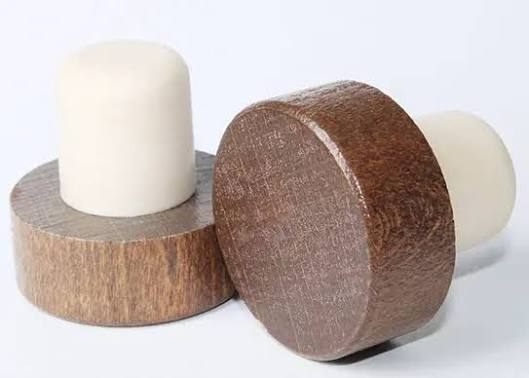
For a more detailed explanation of bore, shank, compression, insertion depth, and pull-out behavior, refer to this guide on how bar-top stoppers fit spirits bottle necks.
For continuous-thread and ROPP systems, verify the finish diameter, thread profile, sealing land, finish height, liner or sealing-plug contact, and tamper-evident geometry.
Why nominal dimensions are not enough
Nominal dimensions describe the design target. Tolerances describe what may arrive during production.
| Bottle condition | Closure condition | Possible result |
|---|---|---|
| Minimum bore | Maximum stopper shank | High insertion force, difficult opening, or excessive stress |
| Maximum bore | Minimum stopper shank | Low retention, movement, or leakage |
| Nominal bottle | Nominal closure | Acceptable fit, but not proof of production capability |
| Mixed production batches | Mixed dimensional variation | Inconsistent application and consumer experience |
The two most demanding combinations are usually:
- The smallest permitted bottle opening with the largest permitted closure dimension
- The largest permitted bottle opening with the smallest permitted closure dimension
For threaded closures, tolerance stacking may involve the bottle finish, cap shell, thread geometry, liner thickness, sealing land, and capping setup.
Is the “1 mm larger” rule sufficient for a bar-top stopper?
No.
A stopper shank slightly larger than the bottle opening may help identify an initial sample, but it is not a universal approval rule.
Performance also depends on:
- Shank material and hardness
- Compression and recovery
- Internal neck taper
- Insertion depth
- Surface treatment
- Storage conditions
- Desired pull-out force
- Bottle and stopper tolerances
Final closure dimensions should be determined through controlled measurement and testing.
3. Structure the Compatibility Review
A useful bottle-to-closure review should move from documented dimensions to physical validation.
Kandacork’s bottle-to-closure matching service considers the available bottle information, proposed closure structure, product requirements, decoration, quantity, and intended market before production samples are prepared.
A compatibility review may include:
- Reviewing the controlled bottle drawing and revision
- Comparing drawing dimensions with supplied bottle samples
- Checking the internal bore or finish at relevant sealing points
- Reviewing proposed shank, liner, plug, or cap dimensions
- Comparing alternative closure constructions where required
- Preparing production-representative samples
- Defining the tests needed before bulk production
The exact process should be adapted to the closure type and project risk.
A bar-top stopper may require bore, insertion, seating, pull-out, and resealing evaluation. A threaded or ROPP system may require finish, liner contact, application torque, opening torque, and tamper-evident assessment.
Specific test quantities, equipment, measurement intervals, and acceptance limits should be based on the actual project rather than presented as universal values.
4. Confirm Closure Construction and Product-Contact Materials
Once a proposed closure system has been selected, the compatibility review should focus on the components that influence sealing and repeatability.
| Closure system | Main compatibility variables |
|---|---|
| Bar-top stopper | Bore profile, shank compression, insertion depth, pull-out force |
| CT or ROPP closure | Finish geometry, liner or plug contact, application and opening torque |
| Inserted dispensing system | Insert retention, leakage, venting, and flow |
| Decorative stopper | Sealing insert, top weight, alignment, and attachment strength |
A closure may contain several materials, including:
- Stopper shank
- Visible top
- Liner or gasket
- Adhesive
- Coating or printing ink
- Pourer or valve
- Tamper-evident component
The material review should answer three questions:
- Is the component dimensionally consistent enough for the bottle tolerance range?
- Is it suitable for the intended spirit, market, and conditions of use?
- Will it maintain sealing and opening performance after conditioning and storage?
Natural cork, engineered cork, and synthetic shanks can provide different levels of compressibility, recovery, appearance, and dimensional repeatability. Material category alone does not confirm compatibility.
Review product-contact documentation
For EU projects, relevant materials should be assessed against applicable requirements under Regulation (EC) No 1935/2004, which establishes general safety and traceability principles for materials intended to contact food.
Request applicable:
- Material specifications
- Food-contact declarations
- Restricted-substance statements
- Migration or extraction information
- Organoleptic test information
- Batch traceability
- Market-specific compliance records
A general “food-grade” statement should not replace documentation relevant to the intended beverage, alcohol level, temperature, and contact duration.
5. Set Measurable Acceptance Criteria
Descriptions such as “fits well,” “feels tight,” or “opens normally” are not adequate production standards.
Define measurable or clearly observable requirements for the proposed closure.
| Closure system | Critical performance checks |
|---|---|
| Bar top | Insertion force, pull-out force, seating height, tilt, attachment strength |
| Continuous thread | Application torque, removal torque, liner contact, cross-threading |
| ROPP | Thread formation, sealing contact, bridge integrity, opening torque |
| Insert or pourer | Retention, leakage, venting, and flow |
| Decorative stopper | Sealing performance, alignment, and top stability |
Bar-top acceptance criteria
Depending on the project, the specification may define:
- Insertion behavior
- Pull-out force before and after conditioning
- Seating-height tolerance
- Permitted stopper tilt
- Top-to-shank attachment strength
- Resealing performance
Screw-closure acceptance criteria
The test plan may include:
- Application torque
- Immediate removal torque
- Removal torque after storage
- Thread engagement
- Liner compression
- Cap back-off
- Cross-threading
Recognized standards such as ASTM D2063/D2063M can support torque-retention test methods for continuous-thread container and closure systems. They do not provide one universal torque value for every bottle, cap, liner, and beverage.
Acceptance limits should be established using the actual bottle, closure, liquid, application equipment, and intended consumer experience.
6. Build a Representative Sample Set
Do not approve a package from one bottle and one handmade closure sample.
Where practical, the sample set should include:
- More than one bottle batch
- More than one closure production lot
- Different bottle molds or cavities
- Components near dimensional tolerance limits
- Production-equivalent shanks, liners, adhesives, and coatings
- Final decoration
- Capsules, sleeves, pourers, or inserts
At minimum, evaluate the smallest bottle opening with the largest closure and the largest bottle opening with the smallest closure.
Record:
- Bottle reference and batch
- Closure reference and lot
- Measured critical dimensions
- Conditioning period
- Test equipment or method
- Test result
- Approval status
A handmade prototype may demonstrate shape, color, or logo placement. It may not represent the final molding, assembly, bonding, lining, or decoration process and should not be used as the only functional approval sample.
7. Complete Package and Filling-Line Testing
A complete compatibility plan should progress from component inspection to filled-package and production validation.
| Test stage | What to verify |
|---|---|
| Dimensional inspection | Components match controlled drawings and tolerances |
| Dry fit | Seating, alignment, damage, opening, and resealing |
| Filled leakage | Leakage or mass loss under relevant conditions |
| Aging | Changes in materials, appearance, torque, or pull-out force |
| Distribution | Leakage, movement, damage, and carton performance |
| Line trial | Application consistency, rejects, speed, and equipment fit |
Dimensional and dry-fit inspection
Before filling, check:
- Bottle bore or finish dimensions
- Closure diameter and roundness
- Thread condition
- Liner placement
- Top alignment
- Decoration thickness
- Visible defects
Apply the closure to an empty bottle and review seating height, straightness, opening effort, resealing, and any visible damage.
Dry fitting is a screening step. It does not prove filled-package performance.
Filled-package leakage
Test the actual spirit or an approved representative formulation under conditions relevant to the project.
These may include:
- Upright storage
- Horizontal storage
- Temporary inversion
- Agitation
- Temperature conditioning
- Opening and resealing
Record visible leakage, wetting around the finish, mass loss, sticky residue, closure movement, cap back-off, or changes in opening force.
Aging and conditioning
Inspect conditioned packages for:
- Swelling or shrinkage
- Softening or cracking
- Adhesive failure
- Coating changes
- Odor or flavor effects
- Torque changes
- Pull-out-force changes
- Loss of resealing performance
The conditioning profile should reflect foreseeable filling, warehouse, transport, retail, and consumer conditions.
Transport and secondary packaging
Evaluate the closure as part of the finished package.
| Component | Compatibility check |
|---|---|
| Capsule or sleeve | Diameter, length, shrink behavior, tear position, opening access |
| Pourer or insert | Retention, flow, venting, dripping, leakage |
| Wax | Application temperature, adhesion, cracking, removal |
| Carton or gift box | Closure height, abrasion, divider clearance, top loading |
Heavy metal, ceramic, or glass closure tops may also affect attachment strength, handling, impact behavior, and carton performance.
For projects involving a newly developed bottle, coordinated engineering across the bottle neck, closure, decoration, and export pack can be managed through an integrated spirits packaging program.
Production-line trial
After laboratory screening, run production-equivalent components through the intended:
- Filler
- Stopper inserter or corker
- Screw capper
- ROPP head
- Closure feeder
- Conveyor
- Capsule or sleeve applicator
- Labeler
- Case packer
Measure:
- Application consistency
- Reject rate
- Line speed
- Closure orientation
- Seating variation
- Glass damage
- Operator intervention
- Finished appearance
A successful hand-fit test cannot confirm filling-line compatibility.
8. Review Supplier Capability and Approve Production
A successful sample is valuable only when the supplier can reproduce it consistently.
Review whether the supplier can provide:
- Controlled drawings
- Critical dimensions and tolerances
- Material specifications
- Bottle-neck matching support
- Inspection methods
- Batch traceability
- Retention samples
- Corrective-action support
- Change-notification procedures
- Adequate production capacity
Ask how the supplier controls:
- Incoming materials
- Critical dimensions
- Shank, cap, liner, or insert production
- Top-to-shank assembly
- Adhesive or bonding processes
- Liner placement
- Decoration
- Final inspection
- Export packing
Commercial approval should also confirm:
- MOQ by shape, material, color, and decoration
- Tooling ownership and maintenance
- Sample lead time
- Initial and repeat-order lead time
- Production capacity
- Packing method
- Defect and replacement procedures
The lowest unit price may not provide the lowest packaging cost if dimensional variation causes sorting, leakage, line downtime, rework, or delayed launches.
Approve the final specification
The approved specification should identify:
- Bottle and closure item numbers
- Drawing revisions
- Material construction
- Critical dimensions and tolerances
- Color and finish
- Decoration
- Mechanical requirements
- Leakage requirements
- Packing method
- Approved application process
- Required compliance documents
Retain an approved golden sample showing the accepted appearance, color, decoration, seating height, opening feel, and overall fit.
A golden sample supports the technical specification but does not replace it. Physical samples can age, fade, become damaged, or fail to represent the full dimensional tolerance.
Require written review before changes to:
- Raw materials
- Shank or liner formulation
- Adhesives
- Tooling
- Critical dimensions
- Production location
- Subcontractors
- Coatings
- Decoration processes
Common Closure Compatibility Failures
| Failure | Likely causes | What to verify |
|---|---|---|
| Stopper is too loose | Large bore, small shank, insufficient recovery | Bore range, shank tolerance, material behavior |
| Stopper is too tight | Small bore, oversized shank, internal restriction | Bore profile, insertion depth, maximum shank size |
| Stopper sits unevenly | Neck ovality, poor insertion alignment, top imbalance | Bottle variation, equipment setup, concentricity |
| Bottle leaks during transport | Inadequate sealing pressure, cap back-off, liner problem | Leakage results, torque retention, sealing contact |
| Cap cross-threads | Finish mismatch, damaged threads, poor alignment | Finish drawing, thread profile, capper setup |
| Opening force changes after storage | Material swelling, compression change, torque loss or gain | Conditioned samples, material compatibility, temperature |
Troubleshooting should begin with controlled measurements, component batch records, and test conditions rather than immediately changing the closure design.
What Should You Send for a Compatibility Review?
A complete technical package helps the closure supplier recommend relevant samples and avoid quoting an unsuitable construction.
Provide:
- Controlled bottle drawing
- Physical empty bottle samples
- Spirit type and ABV
- Target market
- Proposed closure type
- Preferred materials
- Decoration requirements
- Filling and closure-application equipment
- Initial and annual quantities
- Target delivery or launch date
A quotation based only on a bottle photograph or nominal neck size may not reflect the correct closure dimensions, materials, tooling, or production method.
Frequently Asked Questions
Is nominal neck diameter enough to approve a closure?
No. Compatibility also depends on minimum and maximum dimensions, internal neck profile, closure tolerances, sealing material, insertion depth, product exposure, and application equipment.
Is the “1 mm larger” rule enough for a bar-top stopper?
No. It can support preliminary sample selection, but it does not account for material hardness, compression recovery, neck taper, insertion depth, dimensional variation, or required pull-out force.
Should compatibility testing use water or the actual spirit?
Water can support early leakage screening. Final approval should use the actual product or a technically justified representative formulation because alcohol, sugar, botanical oils, flavors, and colors may affect materials differently.
Can bottles and closures come from different suppliers?
Yes. The buyer should obtain controlled drawings from both suppliers, manage revisions, test the complete bottle-and-closure system, and define responsibility for final compatibility approval.
When should the filling-line trial take place?
After dimensional, material, fit, and leakage screening but before mass-production approval or a large closure order.