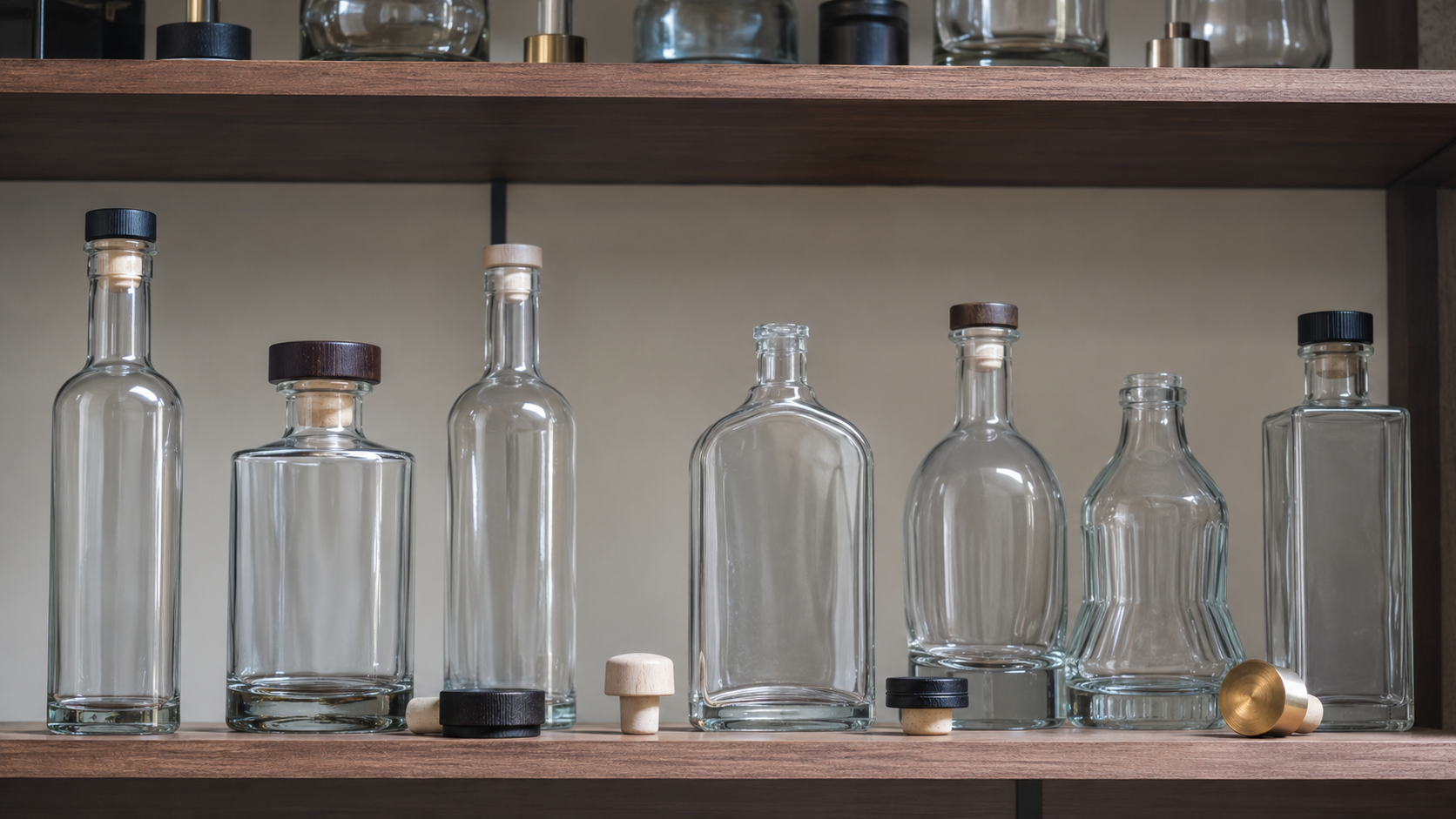
Premium spirits closures need to deliver both visual value and stable production performance. This checklist helps brands define closure material, weight, finish, neck fit, logo method, sealing requirements, inspection points and export packing before bulk production.
What Buyers Should Expect from a Premium Spirits Closure Supplier
A reliable spirits closure supplier should help with both design and technical confirmation. A closure may look attractive in a rendering, but it still needs to fit the bottle neck, seal correctly, work with the filling line, survive export shipping, and meet market expectations for tamper evidence and material safety.
For B2B buyers, the most important supplier capabilities usually include:
| Buyer Need | What the Supplier Should Support |
|---|---|
| Bottle compatibility | Neck finish review, bore diameter confirmation, shank sizing, cap dimension matching |
| Closure selection | Bar-top stoppers, ROPP caps, screw caps, capsules, shrink sleeves, non-refillable options |
| Brand customization | Logo engraving, embossing, debossing, printing, hot stamping, color matching, special finishes |
| Technical testing | Insertion feel, extraction force, torque, leakage review, liner compatibility, packing checks |
| Bulk supply | MOQ planning, sample approval, mass production, QC inspection, export packing |
| Project communication | Clear quotation details, sample timeline, production schedule, and practical feedback |
If you are already preparing a bottle drawing, logo file, target quantity, and preferred closure style, you can request a custom closure quote and share the basic project details for review.
Main Closure Types for Premium Spirits
Premium spirits brands usually choose from several closure structures. The best option depends on the product category, bottle neck finish, target price point, filling line, and desired consumer experience.
| Closure Type | Best For | Main Advantage | Buyer Consideration |
|---|---|---|---|
| Bar-top / T-top stopper | Whisky, rum, tequila, gin, brandy, premium liqueurs | Strong tactile experience and high customization value | Confirm bore diameter, shank size, insertion depth, and extraction force |
| ROPP cap | Vodka, gin, liqueurs, miniature spirits, high-volume lines | Tamper evidence and efficient production | Confirm cap diameter, liner, skirt height, thread profile, and torque |
| Screw cap | Vodka, flavored spirits, RTD spirits, modern spirits brands | Convenient resealing and clean appearance | Decoration and liner selection affect premium perception |
| Non-refillable closure | Premium export spirits, anti-counterfeit programs | Added brand protection and anti-refill function | Requires careful neck compatibility and functional testing |
| Capsule / shrink sleeve | Neck decoration and tamper indication | Completes the package and improves shelf appearance | Usually works with another primary closure |
For high-volume lines, custom ROPP closures can provide a practical balance of tamper evidence, production efficiency, and brand decoration. For luxury and limited-edition products, a bar-top stopper often gives the bottle a heavier and more memorable opening ritual.
Bar-Top Stoppers for Whisky, Rum, Gin, and Tequila
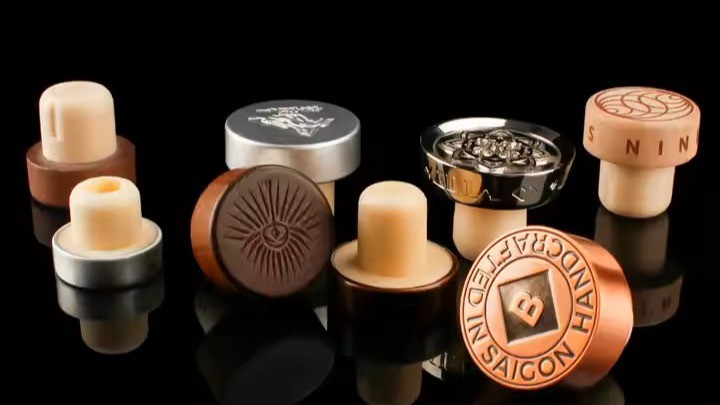
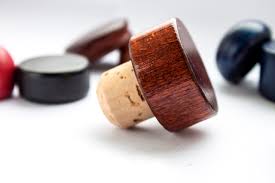
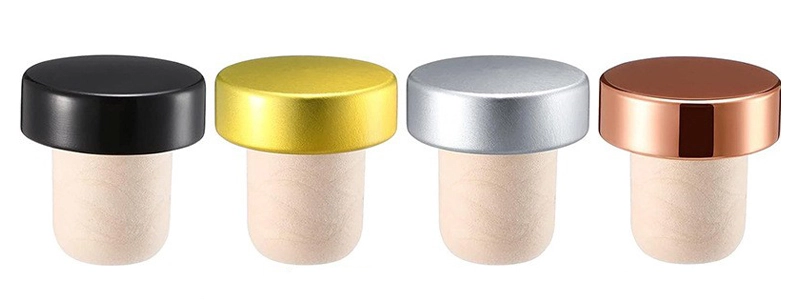
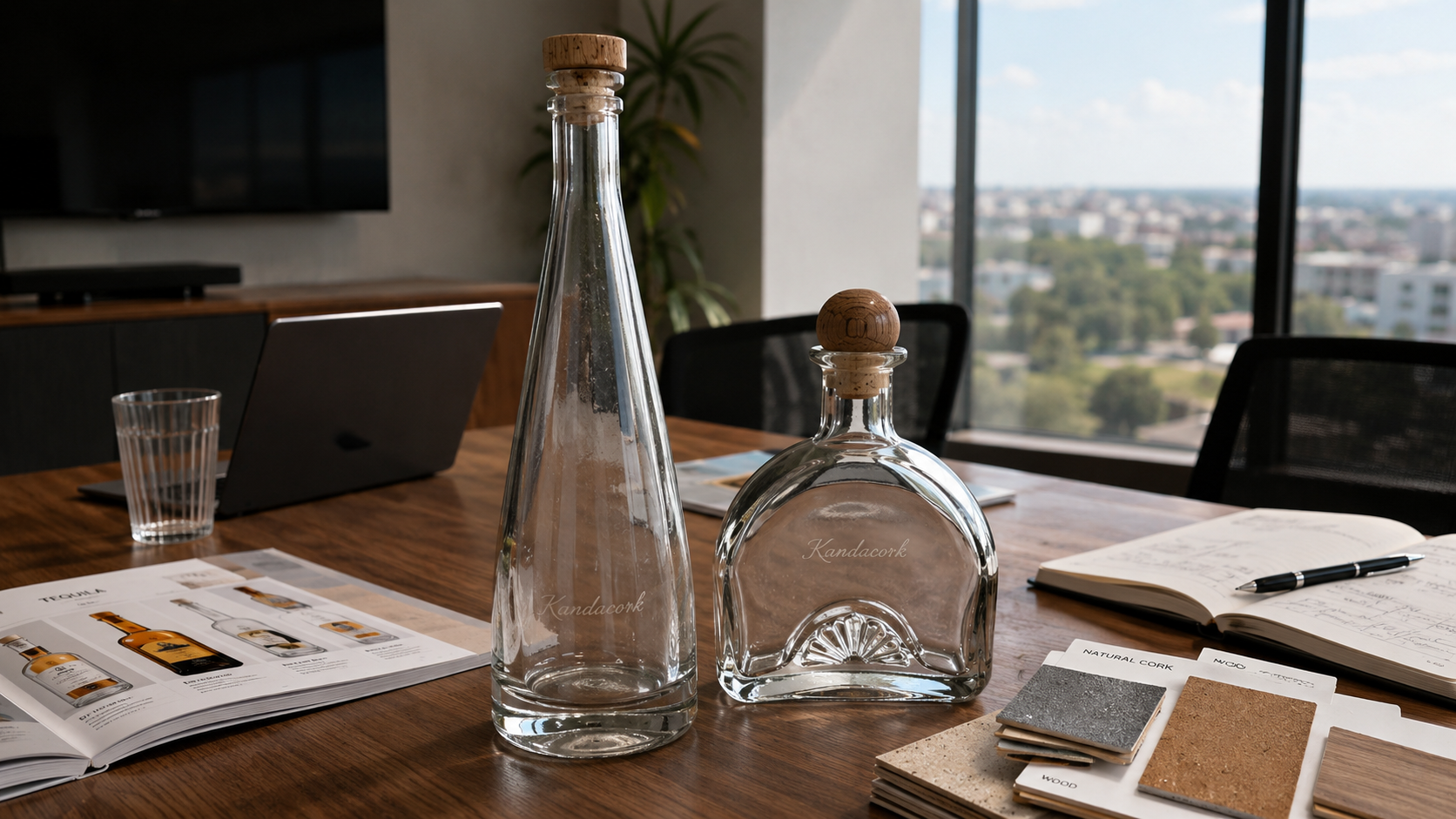
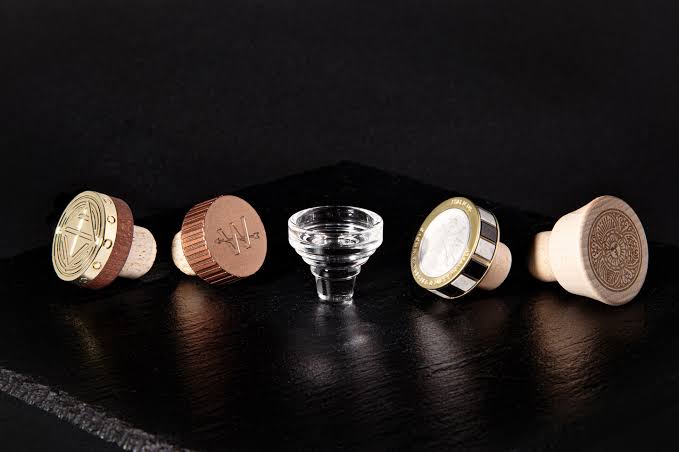
Bar-top stoppers are widely used in premium spirits because they combine sealing function with brand expression. A stopper usually includes a decorative top and a cork, micro-agglomerated cork, synthetic cork, or polymer shank. The top may be made from wood, aluminum, zamac, glass, ceramic, plastic, or mixed materials.
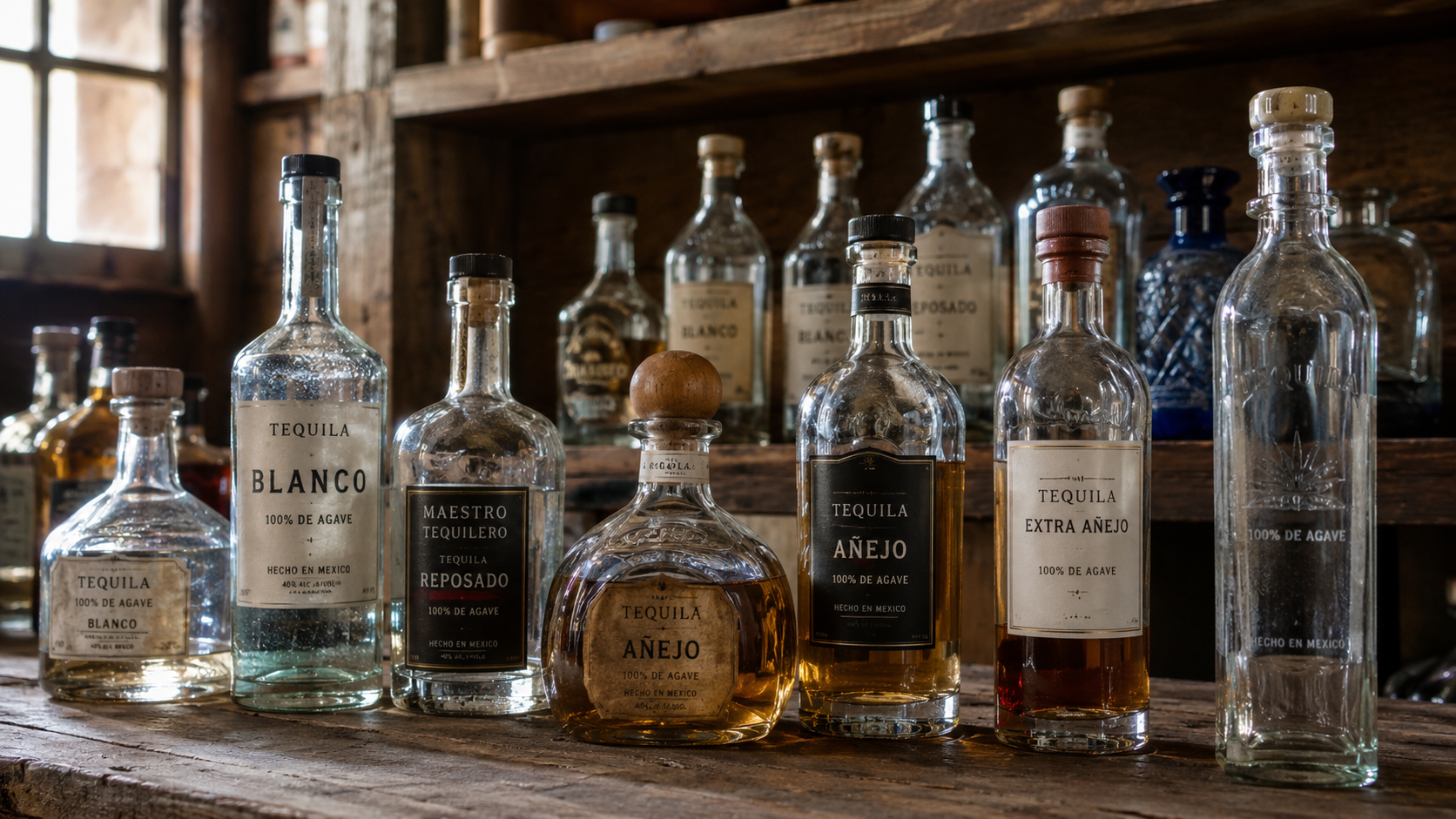
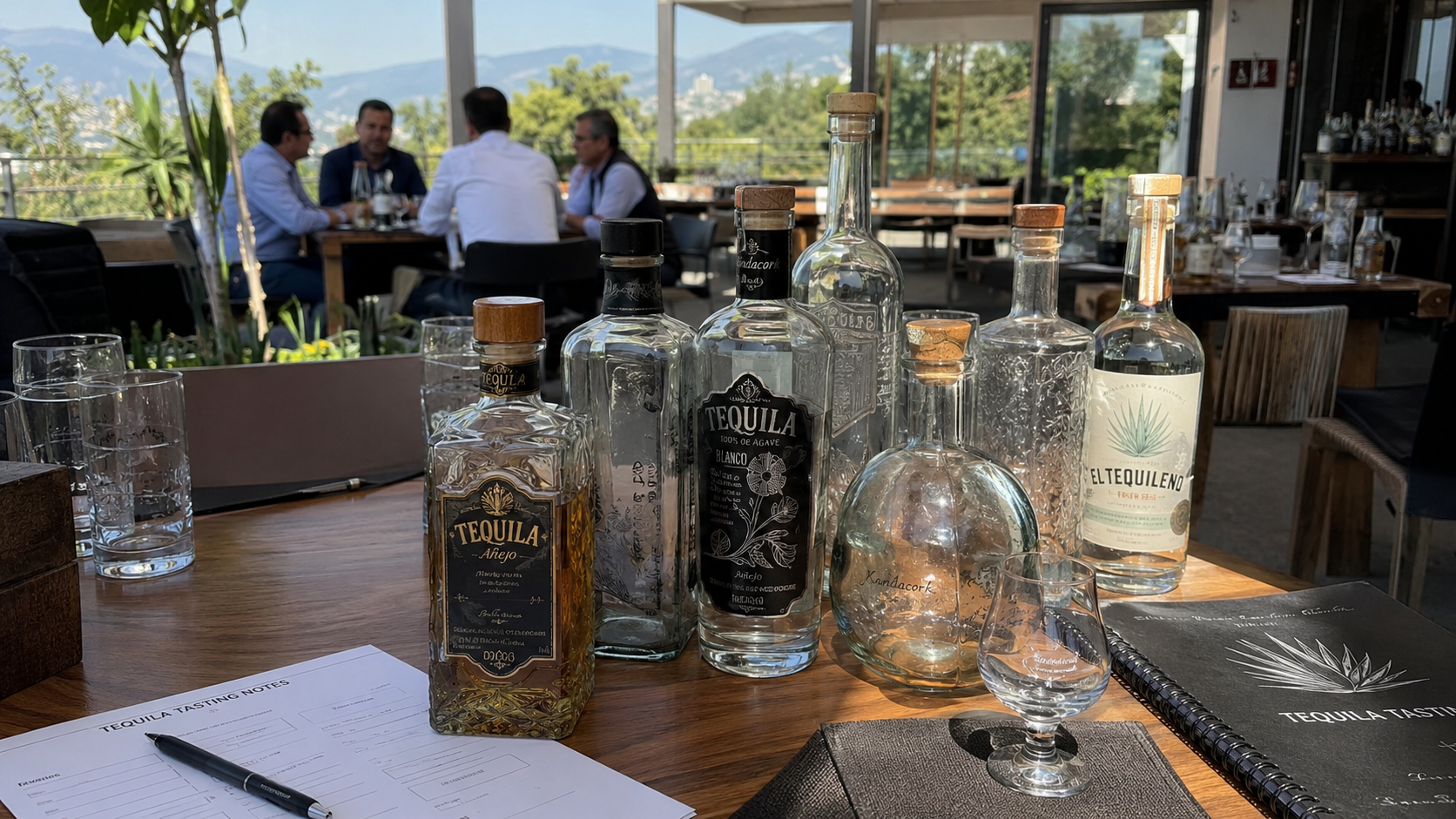
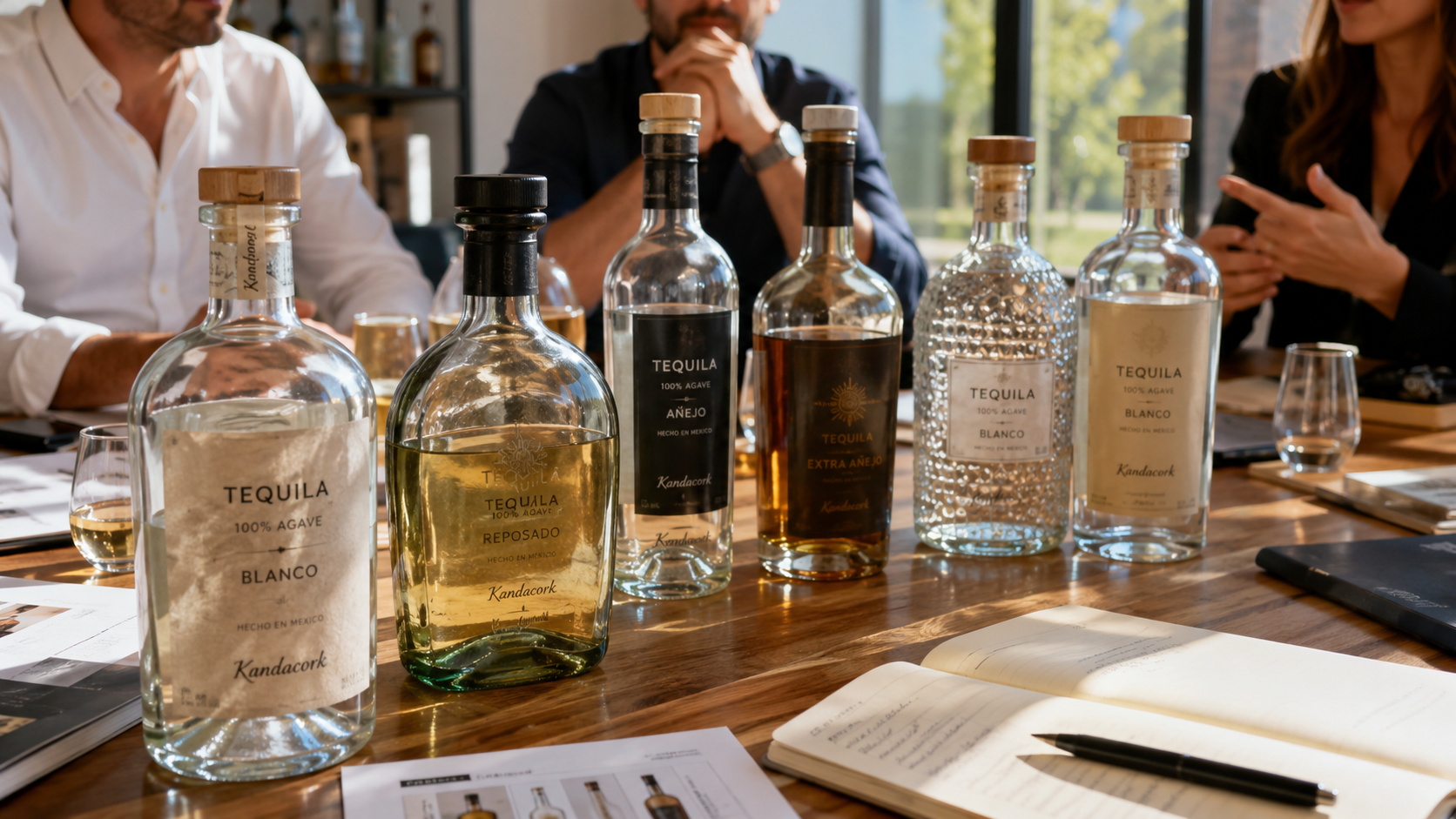
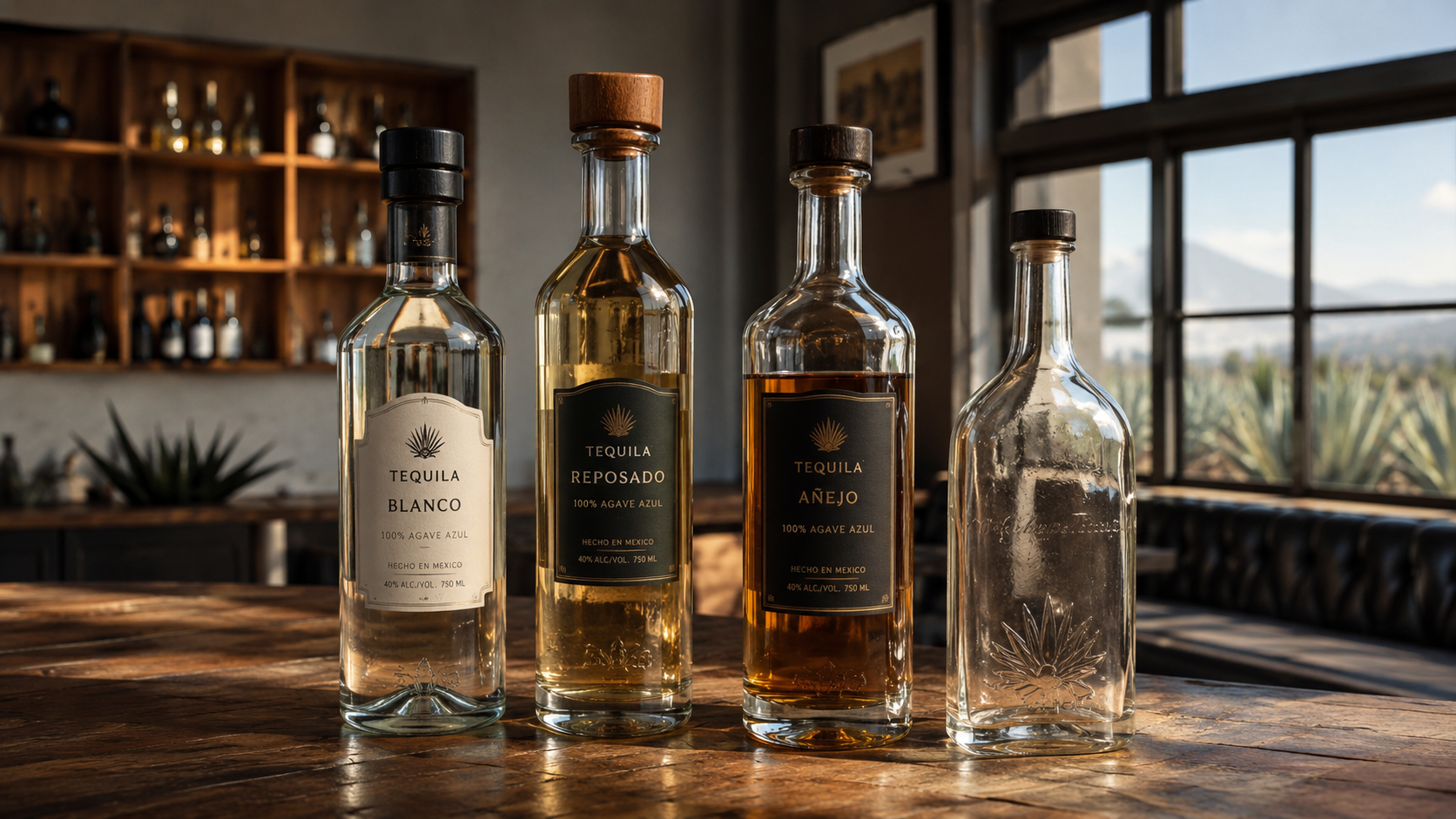
A whisky brand may choose a dark wood or metal top to communicate maturity and craftsmanship. A gin brand may use bright color matching or a sculpted stopper to suggest botanical character. A rum brand may prefer warm wood tones or copper-style finishes. A tequila or mezcal brand may choose a heavy custom top to support a bold, artisanal, or luxury identity.
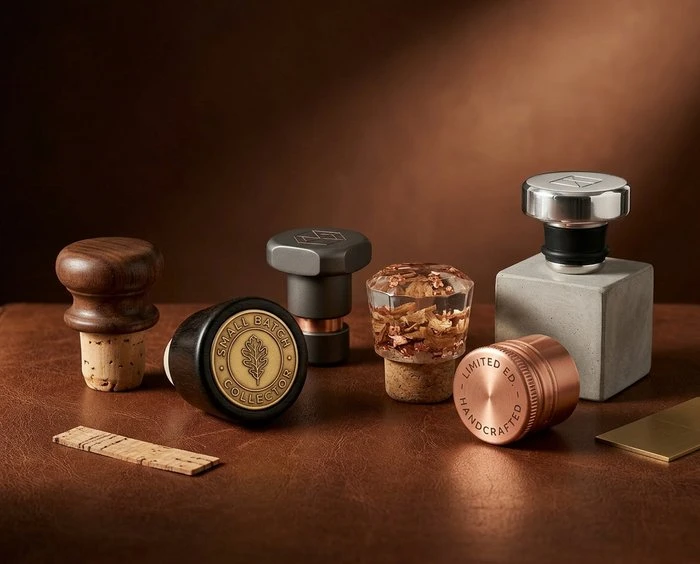
For premium-weight projects, custom metal stoppers can add a luxury feel through brushed, plated, matte, antique, or high-gloss finishes. The key is to balance appearance with real bottle performance: the shank must compress correctly, the top must remain secure, and the stopper must feel smooth when opened and resealed.
ROPP Caps, Screw Caps, and Non-Refillable Systems
ROPP means Roll-On Pilfer-Proof. These aluminum caps are formed onto the bottle neck during capping and commonly include a pilfer band that breaks when opened. ROPP caps are common in spirits packaging because they support speed, repeatability, tamper evidence, and cost control.
Screw caps are also useful when resealing convenience and clean presentation matter. With the right liner, finish, and decoration, an aluminum screw cap can feel modern and premium rather than basic. Capsules and shrink sleeves can be added to improve neck presentation or provide a more complete tamper-evident system.
For markets where refill fraud or counterfeiting is a concern, non-refillable closures can support brand protection. These systems may include valve or pourer structures, tamper-evident components, or internal anti-refill features. They are often considered for premium whisky, tequila, rum, vodka, cognac, brandy, and export-focused spirits.
In the United States, the Alcohol and Tobacco Tax and Trade Bureau explains that distilled spirits bottles generally require a securely affixed tamper-evident closure or similar device that breaks when the container is opened, leaving part of the closure on the container. This makes TTB distilled spirits closure requirements an important reference point for brands selling into the U.S. market.
How to Match a Closure to the Bottle and Filling Line
The closure should be selected after the bottle neck finish and production method are understood. For bar-top stoppers, the most important details are bore diameter, shank diameter, insertion depth, compression recovery, extraction force, and the bond between the top and shank. For ROPP and screw caps, the important details include cap diameter, cap height, thread profile, liner type, application torque, removal torque, and tamper-band performance.
A good sample approval process should include both visual and functional checks. Buyers should test the closure on the actual production bottle rather than relying only on drawings, photos, or general sample references. If the project will use an automatic filling line, samples should also be tested with real line conditions before mass production.
International standards are useful because they show the types of performance areas serious suppliers and quality teams consider. For example, ISO references for cork stoppers include physical test areas such as dimensions, extraction force, and liquid tightness, which makes the ISO cork stopper testing framework relevant when discussing measurable closure performance.
Custom Branding and Premium Presentation
A closure is one of the smallest parts of the bottle, but it can be one of the most touched and remembered. Consumers feel the top, twist or pull it open, and often use it again when resealing the bottle. This makes closure design especially important for premium and gift-oriented spirits.
Common decoration options include:
| Decoration Method | Suitable Closure Materials | Brand Use |
|---|---|---|
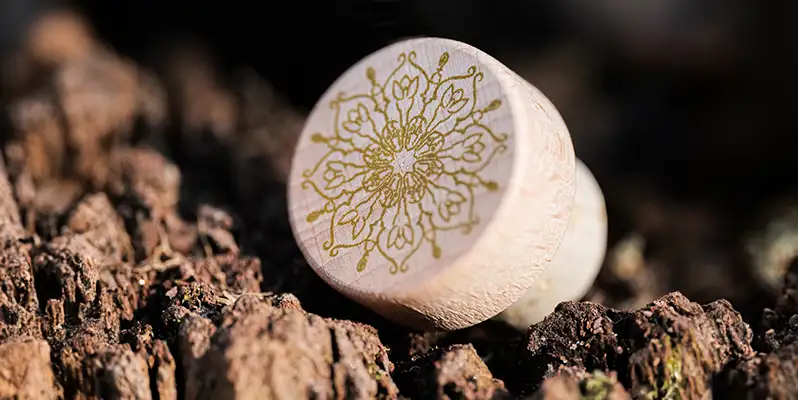
| Laser engraving | Wood, metal, glass | Heritage marks, batch numbers, limited editions |
| Embossing / debossing | Aluminum, zamac, plastic | Raised or recessed logos and crests |
| Hot stamping | Wood, plastic, coated metal | Metallic logo effects and premium highlights |
| Top printing | Aluminum, plastic, glass, coated wood | Color logos, symbols, and product identity |
| Sidewall design | ROPP caps, screw caps, plastic tops | Grip, texture, wraparound branding, opening comfort |
| Custom molds | Zamac, plastic, glass, composite materials | Unique luxury stopper shapes |
Kandacork supports custom branding for spirits closures when buyers need color matching, surface decoration, logo placement, top-surface design, sidewall texture, or a more coordinated bottle-and-closure system. For projects where closure graphics must align with labels, cartons, foils, and neck decoration, related decoration and branding support can also help create a consistent visual language across the full package.
Food-Contact and Market Compliance Considerations
Closure materials may directly or indirectly contact the beverage, so food-contact suitability should be considered early. This is especially important for shanks, liners, coatings, inks, adhesives, and any component that may interact with the liquid, vapor, or bottle opening.
The U.S. FDA explains that food-contact substances include packaging and its components when they come into contact with food and are not intended to have a technical effect in the food. Buyers selling into the U.S. should review FDA food-contact substance information with their compliance team when selecting liners, plastics, coatings, adhesives, and related closure materials.
For the European Union, Regulation (EC) No. 1935/2004 sets the general framework for food contact materials. The European Commission food contact materials framework explains the principles of safety and inertness for materials intended to come into contact with food.
Compliance needs can vary by destination market, material, closure structure, and final use. A serious supplier should be able to discuss material declarations, specifications, batch traceability, test reports where applicable, and documentation support for importers or brand owners.
Quality Control for Custom Spirits Closures
Quality control should cover appearance, dimensions, assembly, function, decoration, and packing. A closure defect may seem small, but it can affect shelf presentation, consumer confidence, and logistics performance.
| QC Area | What to Check | Why It Matters |
|---|---|---|
| Dimensions | Cap diameter, height, shank diameter, insertion depth | Ensures fit and stable production |
| Appearance | Color consistency, scratches, dust, stains, surface defects | Protects premium shelf presentation |
| Assembly | Top-shank alignment, bonding strength, glue control | Prevents loose tops and poor opening feel |
| Sealing | Liner contact, stopper compression, leakage resistance | Reduces product loss and complaints |
| Decoration | Logo position, print clarity, embossing quality, foil accuracy | Maintains brand consistency |
| Torque / extraction | Application torque, removal torque, pull force | Supports usability and line performance |
| Packing | Carton strength, dividers, pallet condition, shipping marks | Protects closures during export shipping |
For custom molded stoppers, metal tops, glass tops, and non-refillable systems, buyers should approve both the aesthetic sample and the functional sample. If a closure will be used across multiple bottle sizes or markets, each key bottle format should be checked before bulk production.
Sample Approval and Development Workflow
A clear development workflow helps reduce delays and misunderstandings. Before mass production, the buyer and supplier should agree on material, finish, color, logo placement, dimensions, packing, and QC expectations.
| Stage | Buyer Action | Supplier Action |
|---|---|---|
| Project brief | Send bottle drawing, target quantity, spirit type, and brand concept | Review feasibility and recommend closure direction |
| Design confirmation | Approve material, finish, color, logo position, and structure | Prepare technical proposal or sample plan |
| Prototype sampling | Test closure on the actual bottle | Provide physical samples for visual and fit review |
| Functional testing | Check insertion, extraction, torque, leakage, and line compatibility | Adjust dimensions or structure if needed |
| Pre-production approval | Confirm final sample, packing method, and purchase order | Freeze specifications and QC plan |
| Bulk production | Monitor schedule and confirm shipping needs | Produce, inspect, pack, and prepare export documents |
This workflow is especially important for luxury tequila closures, custom whisky bottle stoppers, private-label spirits programs, and launch projects where packaging must be approved by multiple teams.
Building a Complete Bottle Packaging System
A premium closure works best when it is developed as part of the full bottle package. Bottle shape, glass weight, label size, neck finish, capsule design, carton structure, and closure material should all support the same brand story.
If a project is still at the bottle-development stage, related spirits bottle development can help buyers think about glass form, neck finish, closure compatibility, and category positioning together. For brands that need broader glass packaging support, Kandacork Glass provides a useful reference point for custom glass bottle projects, while Kandacork Eco Glass may support packaging concepts where recyclability, lighter-weight structures, or more responsible material choices are part of the brief.
Sustainability should not be treated as a slogan. Closure and packaging decisions can affect transport weight, material separation, recyclability, reusability, and secondary packaging volume. The World Packaging Organisation highlights circular design thinking as part of a more consistent global approach to packaging, which makes sustainable packaging design guidance useful when teams are evaluating materials, formats, and logistics impact.
MOQ, Lead Time, Packing, and Export Planning
MOQ depends on closure type, material, decoration method, and whether new tooling is required. Standard caps and existing stopper designs usually have lower MOQs than fully custom molded closures. Custom metal, glass, ceramic, and non-refillable structures may require higher production quantities because tooling, finishing, assembly, and testing are more complex.
Lead time depends on the same factors. A simple decorated ROPP cap may move faster than a custom zamac stopper with a molded crest and special plating. For launch projects, buyers should allow time for artwork review, sampling, fit testing, line trials, production, inspection, packing, shipping, and possible customs documentation.
Export packing is also part of closure quality. Premium finishes can be scratched, dented, or contaminated if the packing method is not suitable. Depending on the closure type, Kandacork can use cartons, protective bags, trays, dividers, pallet packing, and shipping marks to reduce handling risk during international transport.
Why Choose Kandacork Closures
Kandacork helps spirits brands, bottlers, importers, and packaging partners develop closures that combine appearance, fit, and production practicality. The goal is not only to make the closure look premium, but also to make sure it can be sampled, tested, approved, produced, inspected, packed, and delivered for real commercial use.
Buyers choose Kandacork for:
- Custom closure development for premium and mid-premium spirits
- Bar-top stoppers, ROPP caps, screw caps, capsules, shrink sleeves, and non-refillable options
- Wood, aluminum, zamac, glass, plastic, cork, synthetic cork, and micro-agglomerated cork materials
- Logo engraving, embossing, printing, hot stamping, color matching, and special finishes
- Bottle neck matching and functional sample review before bulk production
- OEM/ODM support for brand-specific closure concepts
- Bulk supply for distilleries, spirits brands, importers, distributors, and packaging companies
- Export-ready packing for international shipment
What to Send for an Accurate Quotation
To receive a practical quotation, prepare the most important project details before contacting the supplier:
- Bottle drawing or physical bottle sample
- Bottle neck finish, bore diameter, and thread details
- Spirit category and alcohol percentage
- Target market and compliance expectations
- Preferred closure type and material
- Logo artwork or brand guideline
- Decoration method and finish direction
- Estimated order quantity
- Sample needs and launch timeline
- Packing and shipping requirements
The more complete the information, the faster the supplier can recommend suitable closure structures, estimate cost, prepare samples, and confirm production feasibility.
Frequently Asked Questions
What does a premium spirits closure supplier do?
A premium spirits closure supplier designs and manufactures bottle closure solutions for spirits brands, including bar-top stoppers, T-top corks, ROPP caps, screw caps, capsules, shrink sleeves, and non-refillable closures. The supplier helps with material selection, bottle matching, decoration, sampling, quality control, and bulk production.
What is the best closure for premium whisky?
Premium whisky often uses a wood-top, aluminum-top, zamac-top, or glass-top bar stopper with a natural cork, micro-agglomerated cork, or synthetic shank. The best choice depends on the bottle neck, brand image, retail price, filling process, and target market.
Are ROPP caps suitable for premium spirits?
Yes. ROPP caps can be suitable for premium spirits when they are well designed and decorated. They are especially useful for tamper evidence, efficient production, consistent sealing, and custom branding on vodka, gin, liqueurs, and high-volume spirits lines.
Can Kandacork customize closures with a logo?
Yes. Customization can include engraving, embossing, debossing, printing, hot stamping, color matching, special surface finishes, and custom mold development depending on the material, structure, order quantity, and decoration method.
How do I know if a stopper fits my bottle?
The supplier should review the bottle drawing, bore diameter, insertion depth, shank diameter, and closure structure. Physical samples should be tested on the actual bottle before bulk production, and filling-line testing is recommended for commercial programs.
What is the MOQ for custom spirits closures?
MOQ depends on closure type, material, decoration process, and whether tooling is required. Standard closures usually have a lower MOQ, while custom molded stoppers, special finishes, and non-refillable systems may require higher quantities.
Are non-refillable closures necessary for premium spirits?
They are not necessary for every spirits brand, but they are useful when anti-refill protection, tamper evidence, and brand security are priorities. They are often considered for premium whisky, tequila, rum, vodka, cognac, brandy, and export-focused spirits.
What information should I send before requesting samples?
Send the bottle drawing, closure type, target material, logo artwork, preferred decoration method, order quantity, target market, and shipping requirements. If available, also send a physical bottle sample so fit and sealing can be checked more accurately.