Quick Answer: What Are Bar-Top Stopper Components?
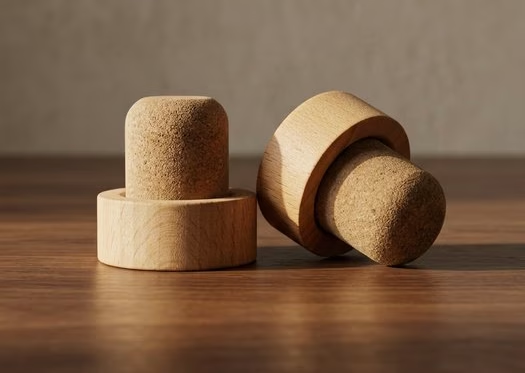
Bar-top stopper components usually include a visible head, an inserted shank, a head-to-shank bonding area, surface finish, logo decoration, and optional capsule or tamper-evident compatibility.
The head creates grip, visual identity, and premium shelf appeal. The shank fits inside the bottle neck and creates the resealable friction seal. The bonding area keeps the head and shank connected during filling, transport, opening, and repeated use.
For spirits packaging buyers, these parts should be evaluated as one complete closure system because each component affects fit, sealing, appearance, compliance, and production reliability.
Why Bar-Top Stopper Components Matter in Spirits Packaging
For spirits brands, distilleries, private label buyers, importers, distributors, bottlers, and packaging procurement teams, a bar-top stopper directly affects bottle compatibility, sealing performance, consumer opening feel, filling-line handling, export safety, and brand presentation.
A well-designed stopper can make a whisky, rum, gin, vodka, tequila, brandy, or liqueur bottle feel premium and reliable. A poorly matched stopper can cause leakage, loose fit, difficult opening, capsule interference, head detachment, or inconsistent presentation across a production batch.
This guide explains the main bar-top stopper components, how each part works, what buyers should check before ordering, and how to prepare for sample or quotation discussions around custom bar-top stoppers.
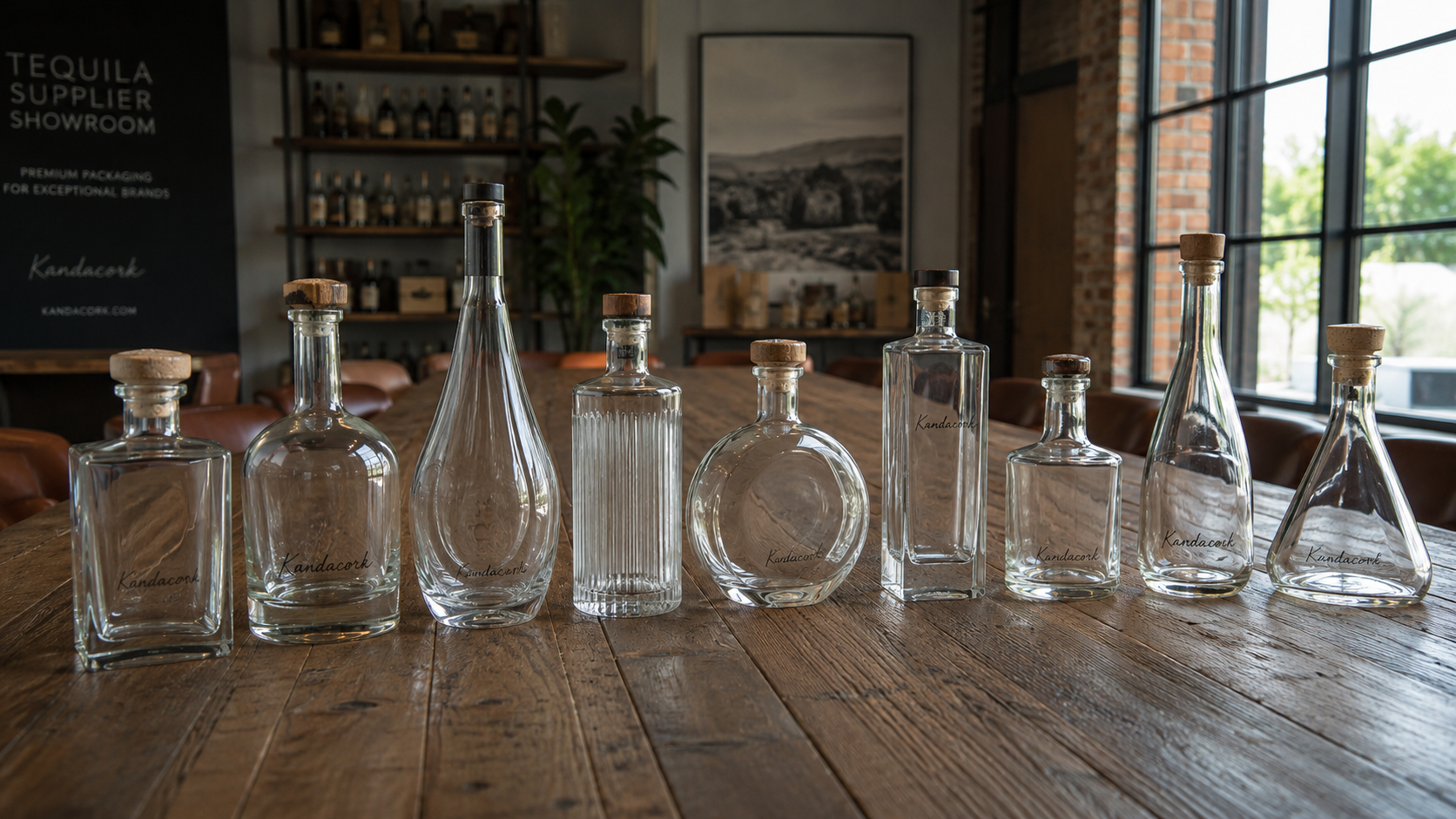
A bar-top stopper may also be called a bar-top closure, T-top cork, T-cork, capped cork, liquor bottle stopper, or spirits bottle stopper. In sourcing conversations, these terms often describe the same basic structure: a wider top head attached to an inserted cork, synthetic cork, or engineered shank. Buyers should always confirm the actual dimensions, materials, and bottle-neck fit instead of relying only on the product name.
Bar-Top Stopper Component Diagram
A useful bar-top stopper component diagram should show how the closure works from top to bottom: top head, top surface, side finish, bonding interface, inserted shank, bottle neck contact zone, and capsule clearance area.
| Component | Main Function | Buyer Risk |
|---|---|---|
| Head / cap | Grip, opening feel, shelf presentation | Wrong material weakens brand value |
| Shank / cork / leg | Sealing and resealing inside the neck | Wrong size causes leakage or difficult opening |
| Bonding interface | Connects head and shank | Weak bonding may cause head detachment |
| Surface finish | Color, texture, coating, hand feel | Scratches or color variation reduce quality perception |
| Logo decoration | Brand identity and recognition | Poor adhesion or unclear artwork affects shelf impact |
| Capsule clearance | Allows sleeve or tamper-evident application | Interference can affect final packaging appearance |
Recommended image title: Bar-Top Stopper Components Diagram
Recommended image file name: bar-top-stopper-components-diagram.webp
Recommended image alt text: bar-top stopper components diagram showing head shank bonding interface and spirits bottle neck fit
Recommended image caption: Main components of a bar-top stopper, including the head, shank, bonding interface, surface finish, logo area, and bottle neck contact zone.
This image should label the head, top surface, side finish, bonding interface, shank, bottle neck contact zone, and capsule clearance area. It supports user understanding, image SEO, and answer-engine interpretation.
Component 1: Stopper Head
The stopper head is the visible top part of the closure. It is the part consumers touch when opening and resealing the bottle, so it affects both brand image and user experience.
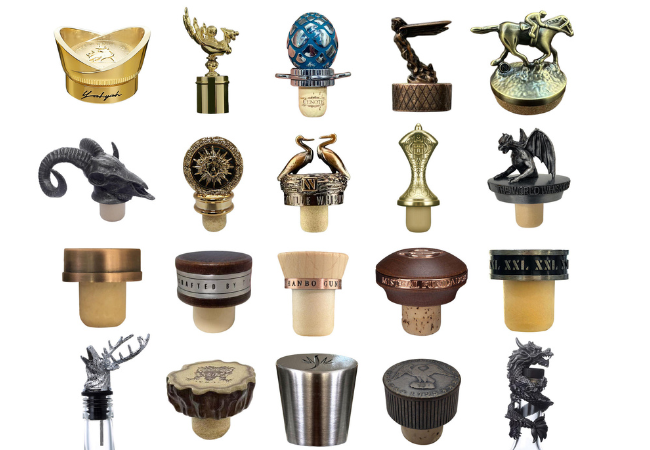
For premium spirits, the head can influence perceived value as much as the bottle shape, label, or carton. A heavy metal head can suggest luxury. A stained wooden head can support a craft or heritage story. A color-matched plastic head can work well for scalable private label programs.
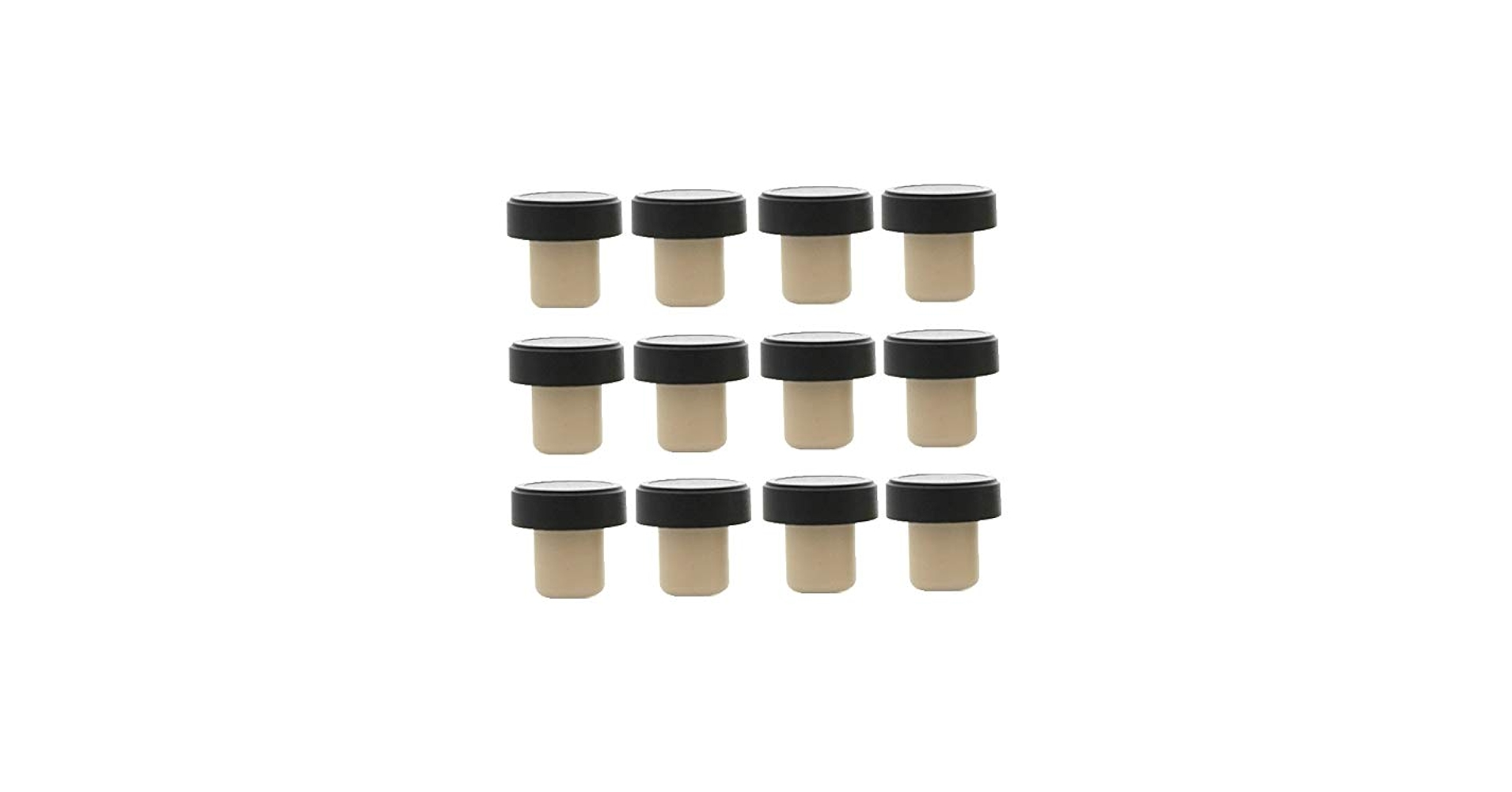
Common stopper head materials include wood, plastic, aluminum, zamac, glass, crystal, ceramic, and composite materials.
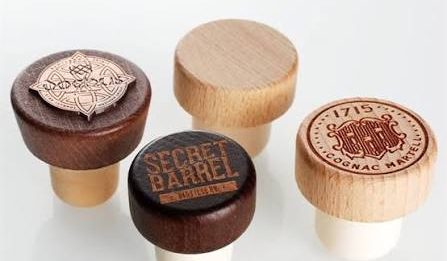
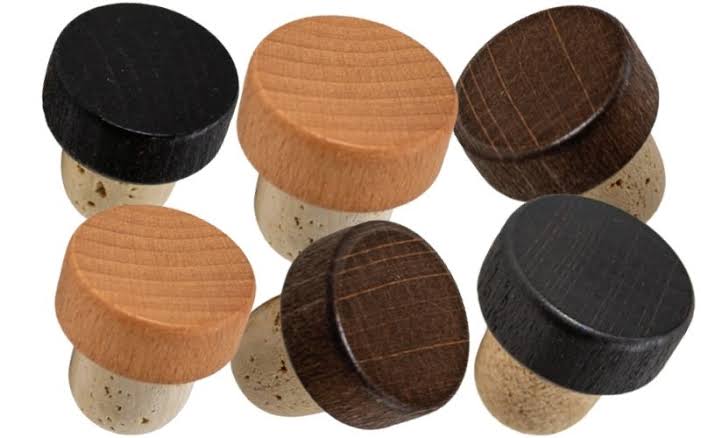
Wood is often used for whisky, rum, brandy, and craft spirits. It offers warmth and a natural appearance, but buyers should check finish consistency, moisture control, and color variation.
Plastic or PP is suitable for private label spirits, mini bottles, promotional products, and high-volume programs. It offers strong repeatability and flexible color matching, although it may not create the same luxury impression as wood or metal.
Aluminum is often selected for modern gin, vodka, tequila, and clean premium packaging. It provides a metallic appearance and can support brushed, anodized, or color-matched finishes.
Zamac or zinc alloy is used for luxury spirits, collectible bottles, sculpted tops, and gift packaging. It creates weight and presence, but it requires careful cost control, bonding strength, and export packing.
Glass or crystal heads can create a decorative high-end appearance. They are suitable for special releases, but buyers should pay attention to breakage risk and protective packing.
For buyers comparing wood bar-top stoppers, plastic bar-top stoppers, aluminum-head stoppers, or zamac-head stoppers, the best head material depends on brand position, bottle weight, target price, decoration method, order quantity, and shipping route.
Component 2: Shank, Cork, or Leg
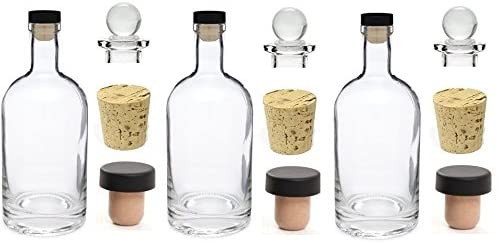
The shank is the inserted part of the stopper. It may also be called the cork, leg, plug, stem, or insert.
Among all bar-top stopper components, the shank is the most important for sealing performance. It fits into the bottle neck and creates compression. It affects insertion force, pull-out force, leakage resistance, opening feel, and repeated resealing.
If the shank is too small, the stopper may feel loose or leak during transport. If it is too large, it may be difficult to insert or remove. If the material is inconsistent, one bottle batch may perform well while another batch creates complaints.
Common shank materials include natural cork, agglomerated cork, micro-agglomerated cork, synthetic cork, TPE, and other engineered polymers.
Natural cork supports a traditional and premium appearance. It is suitable for brands that want a heritage or sustainability-oriented message, but buyers should confirm odor neutrality, diameter consistency, density, and visual grade.
Agglomerated cork offers a cork appearance with controlled cost and improved consistency. Micro-agglomerated cork provides a finer and more uniform cork structure, making it useful for premium spirits that still require a natural cork look.
Synthetic cork and engineered polymer shanks are often selected for dimensional stability, scalable supply, and predictable compression. They are useful for private label projects, high-volume bottling, and programs where consistent bottle neck fit is critical.
Buyers comparing natural cork shank stoppers and synthetic shank stoppers should not select by material name alone. The right choice depends on neck dimensions, alcohol percentage, filling method, product positioning, target market, and actual test performance. Whisky buyers can also review this guide to custom bar top corks for whisky brands when comparing cork structure, visual quality, and closure performance.
Component 3: Head-to-Shank Bonding
The bonding interface connects the visible head to the inserted shank. It is one of the most important but often overlooked parts of a bar-top stopper.
If bonding fails, the consumer may pull off the head while the shank remains in the bottle neck. This creates a poor product experience and can damage brand trust.
Bonding methods may include adhesive bonding, mechanical insertion, press-fit assembly, co-molding, or custom structural design. The right method depends on the head material, shank material, head weight, and production process.
For heavy wood, glass, or zamac heads, bonding strength is especially important because more weight and torque are applied during opening and closing.
Before approving production, buyers should ask whether pull-out force, twisting force, repeated opening, shipping vibration, and temperature exposure have been considered. A reliable supplier should be able to explain how the head and shank are joined and how the structure is tested.
Component 4: Bottle Neck Fit and Shank Diameter
Bottle neck fit is one of the biggest sourcing risks in spirits packaging. A stopper can look correct but still fail if the shank does not match the bottle neck.
Important measurements include neck inner diameter, bore tolerance, shank diameter, shank length, insertion depth, head diameter, head height, and bottle finish type.
A common sourcing rule is that the shank is slightly larger than the bottle opening to create compression. However, this is only a starting point. The final size must be confirmed through real bottle samples and stopper testing.
| Bottle Neck Opening | Common Shank Diameter | Typical Use |
|---|---|---|
| 18.5 mm | Around 19.5 mm | Standard spirits bottles, gin, vodka, whisky |
| 21.5 mm | Around 22.5 mm | Larger premium spirits bottles |
| Custom bore | Custom shank | Molded bottles, luxury spirits, private label packaging |
Actual selection depends on glass tolerance, shank material, elasticity, compression behavior, insertion depth, leakage testing, and pull-out force.
Buyers should never approve bulk production based only on catalog size. The safest process is to send bottle drawings or physical bottles, request stopper samples, and test the full closure-bottle combination before mass production. If the bottle itself is still being selected, buyers can review the broader spirits bottle packaging project before finalizing closure dimensions.
Recommended image title: Shank Diameter and Bottle Neck Fit
Recommended image file name: bar-top-stopper-shank-diameter-neck-fit.webp
Recommended image alt text: shank diameter and spirits bottle neck fit for bar-top stoppers
Recommended image caption: Example of how a bar-top stopper shank fits into a spirits bottle neck and why physical testing is required before bulk production.
Surface Finish, Logo Decoration, and Brand Customization
Surface finish and logo decoration turn a functional closure into a brand asset. These details influence shelf impact, hand feel, premium perception, and product recognition after opening.
Common finish options include natural wood, stained wood, varnished wood, matte paint, glossy paint, brushed aluminum, anodized aluminum, antique plating, metallic coating, soft-touch finish, textured sides, and color-matched plastic.
Common decoration methods include laser engraving, pad printing, screen printing, embossing, debossing, hot stamping, molded logos, metal medallions, and color filling.
Laser engraving works well for wood and some metal surfaces. It creates a permanent premium effect but may not support full-color logos.
Pad printing and screen printing are suitable for simple logo marks, color branding, and scalable production. Buyers should check ink adhesion, color accuracy, and abrasion resistance.
Embossing and debossing create a tactile brand effect. They usually require tooling and work best with simplified logo shapes.
Metal medallions and custom inserts can create strong visual impact for premium whisky, tequila, rum, brandy, and limited-edition spirits.
For custom logo spirits closures, buyers should provide vector artwork, Pantone references, logo size, placement requirements, surface finish preference, and production quantity. If the logo is too detailed, Kandacork Closures may recommend simplifying the artwork or choosing another decoration method.
Capsule, Sleeve, and Tamper-Evident Compatibility
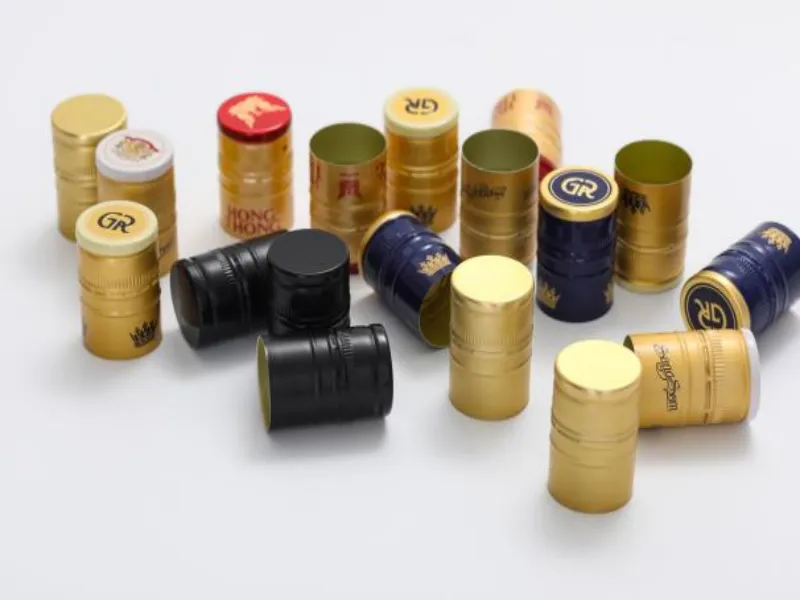
A bar-top stopper must work with the full packaging system, including the bottle, capsule, shrink sleeve, tamper-evident band, label, carton, and filling process.
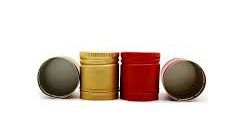
A stopper may fit the neck correctly but still cause problems if the head is too wide for the capsule, too tall for the gift box, or unsuitable for shrink-sleeve application.
Buyers should confirm head diameter, head height, neck diameter, capsule length, sleeve shrink behavior, tamper-evident band position, filling-line application method, and carton clearance.
This is especially important for premium spirits, export orders, e-commerce packaging, and gift sets, where the closure must survive handling while still looking clean and consistent at retail. For projects where closure, capsule, and neck presentation must be developed together, this article on premium bottle neck decoration can help buyers think beyond the stopper alone.
Common Mistakes When Buying Bar-Top Stoppers
Many closure problems happen because buyers choose a stopper by appearance before checking the bottle neck, shank material, and application requirements.
Common mistakes include choosing the head material before confirming neck fit, ordering by catalog size without bottle samples, ignoring head-to-shank bonding strength, forgetting capsule or shrink sleeve clearance, and requesting a quotation without artwork, quantity, target market, or bottle dimensions.
Another common mistake is treating the closure as a separate part instead of a packaging system. The stopper should be tested together with the bottle, capsule, label, carton, and filling process.
Avoiding these mistakes can reduce sample delays, leakage risk, production rejection, and unnecessary tooling costs.
Pre-Production Testing Checklist
Before approving bulk production, buyers should test production-intent stopper samples with real bottle samples.
| Test Item | Purpose |
|---|---|
| Visual inspection | Confirms surface quality, color, logo, and finish |
| Neck fit test | Confirms compatibility with bottle opening |
| Insertion force test | Ensures stopper can be applied smoothly |
| Pull-out force test | Confirms secure but comfortable opening |
| Inverted leakage test | Checks sealing under shipping and handling risk |
| Repeated opening test | Verifies resealing performance |
| Odor and alcohol compatibility check | Reduces risk of aroma impact, swelling, cracking, or deformation |
| Capsule and carton clearance test | Confirms final packaging compatibility |
For high-value spirits, buyers should test bottles from more than one glass production batch. Bottle neck tolerances can vary, and a stopper that fits one sample may not perform the same across the full production run. Kandacork Closures can support buyers with closure quality and testing support during sample approval and production preparation.
Compliance and Documentation Considerations
Bar-top stopper components may include cork, polymers, adhesives, coatings, inks, metals, and decorative elements. These materials may need review for food-contact suitability depending on the destination market.
For the United States, buyers may refer to FDA food-contact substance requirements and relevant 21 CFR references. For the European Union, buyers may consider the European Commission food-contact material rules, Regulation (EC) No 1935/2004, and EU No 10/2011 for plastic materials where relevant. EFSA risk assessment principles and ISO cork-related standards can also support technical and compliance discussions.
Buyers should request documents according to the actual market and material structure. For example, a synthetic shank with printed or coated components may require different documentation from a natural cork shank with a wooden head. The goal is not to collect every certificate, but to confirm that the materials, contact conditions, and destination market are properly supported.
Useful documents may include material specifications, food-contact declarations, migration test references where applicable, quality inspection reports, batch traceability, packing specifications, certificates of origin, or target-market compliance statements.
A capable supplier should be able to explain which documents are available and which tests are relevant to the project.
How to Evaluate a Bar-Top Stopper Supplier
A reliable supplier should provide more than a unit price. It should help buyers confirm materials, neck fit, decoration method, testing requirements, lead time, packing protection, and commercial feasibility.
Strong suppliers ask technical questions before quoting. They want bottle drawings, neck dimensions, physical samples, artwork, spirit category, target market, quantity, capsule requirements, and launch schedule.
Buyers should evaluate whether the supplier can support bottle neck-fit review, material selection, custom molds, color matching, logo decoration, sample development, leakage and pull-out testing, food-contact documentation, export packing, MOQ planning, and lead-time control.
Be cautious if a supplier quotes without asking for bottle neck dimensions. Be cautious if the shank material is unclear, if there is no sample approval process, if the bonding method is not explained, or if the supplier cannot discuss leakage, pull-out force, capsule compatibility, and export packing.
These gaps can lead to rejected closures, delayed production, leaking bottles, damaged decoration, or inconsistent brand presentation.
Related Bar-Top Stopper Options from Kandacork Closures
Kandacork Closures can support different bar-top stopper options for spirits packaging projects, including wood-head stoppers, plastic bar-top stoppers, aluminum-head stoppers, zamac-head stoppers, natural cork shank stoppers, synthetic shank stoppers, and custom logo spirits closures.
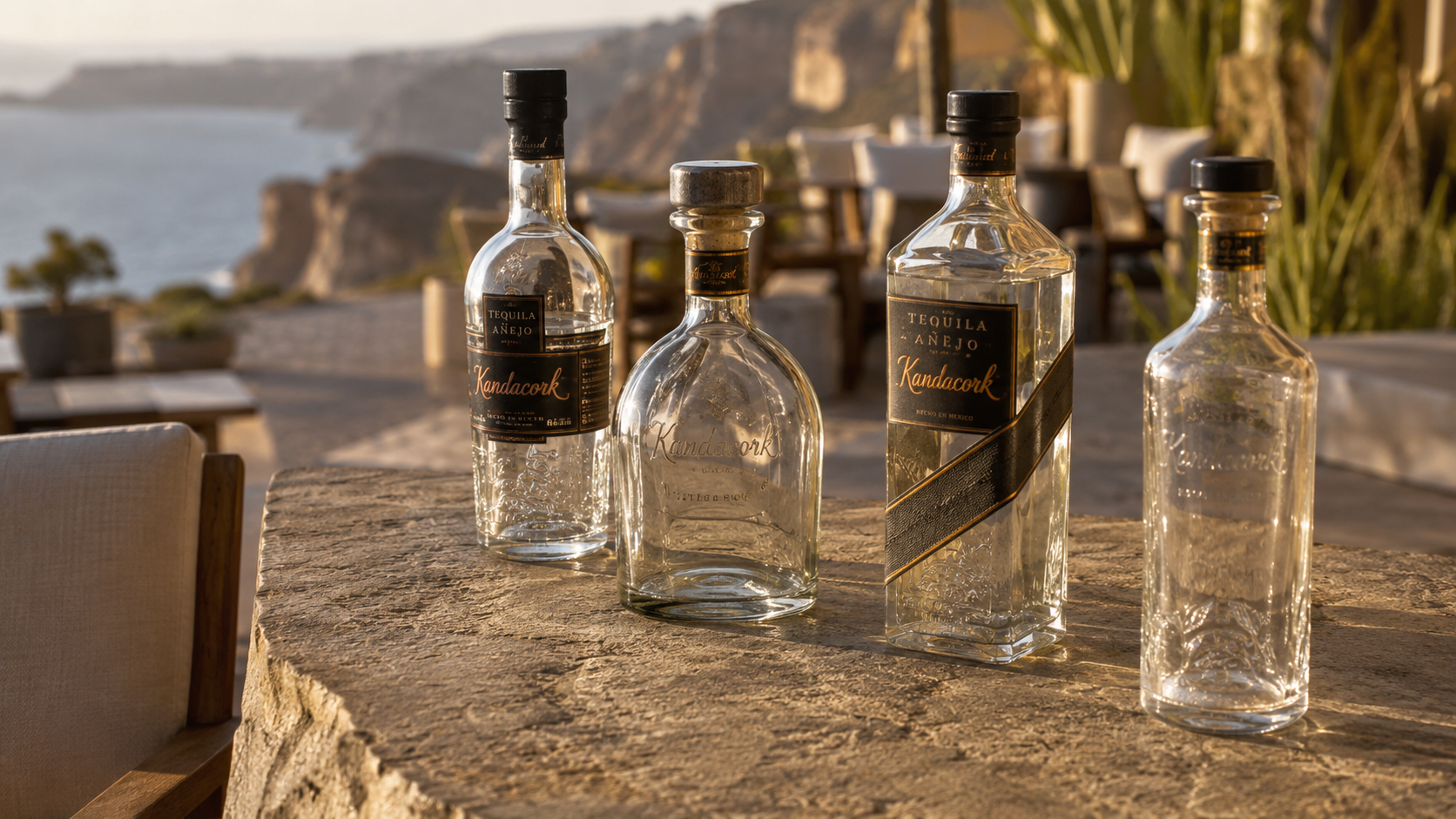
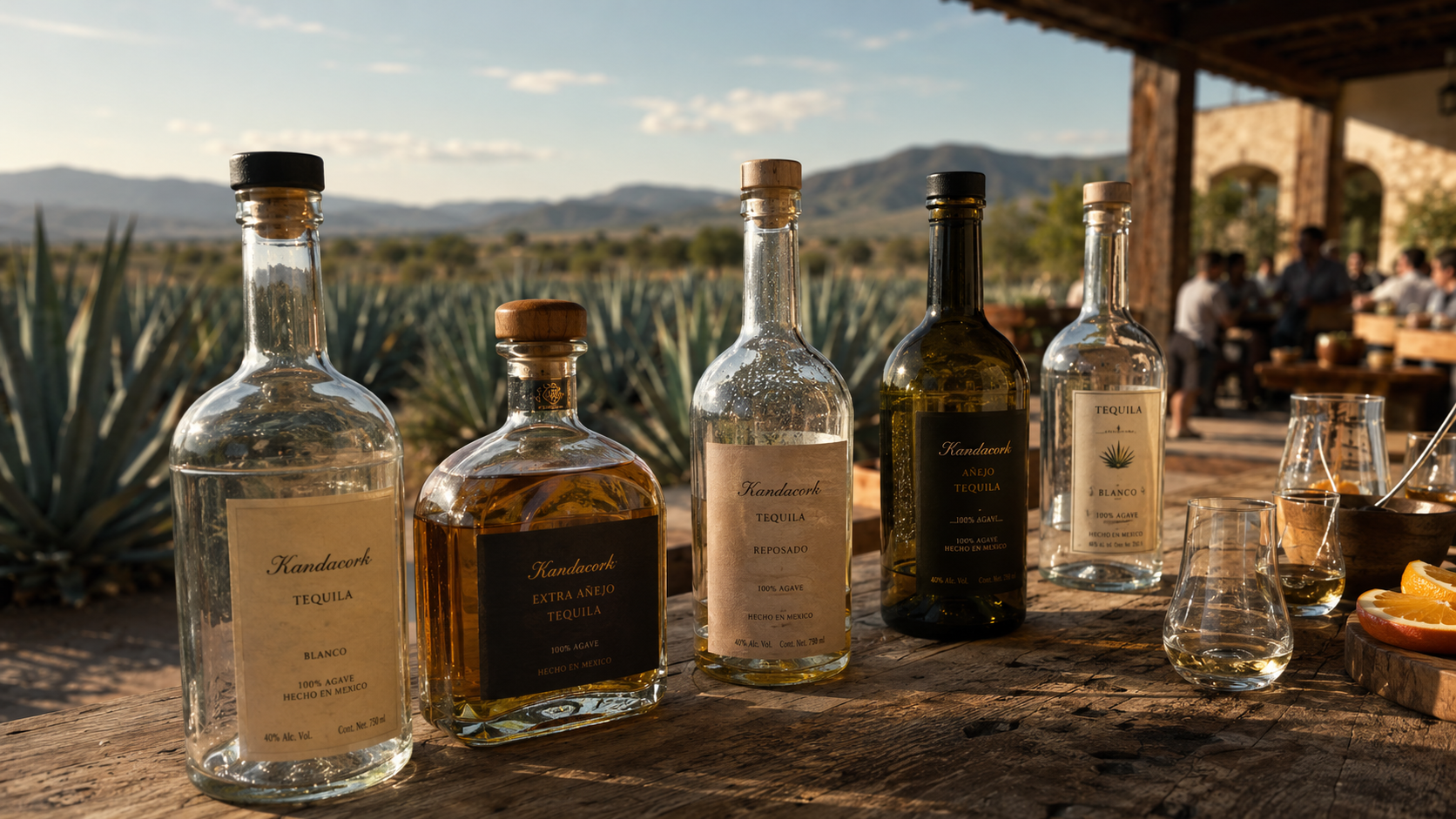
For premium whisky, rum, brandy, tequila, gin, vodka, liqueur, private label, and gift packaging projects, buyers can compare head materials, shank structures, logo methods, and closure-bottle fit before approving samples.
This product-family approach helps buyers move from general component research to practical sample selection and quotation planning.
What Buyers Should Send for a Sample or Quotation
To receive accurate samples or quotations, buyers should prepare enough information for the supplier to evaluate both technical fit and commercial feasibility.
| Buyer Input | Why It Matters |
|---|---|
| Bottle drawing or physical bottle sample | Confirms neck dimensions and real fit |
| Neck inner diameter and tolerance | Determines shank size |
| Bottle capacity and spirit category | Helps match closure scale and material |
| Alcohol percentage | Supports compatibility review |
| Target market | Affects documentation expectations |
| Preferred head and shank material | Guides structure, cost, and performance |
| Logo artwork and color reference | Determines decoration method |
| Capsule or sleeve requirement | Confirms clearance and application needs |
| Estimated quantity | Affects MOQ, tooling, and unit price |
| Launch schedule and shipping destination | Supports production and export planning |
The more complete the inquiry, the faster Kandacork Closures can recommend suitable bar-top stopper components and prepare practical samples or quotations.
Practical Buyer Scenarios
For a premium whisky or rum brand, a stained wood head with natural cork or micro-agglomerated cork may support a traditional, craft, or heritage image. Testing should focus on leakage, pull-out force, bonding strength, finish durability, and carton abrasion.
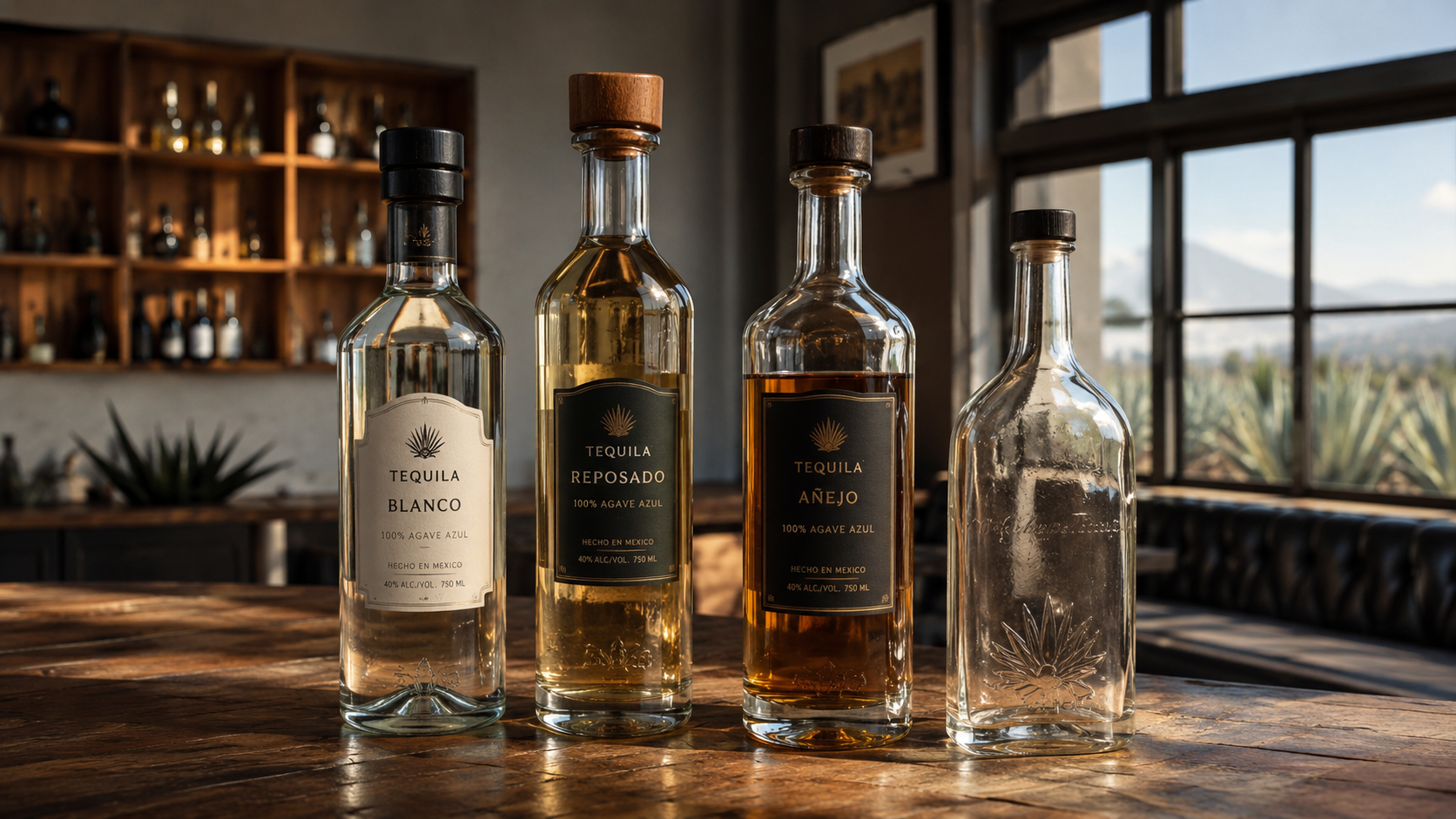
For a modern gin, vodka, or tequila brand, aluminum, plastic, or glass-look heads may help create a clean and contemporary appearance. Testing should focus on color consistency, odor neutrality, capsule clearance, and fit across bottle batches.
For a private label or high-volume spirits program, plastic or aluminum heads with synthetic shanks may support stable cost, consistent sizing, repeatable production, and scalable MOQ. Testing should focus on dimensional stability, filling-line performance, color matching, and lead-time reliability.
FAQ
What are the main components of a bar-top stopper?
The main bar-top stopper components are the head, shank, bonding interface, surface finish, logo decoration, and optional capsule or tamper-evident compatibility. The head creates brand presentation, while the shank creates the resealable fit inside the bottle neck.
What part of a bar-top stopper creates the seal?
The shank creates the seal by fitting into the bottle neck and generating compression. The head helps consumers open and reseal the bottle, but the shank is the main functional sealing part.
What shank diameter fits an 18.5 mm or 21.5 mm spirits bottle neck?
As a common starting point, an 18.5 mm bottle neck opening may use around a 19.5 mm shank, while a 21.5 mm opening may use around a 22.5 mm shank. Final fit must be confirmed with real bottle samples, neck tolerance, shank material, insertion depth, leakage testing, and pull-out force.
Which shank material is best for spirits?
The best shank material depends on bottle neck size, alcohol percentage, brand position, production volume, and testing results. Natural cork supports traditional appeal, while synthetic and engineered shanks often provide stronger dimensional consistency.
What should buyers test before bulk production?
Buyers should test neck fit, insertion force, pull-out force, leakage, repeated opening, odor neutrality, alcohol compatibility, capsule clearance, carton fit, and batch consistency before approving mass production.