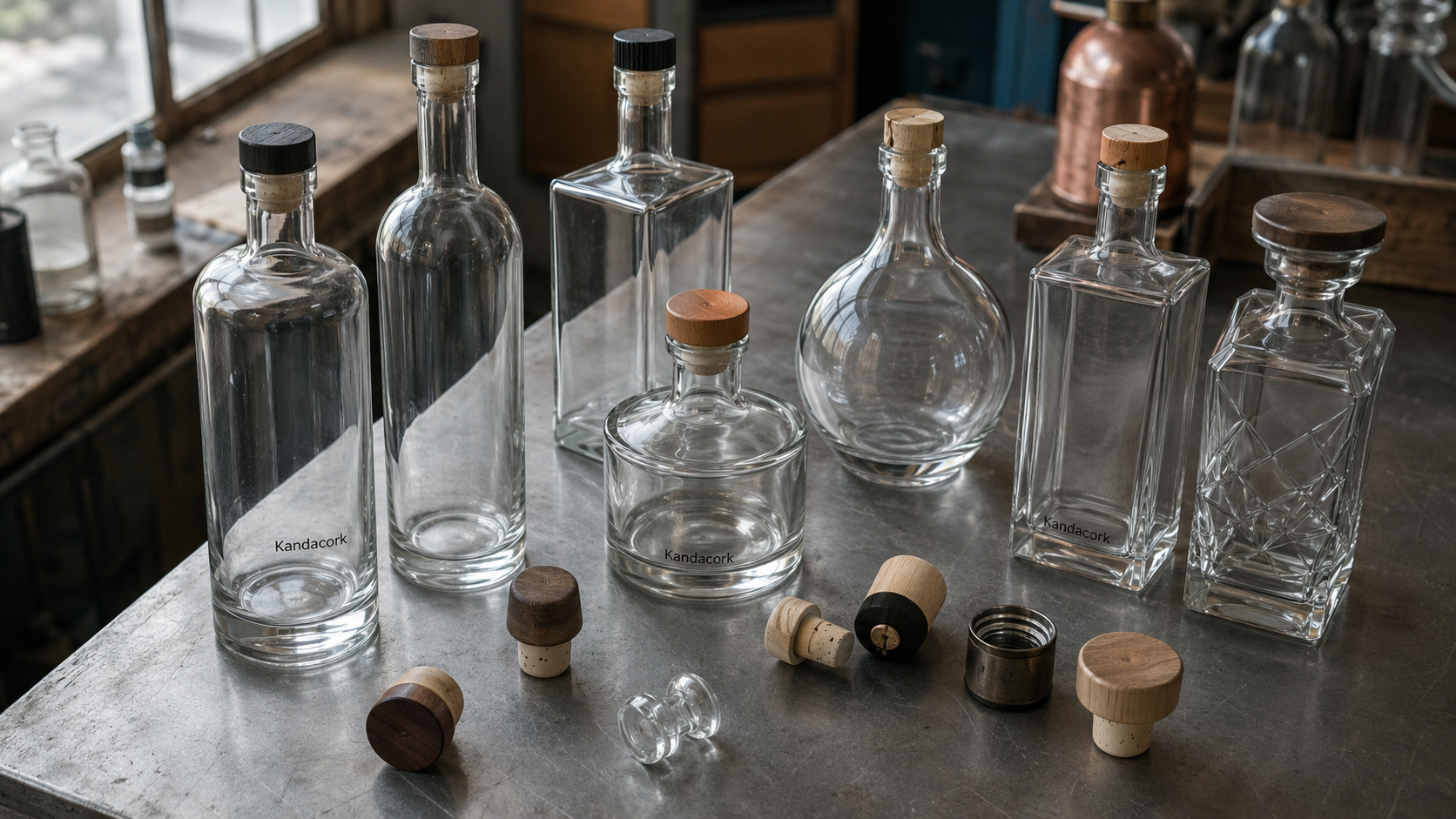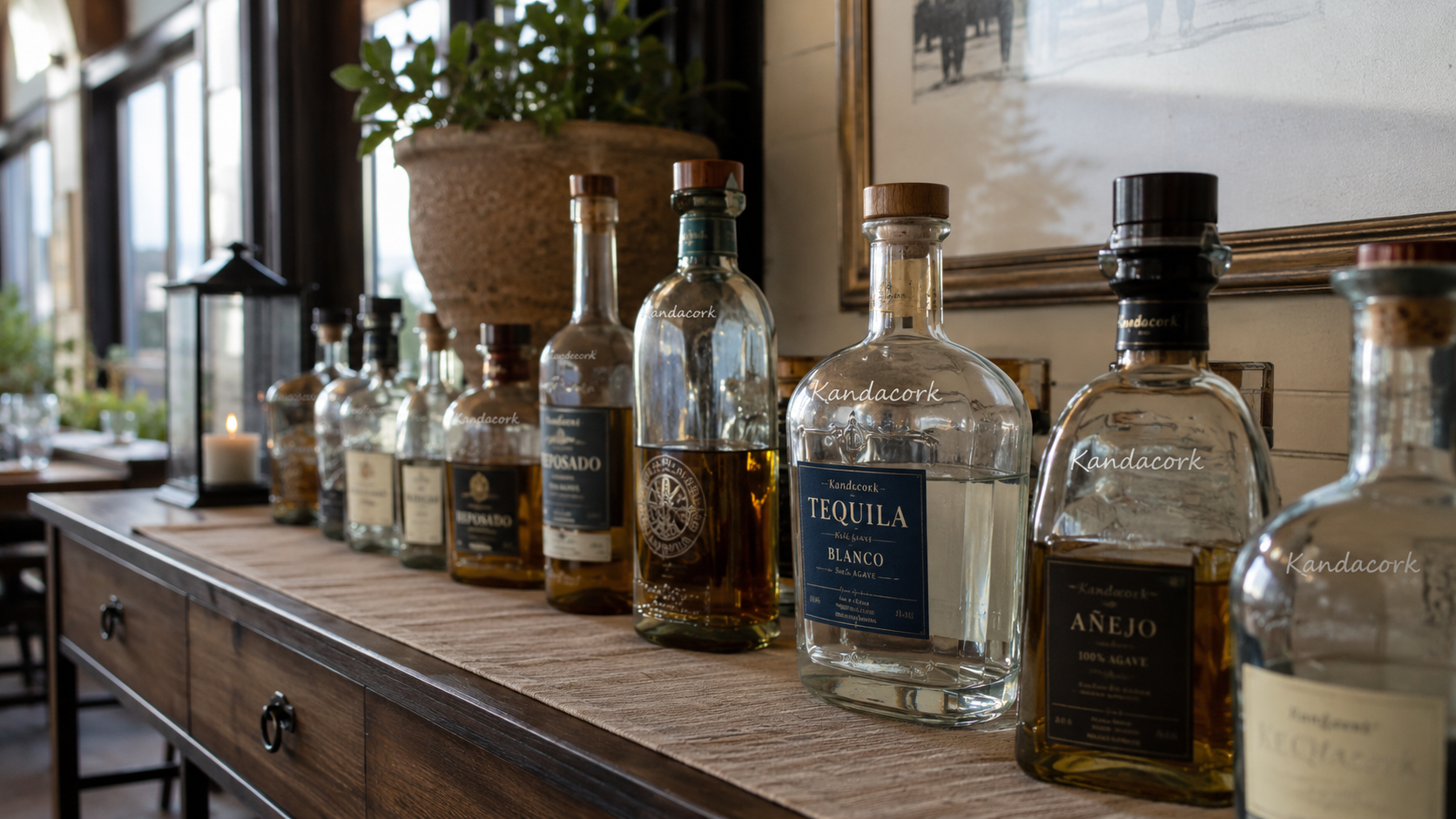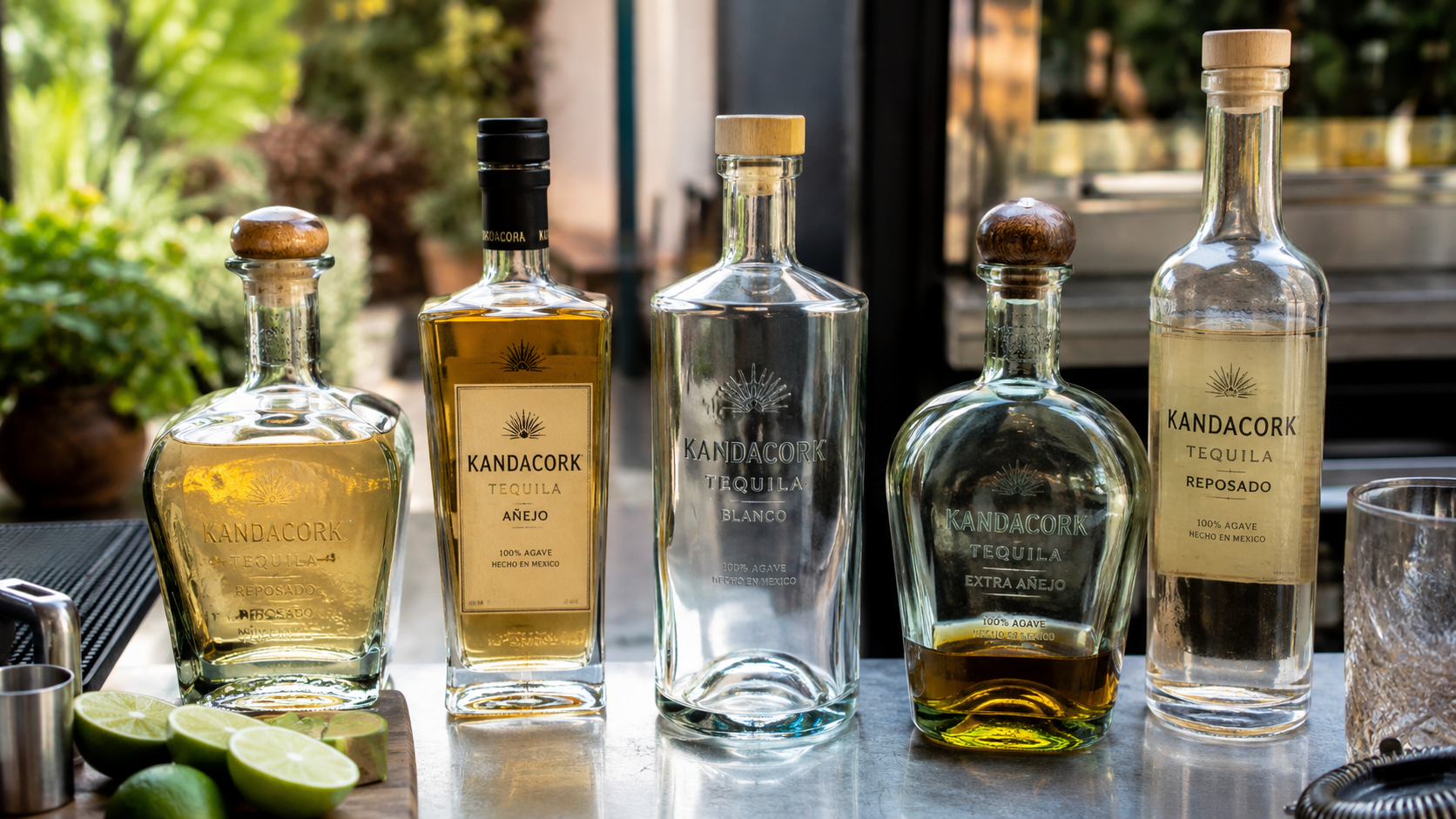
Choosing the right bar-top stoppers is a technical packaging decision, a brand positioning decision, and a sourcing decision. For spirits brands, distilleries, private label buyers, importers, distributors, and bottlers, the stopper affects bottle sealing, shelf appeal, filling-line handling, consumer opening experience, and quotation accuracy.
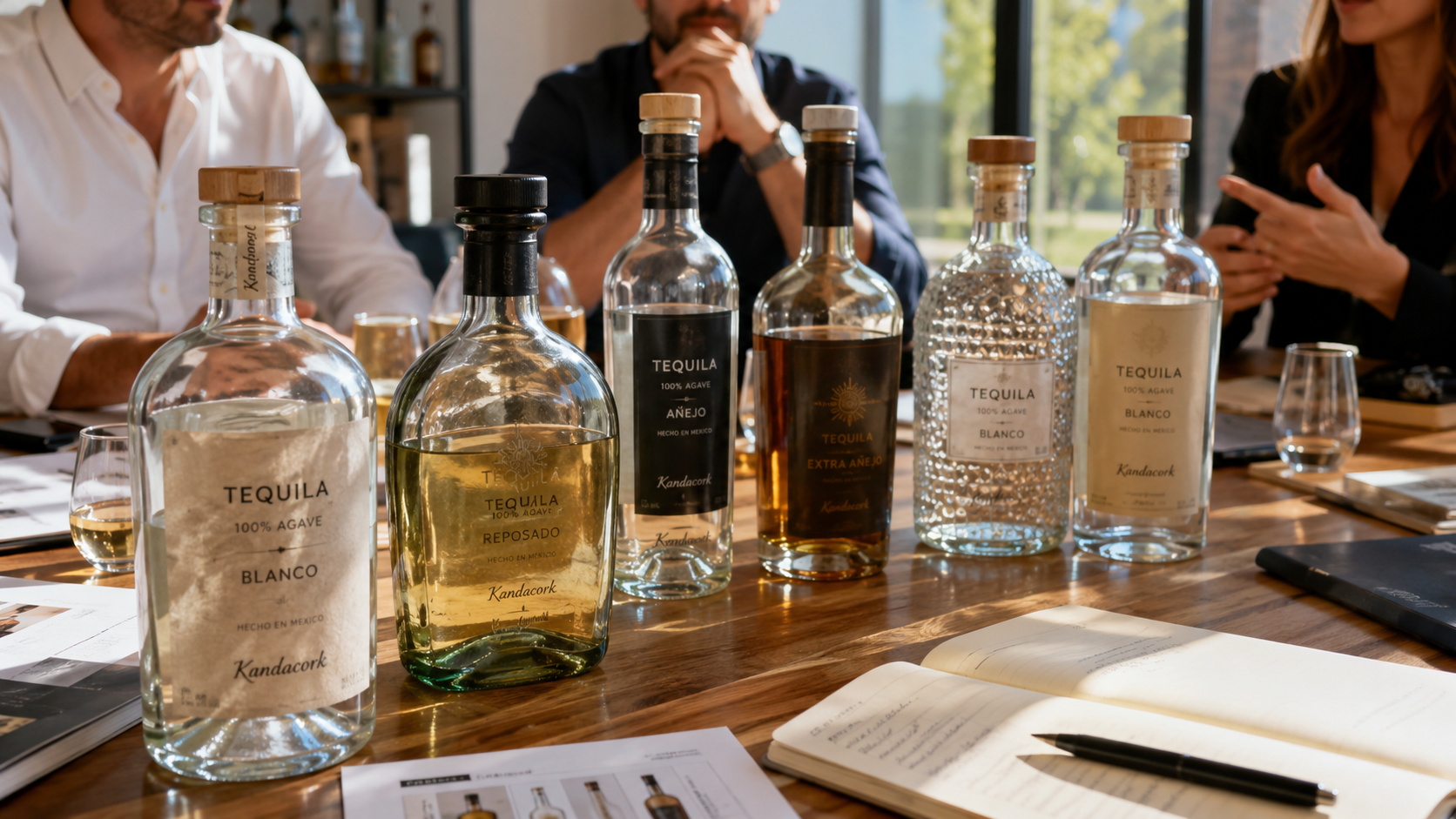
Different spirits need different closure signals. Whisky often needs warmth, weight, and heritage. Vodka usually needs clarity, precision, and a clean modern look. Gin benefits from color, botanical storytelling, and creative customization. Tequila and mezcal often need heavier, sculptural stoppers that create a premium hand feel.
This guide explains how to choose bar-top stoppers by spirit category, shank material, bottle neck fit, stopper head material, decoration method, technical testing, supplier capability, and RFQ preparation.
Need to confirm stopper fit? Share your bottle neck inner diameter or bottle drawing with Kandacork Closures to request sample recommendations.
What Are Bar-Top Stoppers?
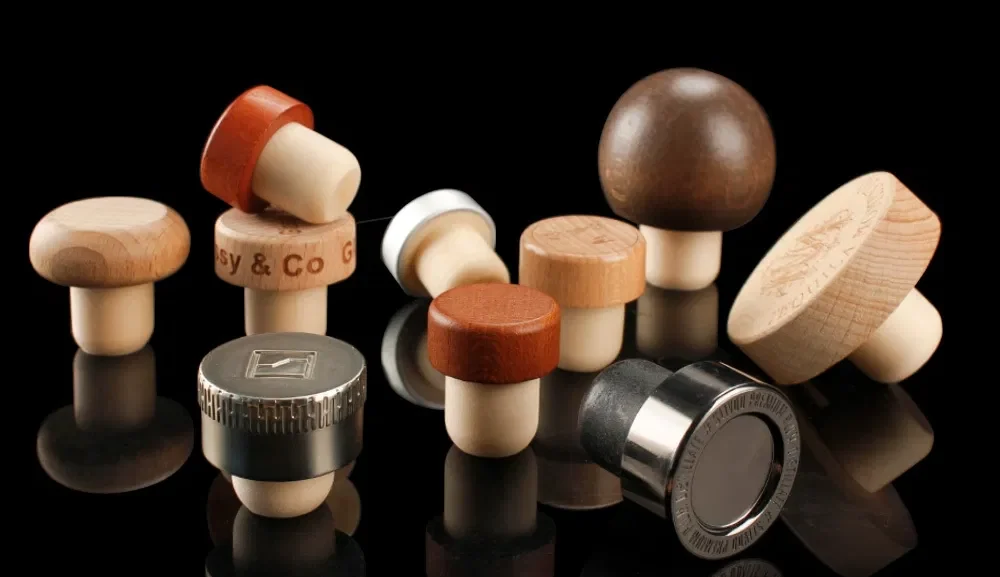
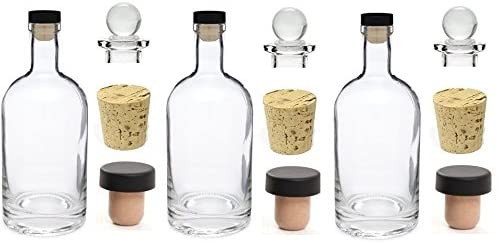
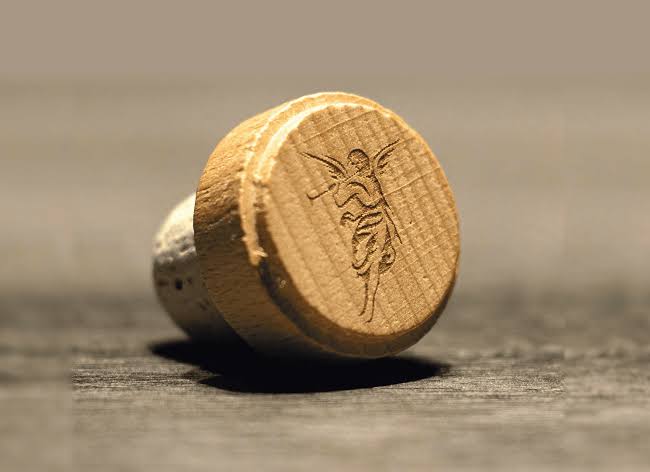
Bar-top stoppers are spirits bottle closures made from two parts: a decorative top and a sealing shank. The top may be made from wood, aluminum, plastic, acrylic, glass, ceramic, Zamac, or zinc alloy. The shank is commonly made from natural cork, micro-agglomerated cork, or synthetic cork.
The shank fits inside the bottle neck and creates a friction seal. The top provides grip, visual identity, and perceived value. In spirits packaging, bar-top stoppers may also be called T-top corks, T-top stoppers, bartop closures, bar-top closures, bottle stoppers, or spirits bottle closures.
For sourcing accuracy, buyers should define the closure by shank diameter, top diameter, stopper height, top material, shank material, decoration method, bottle neck inner diameter, and target spirit category.
Buyer Decision Summary
For fast sourcing decisions, start with three questions: What spirit category are you packaging? What is the bottle neck inner diameter? What brand signal should the stopper create?
Once these are clear, buyers can compare shank material, stopper head material, decoration method, testing requirements, supplier capability, and quotation conditions. This avoids selecting a closure only by appearance or unit price and helps reduce the risk of wrong fit, poor sealing, delayed sampling, or inconsistent bulk production.
Quick Selection Matrix by Spirit Type
| Spirit Type | Recommended Top Materials | Recommended Shank Options | Brand Signal | Best Use Cases |
|---|---|---|---|---|
| Whisky | Wood, dark wood, aluminum, antique metal, Zamac | Natural cork, micro-agglomerated cork, synthetic cork | Heritage, warmth, maturity, premium weight | Aged whisky, bourbon, limited editions, premium collections |
| Vodka | Aluminum, acrylic, glass-like plastic, polished metal | Synthetic cork, white synthetic shank | Clean, modern, pure, precise | Premium vodka, private label vodka, export programs |
| Gin | Colored plastic, wood, aluminum, acrylic, glass | Synthetic cork, micro-agglomerated cork | Botanical, creative, colorful, craft | Craft gin, flavored gin, seasonal gin, gift packs |
| Tequila | Zamac, ceramic, wood, sculpted metal, zinc alloy | Natural cork, synthetic cork, micro-agglomerated cork | Heavy, artisanal, luxury, collectible | Reposado, añejo, extra añejo, mezcal, limited editions |
This matrix is a starting point. Final closure selection should always be confirmed through bottle testing, sample approval, and production validation.
5-Step Process for Sourcing Bar-Top Stoppers
A successful stopper project should follow a clear sourcing process. This helps buyers avoid wrong shank sizes, poor decoration results, leakage issues, and delayed launches.
| Step | What to Do | Why It Matters |
|---|---|---|
| Confirm bottle neck dimensions | Check bottle neck inner diameter, bore size, neck finish, and bottle drawing | Stopper fit depends on the real neck opening, not bottle capacity |
| Select shank and top materials | Compare natural cork, synthetic cork, micro-agglomerated cork, wood, aluminum, plastic, acrylic, Zamac, or ceramic | Material choice affects sealing feel, brand value, cost, and consistency |
| Request samples | Ask for stock samples or custom samples based on the actual bottle | Samples reduce the risk of wrong fit or poor visual matching |
| Test before approval | Check insertion feel, pull-out force, leakage, odor, decoration durability, and packing performance | Testing confirms whether the stopper works in real conditions |
| Approve pre-production samples | Confirm final dimensions, color, logo position, finish, packing, and documentation before bulk order | Pre-production approval protects launch schedules and repeat order consistency |
Kandacork Closures can support bottle-fit checks, shank matching, custom decoration samples, and pre-production approval before bulk orders.
How to Choose Bar-Top Stoppers by Spirit Category
Whisky Bar-Top Stoppers
Whisky packaging often needs a closure that feels warm, substantial, and traditional. Wooden tops are a strong choice because they connect naturally with oak barrels, aging, craft production, and heritage storytelling.
Dark stained wood, walnut-effect wood, black wood, brushed aluminum, antique brass, copper, gunmetal, and custom metal bar-top stoppers can all work well for premium whisky. These materials pair well with amber liquid, heavy glass bases, textured labels, foil details, capsules, and rigid gift boxes.
For whisky, buyers should pay close attention to pull-out feel, heavy glass balance, and gift box compatibility. A heavier stopper can increase perceived value, but it should not make the bottle unstable, difficult to pack, or inconsistent in boxed presentation. The shank should hold firmly without making opening uncomfortable for the consumer.
Vodka Bar-Top Stoppers
Vodka packaging often uses clean lines, transparent glass, frosted finishes, silver tones, white details, and minimalist branding. For this reason, vodka bar-top stoppers usually perform best when they look precise, modern, and controlled.
Aluminum is a strong option because it supports brushed, polished, matte, anodized, and laser-engraved finishes. Acrylic and glass-like tops can reinforce purity and transparency. White or clean synthetic shanks are useful when the brand wants a uniform and hygienic visual effect.
For vodka, buyers should check visual consistency with clear or frosted bottles. A small color mismatch, surface scratch, or uneven logo position can be more visible on minimalist packaging. Synthetic cork shanks are often suitable because they provide consistent diameter, stable color, and repeatable performance for private label, export, and large-volume programs.
Gin Bar-Top Stoppers
Gin gives brands more creative freedom. Many gin products use botanical illustrations, fruit infusions, colored labels, seasonal editions, and limited releases. The stopper can support this storytelling and help the bottle stand out on shelf.
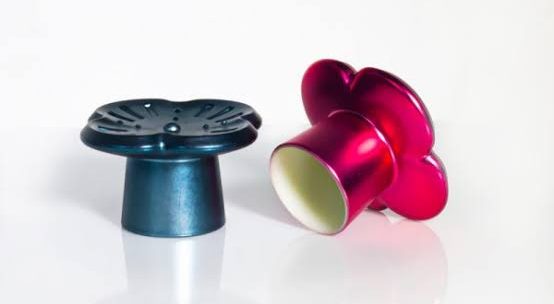
Colored plastic tops, painted aluminum, natural wood, acrylic, and glass-like closures can all work well for gin. A craft botanical gin may use natural wood. A flavored gin may use a color-matched plastic or painted metal top. A premium gin may use aluminum, acrylic, or glass-like materials for a cleaner upscale impression.
For gin projects, seasonal SKU color consistency is especially important. Buyers should provide Pantone references, label samples, capsule colors, and carton artwork during development. When the closure must coordinate with bottle shape, tint, and decoration, working with a broader custom spirits bottle packaging partner can help reduce mismatch between the bottle and stopper.
Tequila Bar-Top Stoppers
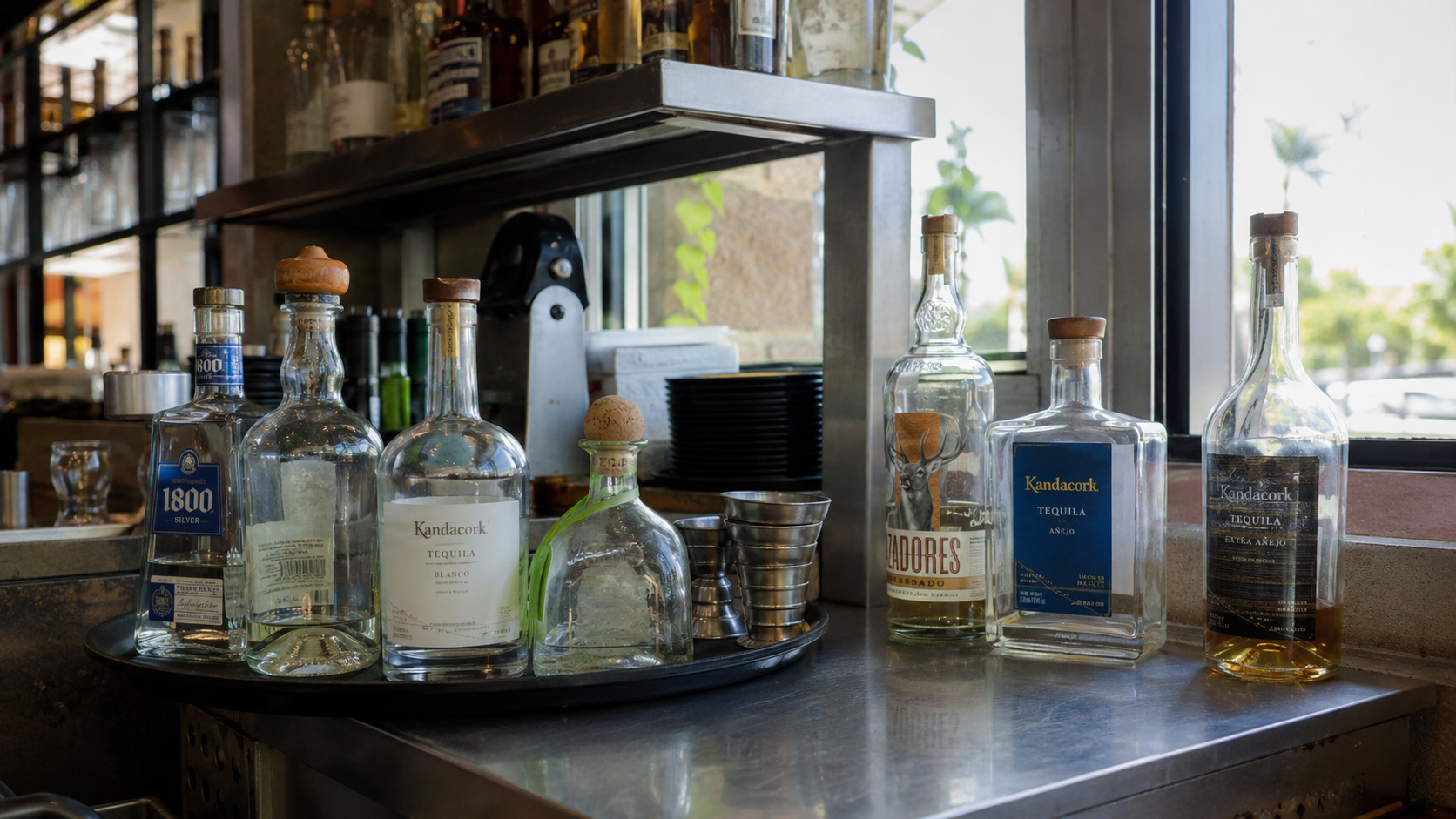
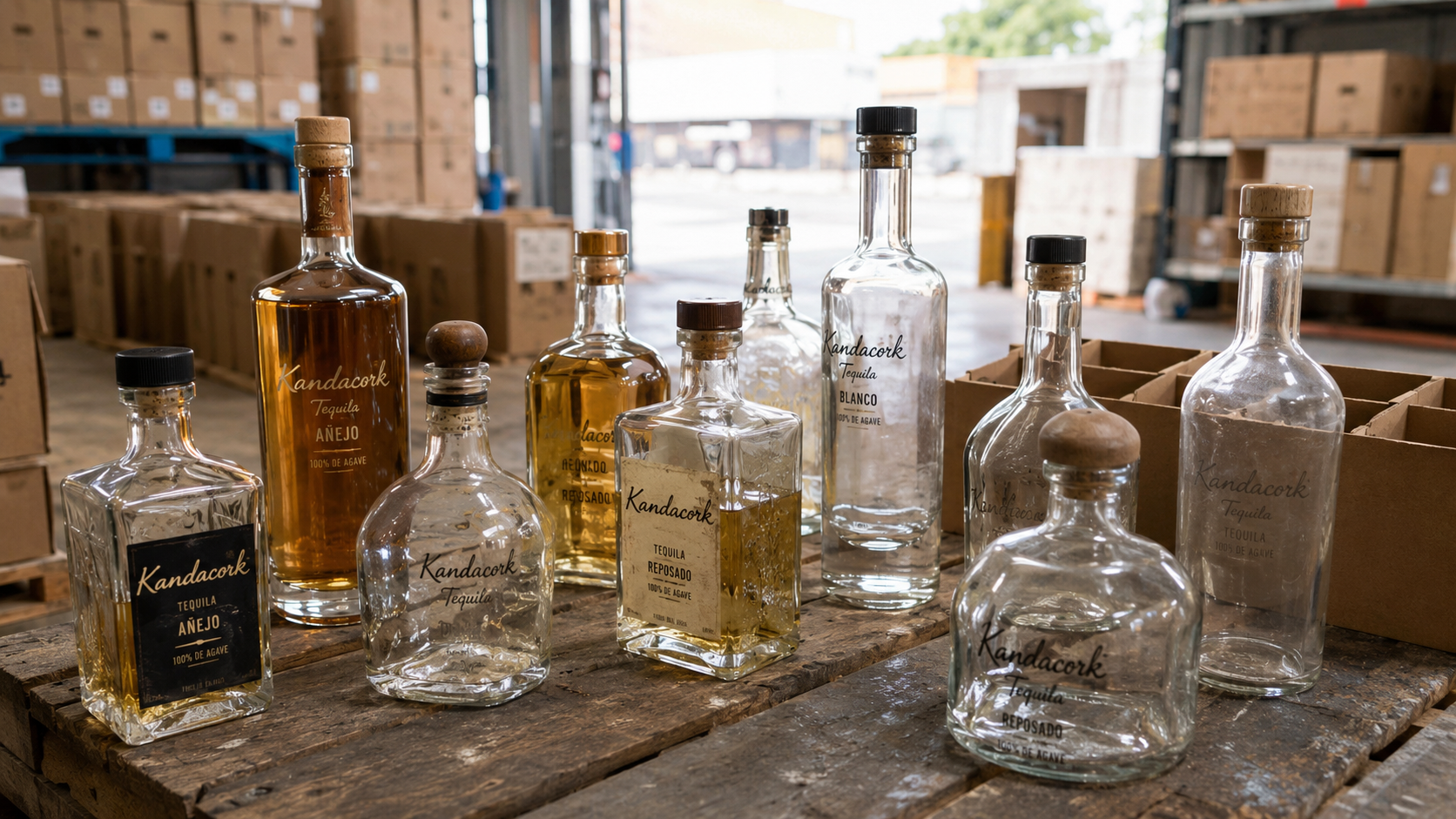
Tequila and mezcal packaging often use closures to communicate weight, craft, ritual, and luxury. Premium tequila bottles frequently use sculpted or decorative tops that make the bottle feel more collectible.
Zamac, zinc alloy, ceramic, wood, and sculpted metal are strong options for tequila bar-top stoppers. These materials support embossed icons, antique plating, custom shapes, cultural motifs, and high-end finishes. They are especially relevant for reposado, añejo, extra añejo, cristalino tequila, and mezcal.
For tequila, buyers should plan for custom mold lead time, plating tolerance, polishing consistency, and packing protection. A dramatic stopper must still fit securely, remain stable during shipping, align correctly with the bottle, and feel comfortable when opened. Custom molded stoppers should move through tooling review, finish sampling, color approval, and pre-production testing before bulk production.
Natural Cork vs Synthetic Cork vs Micro-Agglomerated Shanks
The shank is the sealing part of the stopper, so material choice directly affects fit, pull-out feel, appearance, and production consistency.
| Shank Type | Advantages | Considerations | Suitable Spirits |
|---|---|---|---|
| Natural cork | Traditional, premium, natural appearance | More visual and density variation; requires quality grading | Whisky, rum, brandy, craft spirits |
| Synthetic cork | Consistent size, clean appearance, stable repeatability | Less natural material story | Vodka, gin, private label spirits, export programs |
| Micro-agglomerated cork | Balanced cork appearance and controlled performance | Requires supplier quality control | Whisky, gin, tequila, premium spirits |
Natural cork supports heritage and premium storytelling. Synthetic cork supports consistency and large-scale production. For a more detailed B2B comparison, buyers can review this guide to synthetic cork vs natural cork stoppers before confirming shank structure.
The best shank material depends on bottle neck tolerance, brand positioning, target market, production volume, filling process, and budget.
Bottle Neck Fit: Neck ID, Shank Diameter and Pull-Out Feel
Bottle neck fit should be confirmed before color, logo, or material decisions. Bar-top stoppers must be matched to the actual bottle neck inner diameter, not only to bottle volume.
A 700 ml bottle and a 750 ml bottle may require different stopper sizes. Two bottles with the same capacity can also have different neck dimensions. Buyers should review bottle drawings, neck inner diameter, bore diameter, and physical bottle samples before confirming the stopper.
Many spirits bottles use common neck openings such as 18.5 mm or 21.5 mm. A common starting point is to use a shank approximately 1 mm larger than the bottle neck inner diameter. For example, an 18.5 mm neck may often pair with a 19.5 mm shank.
The 1 mm rule is a sizing shortcut, not a final engineering specification. Glass bottle tolerance, mold variation, finish quality, shank material, compression recovery, storage condition, and insertion method can all affect real fit.
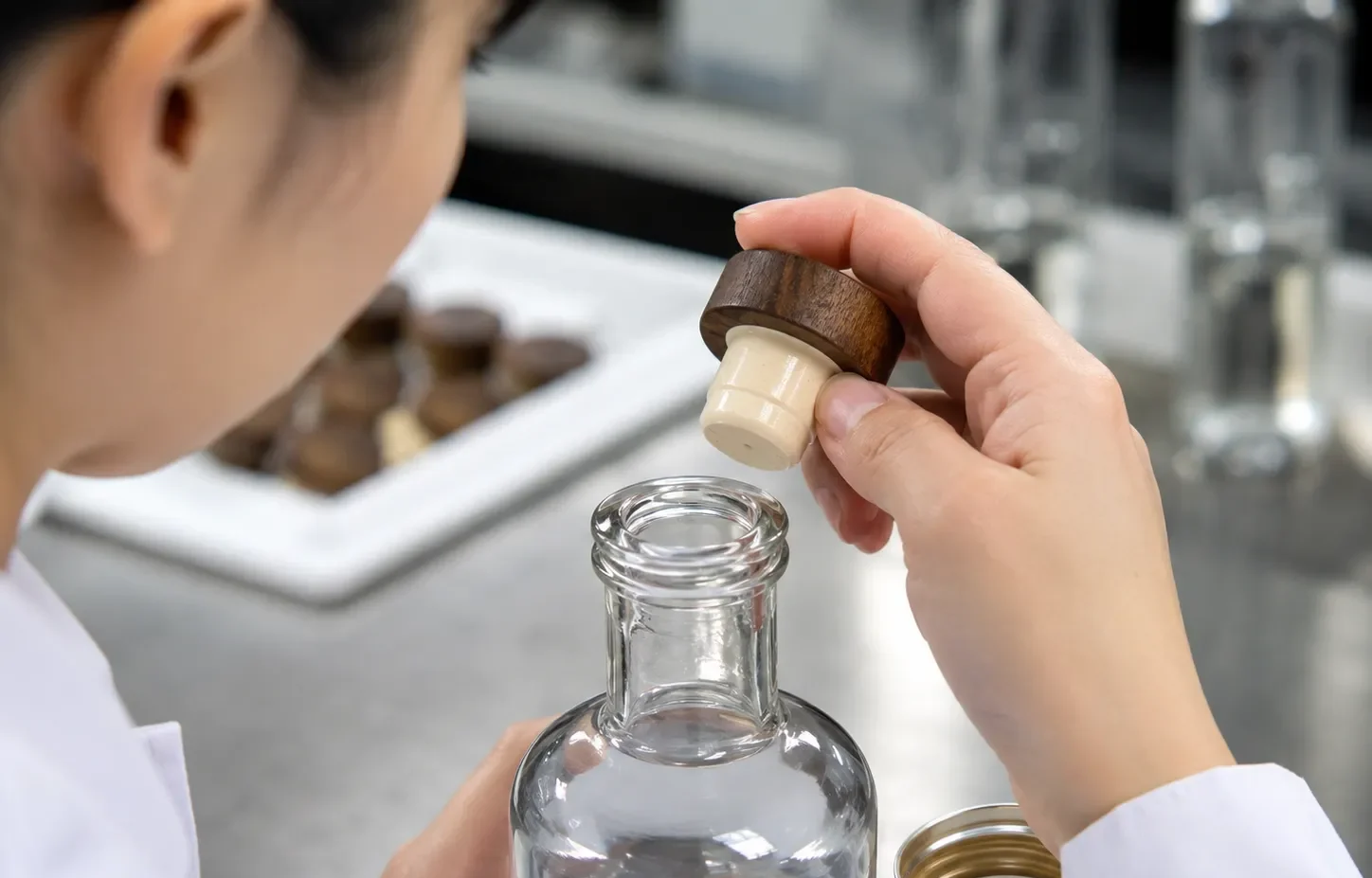
Final fit should be confirmed by real-bottle testing, pull-out force checks, leakage review, and filling-line trials. A stopper that feels correct by hand may still fail during shipping, temperature changes, or automatic insertion, so fit approval should include both manual testing and production-condition testing.
Important checks include insertion feel, removal force, inversion performance, temperature exposure, bottle storage position, and packed transport conditions.
Stopper Head Materials Compared
| Top Material | Best For | Main Strength | Decoration Options |
|---|---|---|---|
| Wood | Whisky, gin, rum, craft spirits | Warm, natural, tactile | Laser engraving, staining, varnishing, painting, embossing |
| Aluminum | Vodka, gin, whisky, modern spirits | Clean, precise, versatile | Brushing, polishing, anodizing, laser marking, printing |
| Plastic | Private label, mid-tier spirits, color-driven projects | Cost control, color flexibility | Custom color, molded texture, printing |
| Acrylic / Glass-like | Vodka, premium gin, luxury packaging | Clarity, brightness, modern look | Printing, polishing, transparent effects |
| Zamac / Zinc Alloy | Tequila, mezcal, luxury whisky | Weight, sculptural detail, premium hand feel | Plating, embossing, antique finish, custom shapes |
| Ceramic | Tequila, mezcal, collectible spirits | Decorative, artisanal, distinctive | Glazing, printing, molded forms |
The stopper head should match both the spirit category and the bottle design. A material that works well for luxury tequila may look excessive on a minimalist vodka bottle. A lightweight plastic top may be commercially suitable for private label spirits but may not communicate enough value for a limited-edition whisky.
Custom Decoration and Branding Options
Custom decoration turns a closure into a brand asset. The stopper is visible from above, from the side, and during opening, so it can reinforce recognition before the consumer reads the label.
| Decoration Method | Suitable Materials | Best Use |
|---|---|---|
| Laser engraving | Wood, aluminum, metal | Premium logo detail, durable branding |
| Embossing / debossing | Plastic, metal, Zamac, wood | Tactile brand marks, luxury cues |
| Top printing | Plastic, aluminum, wood, acrylic | Clean logo application, private label programs |
| Hot foil stamping | Wood, plastic, coated tops | Metallic logo effects |
| Pantone color matching | Plastic, coated aluminum, painted wood | Gin, flavored spirits, seasonal packaging |
| Plating / antique finish | Zamac, metal | Tequila, mezcal, luxury whisky |
| Custom molded shape | Plastic, Zamac, ceramic | Limited editions, collectible packaging |
Buyers should approve decoration samples next to the bottle, label, capsule, and carton. This helps prevent color mismatch, poor logo position, weak contrast, or inconsistent shelf presentation. For projects where logos, sidewall textures, colors, and finishes must align across multiple SKUs, Kandacork Closures provides custom branding for spirits closures to support a unified packaging system.
Technical Tests Before Bulk Production
A professional stopper project should include more than visual approval. The closure must perform during filling, packing, shipping, storage, retail display, and consumer opening.
Before bulk production, buyers should request neck fit testing, shank diameter confirmation, insertion force review, pull-out force testing, leak or inversion testing, alcohol compatibility review, odor and taint assessment, surface durability testing, logo adhesion checks, color consistency review, drop testing, vibration testing, export packing checks, and filling-line trials when automatic or semi-automatic insertion is used.
Testing is especially important for premium spirits because the closure becomes part of the perceived value. A beautiful stopper that leaks, loosens, scratches, smells, or opens inconsistently can damage brand trust.
Compliance and Tamper-Evident Considerations
Bar-top stoppers should be reviewed as part of the full closure system. In many markets, distilled spirits packaging may need tamper-evident protection or related security features.
Depending on the destination market, the stopper may need to work with a capsule, shrink sleeve, tear strip, neck seal, tax strip, or another tamper-evident component. For example, the U.S. Alcohol and Tobacco Tax and Trade Bureau explains that distilled spirits plants and importers are required to securely affix a tamper-evident closure or similar device to bottles or containers of distilled spirits.
For export spirits projects, buyers should review food-contact requirements for the shank, coating, ink, adhesive, and decorative finish, not only the bottle and liquid. Relevant entities may include the U.S. Food and Drug Administration for food-contact packaging considerations, European Commission food-contact material rules for EU markets, and ISO packaging standards for broader packaging system control.
This article is not legal advice. The practical recommendation is to confirm destination-market requirements early and make sure the closure, bottle, capsule, label, and packing method are developed as one system.
How to Evaluate a Bar-Top Stopper Supplier
A qualified supplier should be able to confirm neck fit, provide material samples, control shank tolerance, support decoration trials, and inspect bulk production before shipment. Buyers should not evaluate suppliers only by unit price.
| Buyer Question | Why It Matters |
|---|---|
| Can the supplier recommend shank size based on actual bottle neck ID? | Reduces the risk of loose fit, tight fit, leakage, or poor opening feel |
| Can the supplier provide stock and custom samples before bulk production? | Allows fit, appearance, and decoration approval before large orders |
| Can the supplier support multiple top and shank materials? | Helps buyers compare wood, aluminum, plastic, acrylic, Zamac, ceramic, natural cork, synthetic cork, and micro-agglomerated cork |
| Can the supplier control repeat orders? | Protects color, diameter, finish, logo position, and packing consistency |
| Can the supplier support custom decoration? | Enables engraving, printing, embossing, color matching, plating, and custom molding |
| Can the supplier provide food-contact and export documentation? | Supports compliance review and international shipping requirements |
| Can the supplier inspect bulk production before shipment? | Reduces the risk of defective finishes, wrong dimensions, or rejected shipments |
A weak supplier can create fit problems, delivery delays, inconsistent finishes, or launch risk. A stronger supplier helps buyers reduce technical and commercial uncertainty before mass production.
RFQ Checklist for Buyers
A clear RFQ helps the supplier recommend the right stopper and provide a more accurate quotation.
| Must-Have Information | Optional but Helpful Information |
|---|---|
| Spirit category | Label sample or artwork |
| Bottle capacity | Capsule or neck seal plan |
| Bottle drawing or physical bottle | Carton or gift box design |
| Bottle neck inner diameter | Pantone color reference |
| Neck finish type | Target retail channel |
| Target shank diameter | Filling-line method |
| Stopper top material | Export packing requirements |
| Shank material preference | Destination-market requirements |
| Top diameter and stopper height | Sample deadline |
| Logo file and decoration method | Bulk delivery timeline |
| Order quantity | Reorder forecast |
If a bottle drawing is not available, buyers should send physical bottle samples. This allows direct fit testing and reduces the risk of ordering the wrong shank size.
Send your bottle drawing, spirit category, logo artwork, target material, and order quantity to Kandacork Closures to request bar-top stopper samples or a quotation.
Common Mistakes to Avoid
The most common mistake is choosing by bottle capacity instead of neck inner diameter. A 750 ml bottle does not automatically require one specific stopper size.
Another mistake is treating the 1 mm shank rule as a final answer. It is only a starting point. The actual bottle and stopper must be tested together.
Buyers should also avoid approving artwork too late, choosing a heavy top without checking bottle balance, ignoring tamper-evident requirements, skipping pre-production samples, and focusing only on unit price. A low-cost stopper can become expensive if it causes leakage, poor fit, inconsistent finish, rejected shipments, or consumer complaints.
Why Choose Kandacork Closures
Kandacork Closures helps spirits brands and packaging buyers develop bar-top stoppers that connect technical fit with brand value. The company supports material selection, shank matching, custom decoration, sample development, quality control, and bulk production for whisky, vodka, gin, tequila, rum, brandy, liqueur, and private label spirits projects.
For whisky, Kandacork Closures can support wood, metal, dark finish, and premium tactile stopper solutions. For vodka, it can help develop aluminum, acrylic, minimalist, and clean synthetic-shank closures. For gin, it can support color-driven and botanical-inspired stopper designs. For tequila and mezcal, it can support heavier, sculptural, and luxury-positioned closures.
Buyers can share bottle drawings, physical bottle samples, logo artwork, target materials, quantity, and destination-market requirements to begin sample development or request a quotation.
Conclusion
Choosing bar-top stoppers for whisky, vodka, gin, and tequila requires more than selecting a material or matching a color. The right closure must fit the bottle neck, seal reliably, support the filling process, meet market requirements, and communicate the correct brand value.
The best process is to define the spirit category, confirm the bottle neck, select the shank material, choose the stopper head, approve decoration, test samples, review compliance needs, and evaluate supplier capability before bulk production.
For spirits brands, distilleries, private label buyers, importers, distributors, and bottlers, Kandacork Closures can help make stopper sourcing more accurate and efficient. Share your bottle specifications and brand requirements to request bar-top stopper samples or a project quotation.
FAQ
What are bar-top stoppers?
Bar-top stoppers are spirits bottle closures with a decorative top and a sealing shank. The shank fits inside the bottle neck, while the top provides grip, branding, and premium visual value.
What size bar-top stopper do I need for a spirits bottle?
Choose a bar-top stopper by measuring the bottle neck inner diameter first. As a starting point, an 18.5 mm neck often pairs with a 19.5 mm shank, but final fit should always be tested with the actual bottle.
Are synthetic cork shanks better than natural cork shanks?
Synthetic cork shanks offer consistent size, clean appearance, and stable repeatability. Natural cork shanks provide a more traditional and premium material story. The better choice depends on brand positioning, bottle fit, production volume, and budget.
Which bar-top stopper is best for whisky?
Whisky often works well with wood, dark stained wood, aluminum, antique metal, or Zamac stoppers. These materials support warmth, heritage, maturity, and premium shelf presence.
Which bar-top stopper is best for vodka?
Vodka often works well with aluminum, acrylic, glass-like, polished metal, white, silver, or minimalist closures. These options support clean, pure, and modern brand cues.
Which bar-top stopper is best for gin?
Gin brands often use colored plastic, wood, aluminum, acrylic, or glass-like tops. These materials help match botanical labels, seasonal colors, creative packaging, and craft positioning.
Which bar-top stopper is best for tequila?
Premium tequila and mezcal often use Zamac, ceramic, sculpted metal, wood, or heavy luxury stoppers. These closures create stronger hand feel, shelf impact, and collectible value.
What information is needed to request custom bar-top stopper samples or a quotation?
Prepare the bottle drawing, neck inner diameter, spirit category, target stopper material, shank preference, decoration method, logo file, order quantity, target market, sample requirements, and delivery schedule.