Why Stopper Feel Matters
A bar-top stopper is more than a sealing component. It shapes the first physical experience a consumer has with a spirits bottle. Before tasting the whisky, gin, rum, vodka, tequila, brandy, or liqueur, the consumer touches the top, pulls the stopper, hears the release, and judges whether the bottle feels secure, premium, and well made.
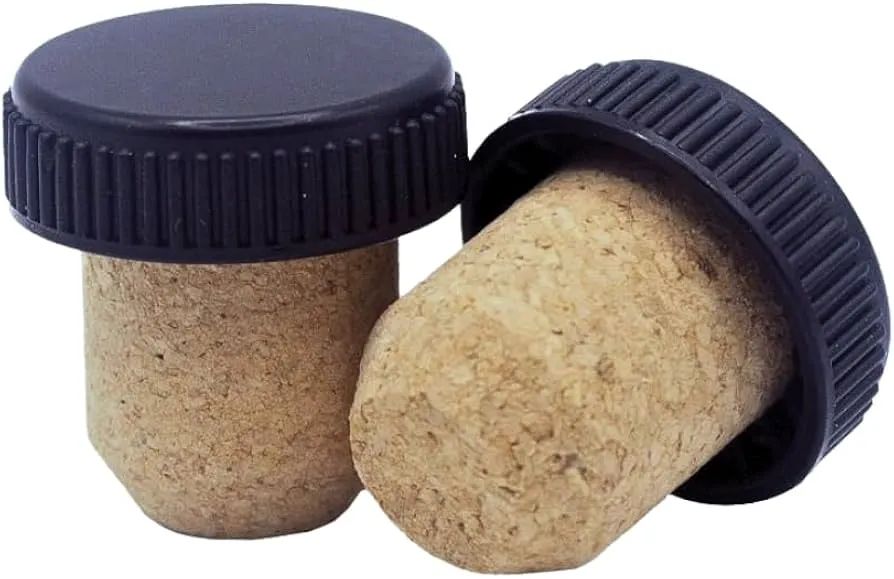
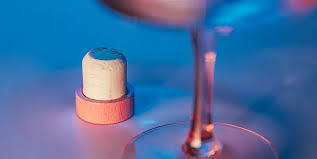
Also called a bar-top closure or T-top stopper, this component combines a decorative top with a cork, synthetic, or polymer shank. For spirits brands, the right custom bar-top stopper design must balance sealing performance, pull force, visual quality, filling efficiency, and consumer opening experience.
For distilleries, private label buyers, importers, distributors, bottlers, and packaging buyers, stopper feel affects both technical performance and brand perception. A closure that looks premium but feels too loose, too tight, uneven, or difficult to reopen can cause production delays, leakage risk, customer complaints, and inconsistent shelf presentation.
This guide explains how to evaluate bar-top stopper size, insertion feel, pull force, shank fit, materials, packaging compatibility, supplier capability, and sample approval before moving into bulk closure orders.
Need to confirm stopper fit before ordering? Send Kandacork Closures your bottle drawing or physical sample for cap and neck compatibility review.
Quick Answer: What Should a Good Bar-Top Stopper Feel Like?
A good bar-top stopper should insert smoothly, seat consistently, open with controlled resistance, and reseal securely after use.
It should feel firm enough to protect the spirit, but not so tight that bottling operators struggle to insert it or consumers struggle to open it. The right feel depends on the relationship between the bottle neck, shank diameter, shank length, shank material, top design, surface finish, and filling process.
A good spirits closure should meet five practical conditions:
- Smooth insertion into the bottle neck
- Stable compression without excessive force
- Consistent seating height and visual alignment
- Controlled opening pull without sudden looseness
- Reliable resealing after repeated use
The goal is not simply to find a stopper that fits. The goal is to approve a custom spirits closure that seals reliably, supports production, feels right in the hand, and strengthens the final brand experience.
Insertion Feel vs Opening Experience
Insertion feel and opening experience are related, but they are not the same.
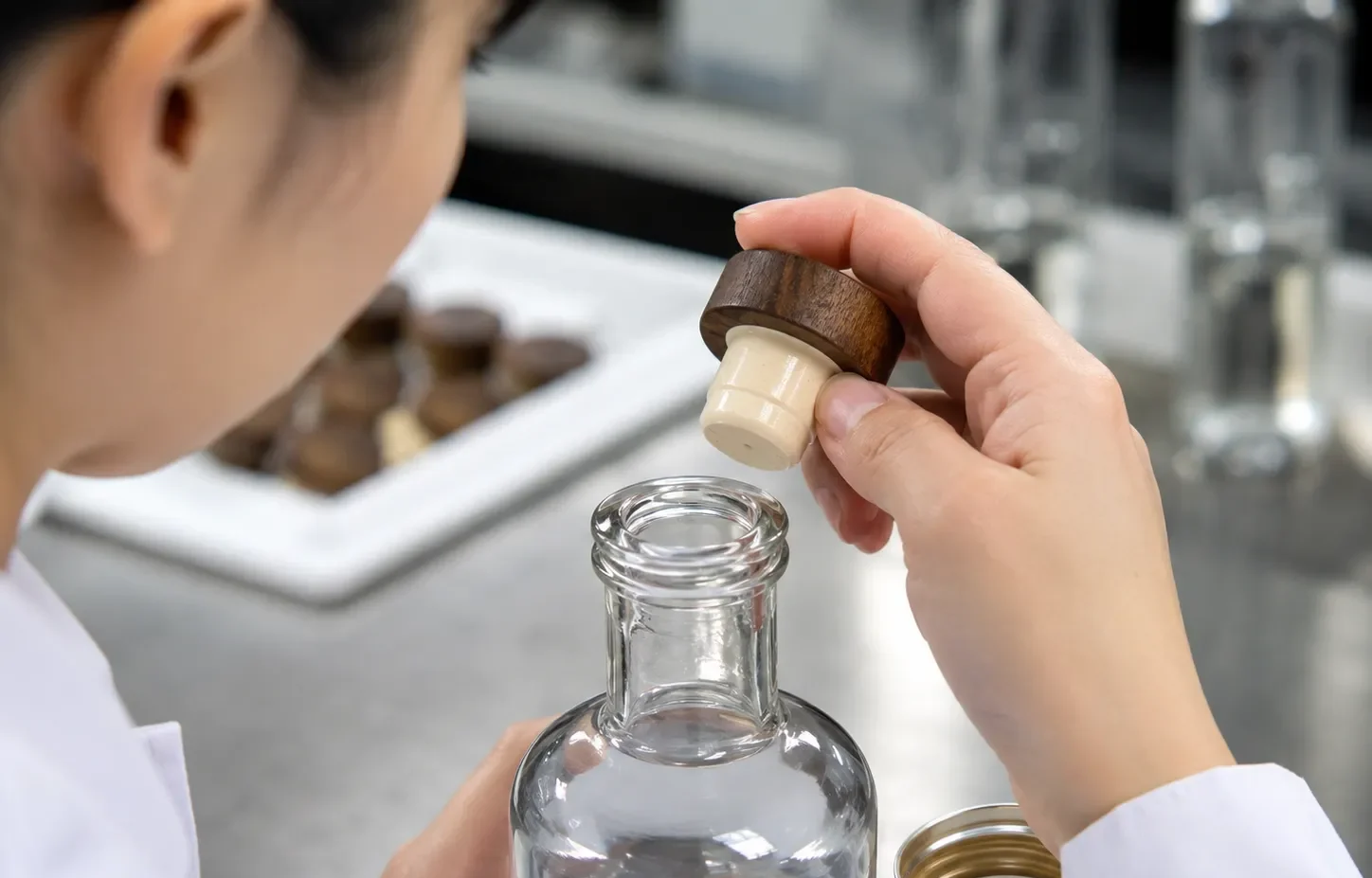
Insertion feel describes what happens when the stopper is pushed into the bottle neck during filling, assembly, or sample testing. It includes first contact, compression, push-in resistance, seating height, and alignment.
Opening experience describes what the consumer feels when removing the stopper. It includes grip comfort, pull force, release behavior, sound, motion, and resealing feel.
A stopper can insert well but open poorly. It can also open comfortably but fail to seal securely. That is why buyers should evaluate both technical fit and sensory performance before approving bulk production.
Key Factors: Neck ID, Shank Size, Material and Top Design
The bottle neck inner diameter is the starting point for stopper selection. Even bottles with similar outer shapes can have different inner bore dimensions. Small differences in glass tolerance can change insertion force, pull force, leakage risk, and resealing performance.
Buyers should not approve a bar-top stopper based only on a catalog image or nominal bottle size. For accurate matching, review the bottle drawing and test physical bottle samples from the intended production source.
The shank is the sealing part of the stopper. Shank diameter affects compression. If the shank is too small, the stopper may feel loose. If the shank is too large, the stopper may become hard to insert or open. Shank length also matters. A longer shank can improve retention and alignment, but it may increase opening resistance.
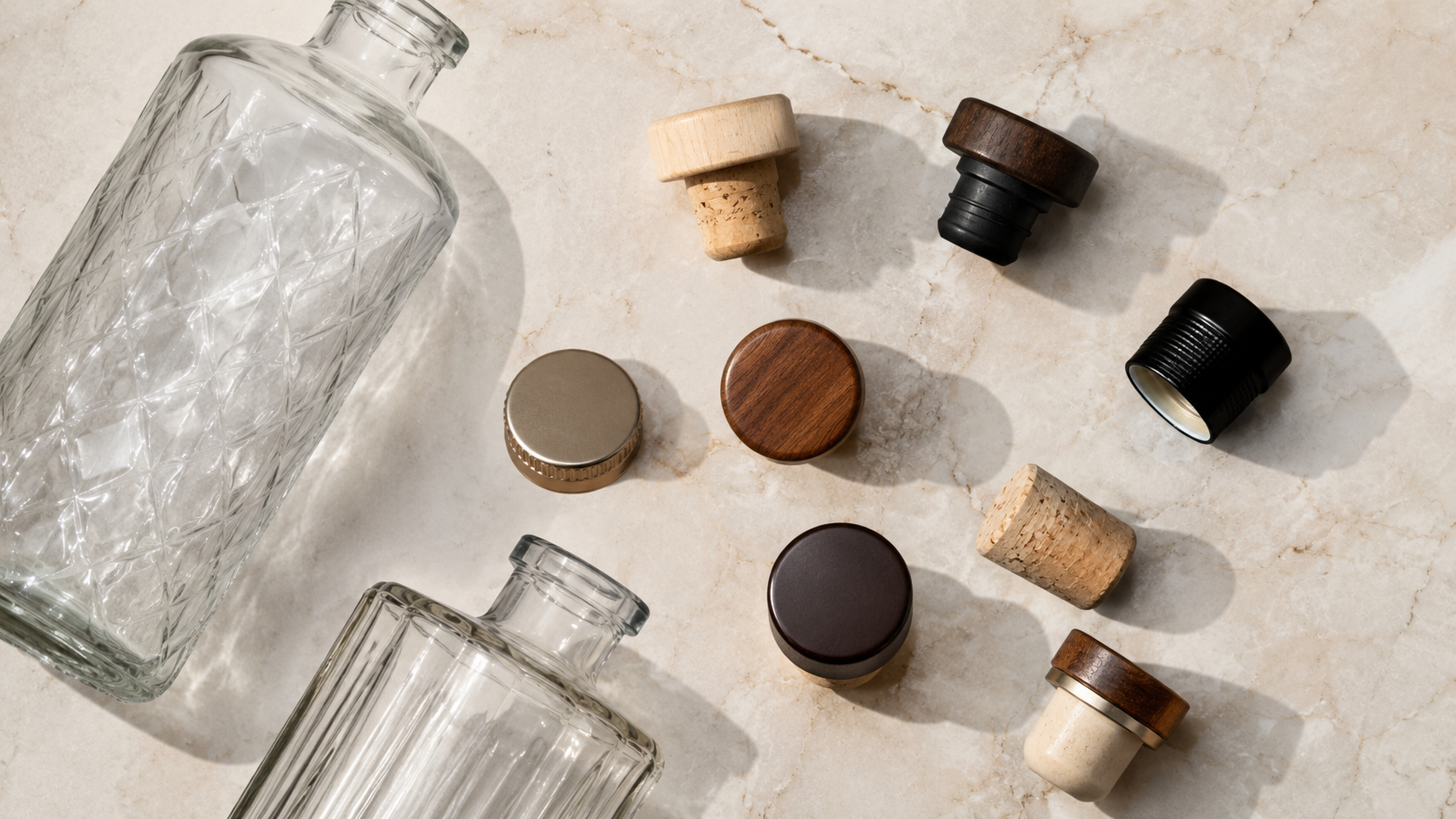
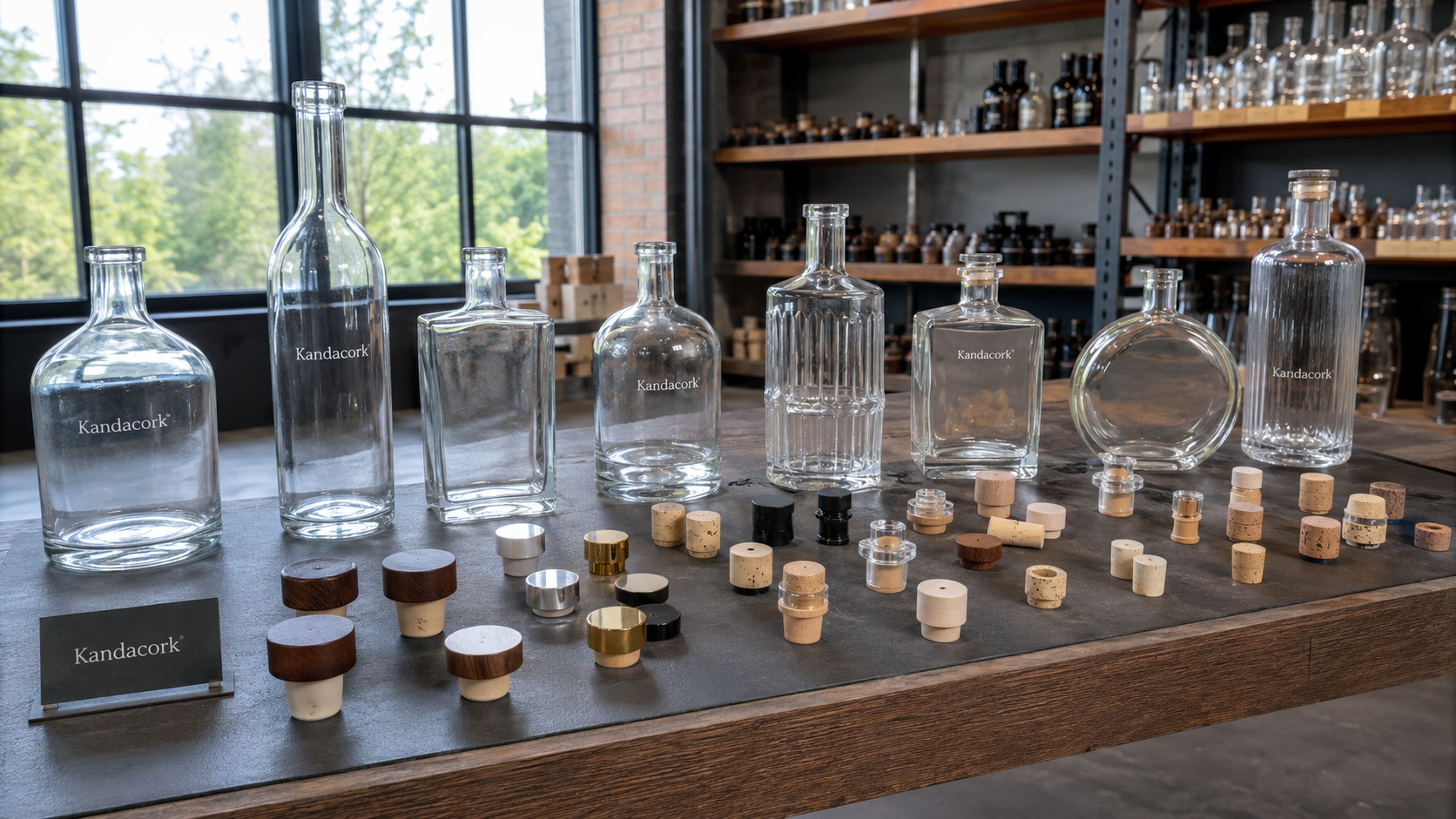
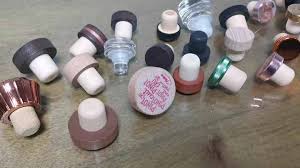
Material choice changes both performance and feel. Natural cork gives a traditional, warm impression, but it may show more variation than engineered materials. Micro-agglomerated cork offers a cork-based appearance with more controlled consistency. Synthetic cork provides repeatable dimensions and stable compression. Polymer, TPE, or engineered elastomer shanks can support smooth insertion and controlled pull force.
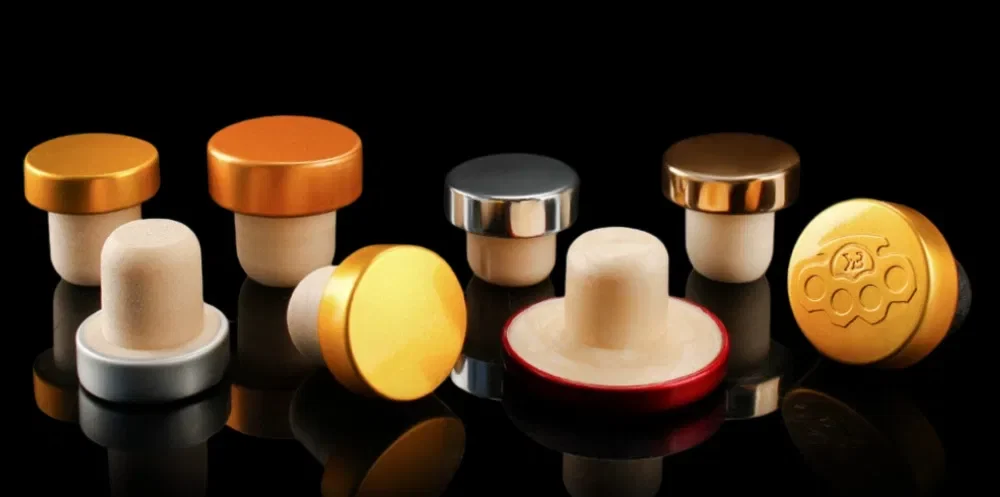
The top head affects hand feel and brand identity. Wood tops feel warm and craft-oriented. Plastic tops support color control and cost efficiency. Aluminum creates a clean modern appearance. Zamak and metal tops add luxury weight. Glass or resin tops can support limited editions and gift packaging.
Top weight, surface finish, and grip must be matched with the shank. A heavy top can feel premium, but it needs strong head-shank bonding and reliable retention. A smooth top may look elegant, but matte, ribbed, knurled, embossed, debossed, or textured surfaces often improve opening confidence.
How to Estimate Bar-Top Stopper Size Before Sampling
As a practical starting point, many spirits bar-top stoppers use a shank diameter slightly larger than the bottle neck inner diameter, often around 1 mm larger. This can help create compression between the shank and the bottle neck.
However, this should only be treated as a starting point, not a final rule. The final stopper size must be approved through physical bottle testing, because real bottle necks can vary by supplier, mold, batch, glass thickness, mouth profile, and internal tolerance.
A good size review should include bottle neck inner diameter, neck tolerance, mouth shape, shank diameter, shank length, shank material, insertion force, pull force, leakage checks, and capsule or shrink sleeve fit. Buyers comparing polymer or molded options can also review this plastic bar-top stopper guide when evaluating color control, repeatability, and bulk production needs.
For commercial spirits packaging, the safest method is to test actual bottle samples with several stopper options before confirming bulk production.
Bar-Top Stopper Approval Matrix
A strong sample approval process should turn stopper feel into clear pass, adjust, or retest decisions.
| Approval Item | What to Check | If It Fails, Adjust |
|---|---|---|
| Initial insertion | Does the shank enter the neck smoothly? | Change shank diameter, material, or mouth fit |
| Push-in resistance | Is the force controlled and repeatable? | Adjust shank size, flexibility, or insertion depth |
| Seating and alignment | Does the top sit level at a consistent height? | Review neck tolerance, shank straightness, or insertion method |
| Pull force | Does the stopper open with controlled resistance? | Adjust compression, shank length, or head grip |
| Resealing feel | Does the stopper reseal after repeated use? | Test material recovery and contact area |
| Leakage | Does the closure hold during handling checks? | Improve compression, shank contact, or material choice |
| Head grip | Is the top easy to hold and pull? | Improve surface texture, diameter, or edge radius |
| Head-shank bonding | Does the top remain secure under pull/twist stress? | Improve bonding method or reduce pull stress |
| Packaging compatibility | Does it fit capsule, sleeve, carton, and gift box? | Adjust top height, diameter, or packaging design |
This matrix helps buyers reduce subjective judgment and approve the bar-top closure based on performance, appearance, and production readiness.
Troubleshooting: Too Tight, Too Loose, Hard to Open, Leakage
Stopper Inserts Too Easily
If the stopper enters the bottle neck with almost no resistance, the shank may be undersized, too soft, or unsuitable for the neck profile. The bottle neck may also be larger than expected.
Recommended action: test a larger shank diameter, adjust the material, or review bottle neck tolerance with real samples.
Stopper Is Too Hard to Insert
If insertion requires excessive force, the shank may be too large, too rigid, or too long. The neck bore may also be tighter than the drawing suggests.
Recommended action: test a smaller shank, compare a softer or more flexible material, and review insertion depth.
Stopper Opens Too Easily
If the stopper pulls out too easily, the closure may not create enough consumer confidence. It may also raise concern during transport, storage, or repeated handling.
Recommended action: increase shank diameter, select a material with stronger compression recovery, or test a longer shank.
Stopper Is Too Hard to Open
If the stopper is difficult to remove, consumers may become frustrated. Excessive pull force can also stress the head-shank bond.
Recommended action: reduce shank compression, test another material, improve top grip, or adjust shank length.
Stopper Leaks During Handling
Leakage may result from weak compression, poor material recovery, bottle neck defects, insufficient contact area, or mismatch between the shank and bottle.
Recommended action: run filled-bottle leakage checks, side-position tests where appropriate, temperature exposure review, and transport-style handling checks.
Capsule or Shrink Sleeve Does Not Fit
A stopper may seal well but still fail the final packaging review if the top diameter, visible height, or neck finish does not match the capsule, shrink sleeve, tamper-evident band, or gift box.
Recommended action: review the complete packaging system before final approval.
Field Risks That Affect Stopper Feel After Production
A stopper may feel acceptable during a quick sample test but behave differently after filling, packing, storage, or transport. Bottle weight, headspace, storage temperature, shipping vibration, and top weight can all change how the closure feels in real use.
A stopper approved on empty bottles may perform differently after filling because bottle weight, headspace, and handling pressure change. For this reason, export projects should test the complete package, not only the closure.
Common risks include using a bottle neck designed for another product category, insufficient headspace, temperature changes during filling or storage, heat exposure during transport, pressure variation, heavy metal or glass tops, weak head-shank bonding, and missing capsule or shrink sleeve support.
For U.S. distilled spirits projects, buyers should also review TTB tamper-evident closure guidance. For international projects, food-contact material rules, destination-market requirements, and distribution testing may need to be confirmed before shipment.
The safest approach is to test the bottle, stopper, capsule, label, carton, divider, and shipping method as one packaging system.
Material and Spirits Category Selection Table
| Project Need | Recommended Direction | Why It Helps |
|---|---|---|
| Whisky, bourbon, cognac | Wood, metal, or weighted top with secure shank | Creates a deliberate premium pull and heritage feel |
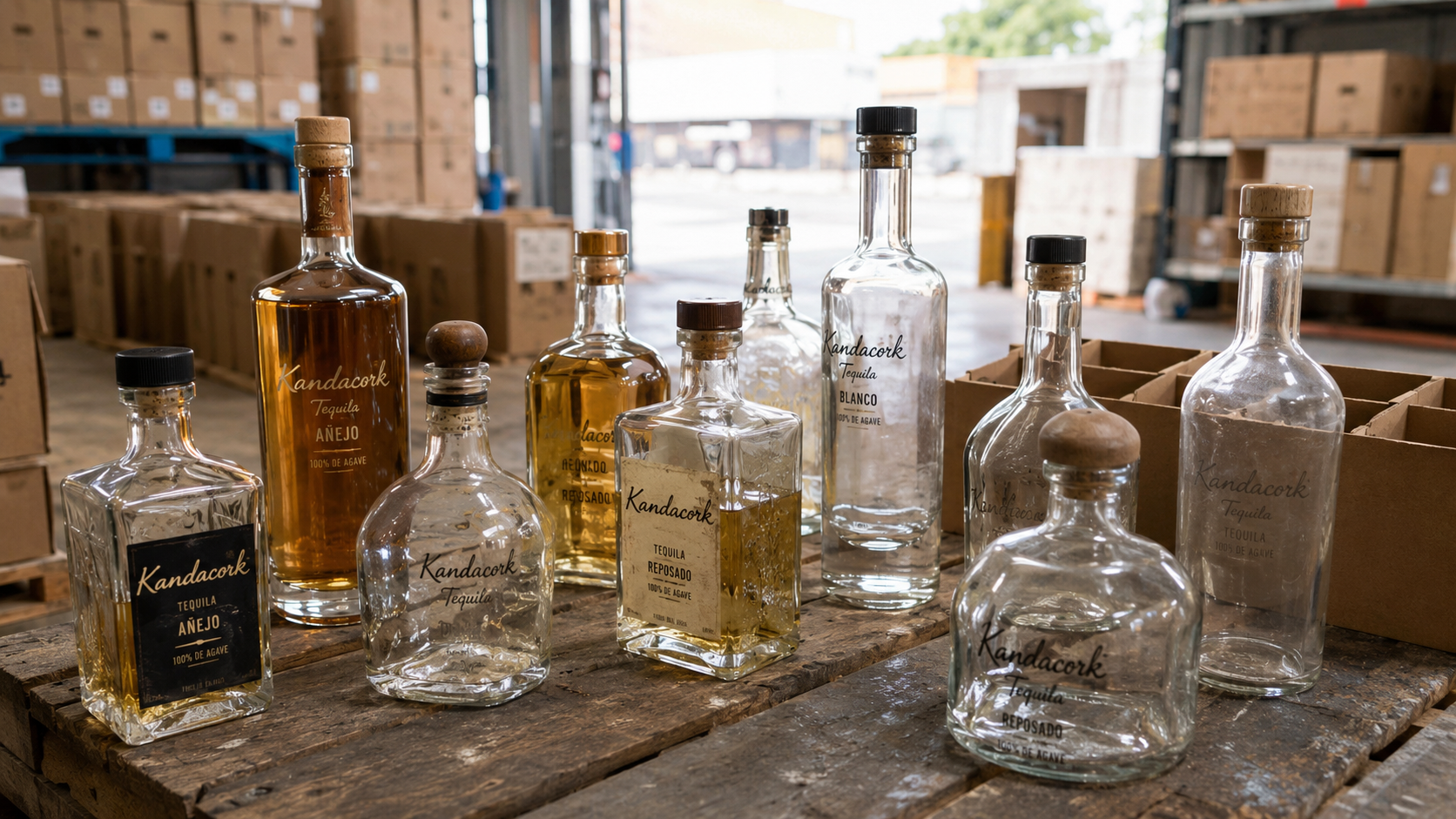
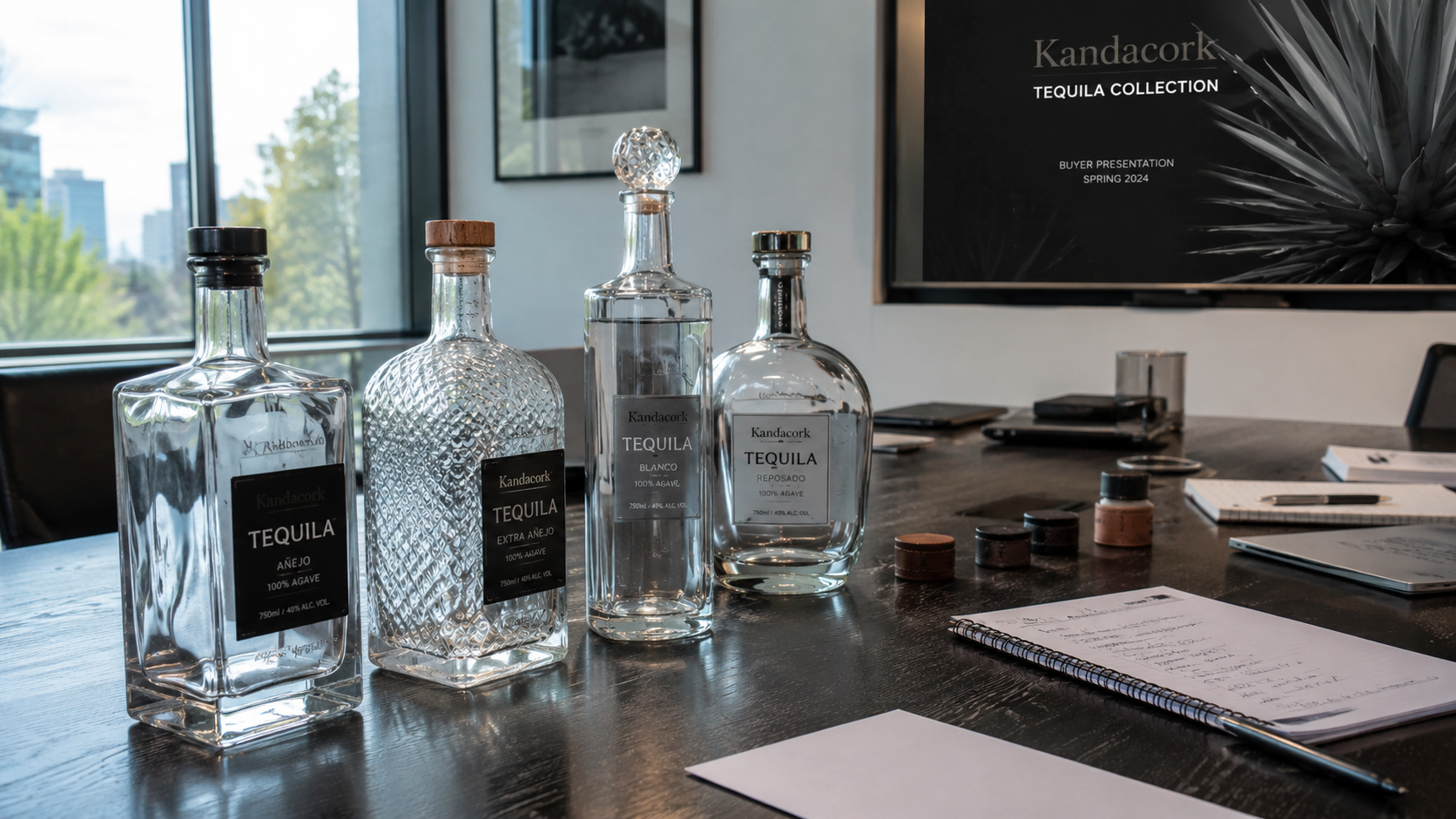
| Rum and tequila | Decorative top with stable export-ready fit | Balances visual personality and transport security |
| Gin and vodka | Plastic, aluminum, synthetic, or glass-like top | Supports clean design, color control, and SKU consistency |
| Liqueurs and specialty spirits | Easy reseal design with comfortable grip | Supports repeated use after opening |
| Private label programs | Synthetic or polymer shank with scalable top material | Improves consistency across larger orders |
| Limited editions | Metal, glass, resin, or custom-shaped top | Adds gift value and shelf impact |
| Cost-sensitive projects | Plastic top with suitable synthetic shank | Balances appearance, performance, and budget |
The best material is not always the most expensive one. The right choice depends on bottle design, brand positioning, filling method, order quantity, destination market, and desired consumer experience.
Testing Workflow Before Bulk Orders
Review the Bottle Drawing
Start with the bottle drawing. Check neck inner diameter, tolerance, neck finish height, mouth shape, fill level, and headspace. This helps Kandacork Closures recommend a practical shank range before sample testing.
Test Physical Bottle Samples
Physical testing is essential. Send real bottles from the intended bottle supplier, not only reference bottles. If the closure is being developed alongside a new bottle, early coordination with custom spirits bottles can help reduce fit risks between glass, stopper, labels, capsules, and export cartons.
For export projects, test filled bottles where possible. Filled bottles reveal real handling weight, leakage risk, and opening behavior more accurately than empty samples.
Compare Shank Materials
When the project is still flexible, compare several shank options. Natural cork, micro-agglomerated cork, synthetic cork, and polymer shanks may behave differently in the same bottle neck.
Record insertion feel, pull force, resealing behavior, visual alignment, and leakage performance.
Evaluate Insertion and Opening
During insertion testing, check first contact, push-in resistance, seating height, head alignment, shank deformation, and operator comfort.
During opening testing, check grip comfort, pull force, release smoothness, sound, motion, and consumer perception. It is useful to test the stopper with several people, not only engineers or packaging managers. A technical team may accept a tight stopper, while consumers may find it difficult to open.
Check Full Packaging Compatibility
After the initial fit review, test the bottle as a complete package. Check upright storage, side positioning where relevant, short inversion checks if appropriate, temperature changes, carton packing, and transport-style handling.
Also confirm compatibility with capsules, shrink sleeves, strip seals, tamper-evident bands, neck labels, gift boxes, dividers, export cartons, and pallet protection. For projects where branded surfaces, tactile decoration, or special neck finishes are part of the concept, coordinated bottle decoration and branding can help buyers review the full packaging presentation before launch.
Approve a Reference Sample
Before bulk production, approve a physical reference sample. Keep one approved sample with the buyer, one with the supplier, and one with the filling or assembly partner if needed.
The approval record should include shank diameter, shank length, shank material, head material, color, finish, decoration method, insertion depth, packing method, approval date, and project code.
What Kandacork Checks During Sample Review
For sample review, Kandacork Closures can check neck fit, shank compression, insertion feel, pull force, seating height, leakage risk, capsule compatibility, decoration feasibility, and packing requirements before bulk production.
This helps buyers compare stopper options under real project conditions instead of relying only on catalog specifications. It also helps reduce rework when the closure must match a custom bottle, branded top, capsule, gift box, or export carton.
For private label buyers and distributors managing multiple SKUs, sample review can also support reorder consistency. Once a reference sample is approved, the same specification can be used as the control point for future production.
Request stopper samples for insertion and pull-force comparison before approving bulk orders.
Supplier Capability and Deliverables Checklist
A qualified bar-top stopper supplier should help buyers reduce uncertainty before production, not simply sell a standard catalog item.
Before bulk ordering, confirm whether the supplier can provide:
- Bottle neck fit recommendation
- Shank material comparison
- Physical stopper samples
- Approved reference sample
- Decoration proof
- Technical specification
- Packing specification
- Food-contact material document if required
- QC inspection points
- Bulk production specification
- Reorder consistency record
Buyers should also ask whether the supplier can support custom top shape, Pantone color matching, wood finish selection, metal plating, embossing, debossing, pad printing, hot stamping, laser engraving, export packing, sample lead time, MOQ, and bulk production scheduling.
A strong supplier should make the sampling and approval process clearer, faster, and more reliable.
Sample and Quotation Information
To receive an accurate recommendation from Kandacork Closures, buyers should prepare the key project information before requesting samples or a quotation.
Must Send
- Bottle drawing
- Physical bottle samples if available
- Neck inner diameter and tolerance if available
- Spirits category
- Expected order quantity
- Preferred shank material
- Preferred top material
- Logo artwork or branding requirement
- Capsule or shrink sleeve requirement
- Destination market
Helpful to Send
- Filling method
- Manual or machine insertion method
- Color references
- Export carton or gift box requirement
- Target launch date
- Desired opening feel
For brand development, describe the intended experience in simple terms. Examples include “traditional whisky feel,” “modern gin closure,” “heavy luxury pull,” “easy liqueur reseal,” or “cost-effective private label stopper.”
This helps Kandacork Closures match technical closure performance with the desired brand experience.
Why Work With Kandacork Closures
Kandacork Closures supports spirits brands and packaging buyers with custom bar-top stopper development, material comparison, bottle neck fit review, sample testing, and quotation preparation.
Instead of treating the closure as a simple accessory, Kandacork Closures helps buyers evaluate how the stopper performs in real use. This includes insertion feel, pull force, shank compression, top material, decoration quality, capsule compatibility, leakage risk, and packaging readiness.
For distilleries, private label buyers, importers, distributors, bottlers, and packaging procurement teams, this support can reduce trial-and-error during development. Buyers can compare wood, plastic, aluminum, metal, glass, cork, synthetic, and polymer options based on bottle design, brand position, order quantity, and target market. Buyers comparing closure systems beyond T-top formats can also use this bar-top stoppers vs screw caps vs ROPP closures guide to review alternative structures before final sampling.
A strong closure project should end with a clear approved sample, a confirmed specification, and a quotation that reflects real production requirements.
FAQ
What should a bar-top stopper feel like?
A bar-top stopper should enter smoothly, compress securely, sit at a consistent height, open with controlled resistance, and reseal reliably after use.
How tight should a bar-top stopper be?
It should be tight enough to seal and feel secure, but not so tight that it slows bottling or makes the bottle difficult to open. The right tightness depends on bottle neck size, shank material, shank diameter, and insertion depth.
What is the best bar-top stopper size for my spirits bottle?
The best size depends on bottle neck inner diameter, tolerance, shank material, and desired pull force. A shank slightly larger than the neck inner diameter can be a useful starting point, but final approval should always depend on physical bottle testing.
Why is my bar-top stopper hard to open?
A stopper may be hard to open if the shank is oversized, too rigid, too long, or compressed too deeply. Poor top grip or bottle neck mismatch can also increase opening difficulty.
Why does my stopper feel too loose?
A stopper may feel too loose if the shank is undersized, the bottle neck is larger than expected, the material is too soft, or the insertion depth is insufficient.
How do you test stopper pull force?
Stopper pull force can be evaluated by measuring how much effort is needed to remove the closure from the bottle. Buyers should combine objective measurement with human opening tests because consumer experience also depends on grip, release smoothness, and perceived security.
What information is needed for a stopper quotation?
Buyers should provide bottle drawings, physical samples, neck size, spirits category, preferred materials, logo artwork, order quantity, filling method, capsule requirement, and destination market.
Recommended Structured Data
The published page can use Article, BreadcrumbList, Organization, and Product or Service schema. FAQPage markup may still help structure visible Q&A content, but FAQ rich result eligibility is limited by Google. All structured data should match visible page content and be tested before publication.
Conclusion: Treat Stopper Feel as Engineering and Brand Experience
A bar-top stopper must seal the bottle, protect the spirit, support filling, survive handling, and deliver a confident opening moment. The right stopper feel comes from technical matching and sensory evaluation together.
Before bulk ordering, buyers should review bottle drawings, test real bottles, compare shank materials, evaluate insertion and opening behavior, check leakage, confirm capsule compatibility, and approve a reference sample.
Kandacork Closures can help spirits brands, distilleries, private label buyers, importers, distributors, bottlers, and packaging teams select, customize, test, and quote bar-top stoppers for commercial spirits packaging projects.
To request samples or a quotation, share your bottle drawing, neck inner diameter, physical bottle samples, target spirit category, preferred top material, logo artwork, order quantity, and destination market through the Kandacork Closures quotation form.