Quick Answer: What Causes Bar-Top Stopper Leakage?
Bar-top stopper leakage is usually caused by poor stopper-neck fit, incorrect shank diameter, unstable material compression, inconsistent bottle neck tolerance, insufficient insertion depth, or weak filled-bottle testing before shipment.
For export spirits packaging, leakage should not be judged by stopper appearance alone. The closure must be tested with the actual bottle, liquid, fill level, shank material, carton structure, and expected transport conditions.
For spirits brands, distilleries, private label buyers, importers, distributors, bottlers, and packaging buyers, the safest approach is to evaluate the bar-top stopper as part of the complete packaging system.
Why Leakage Matters for Export Spirits Brands
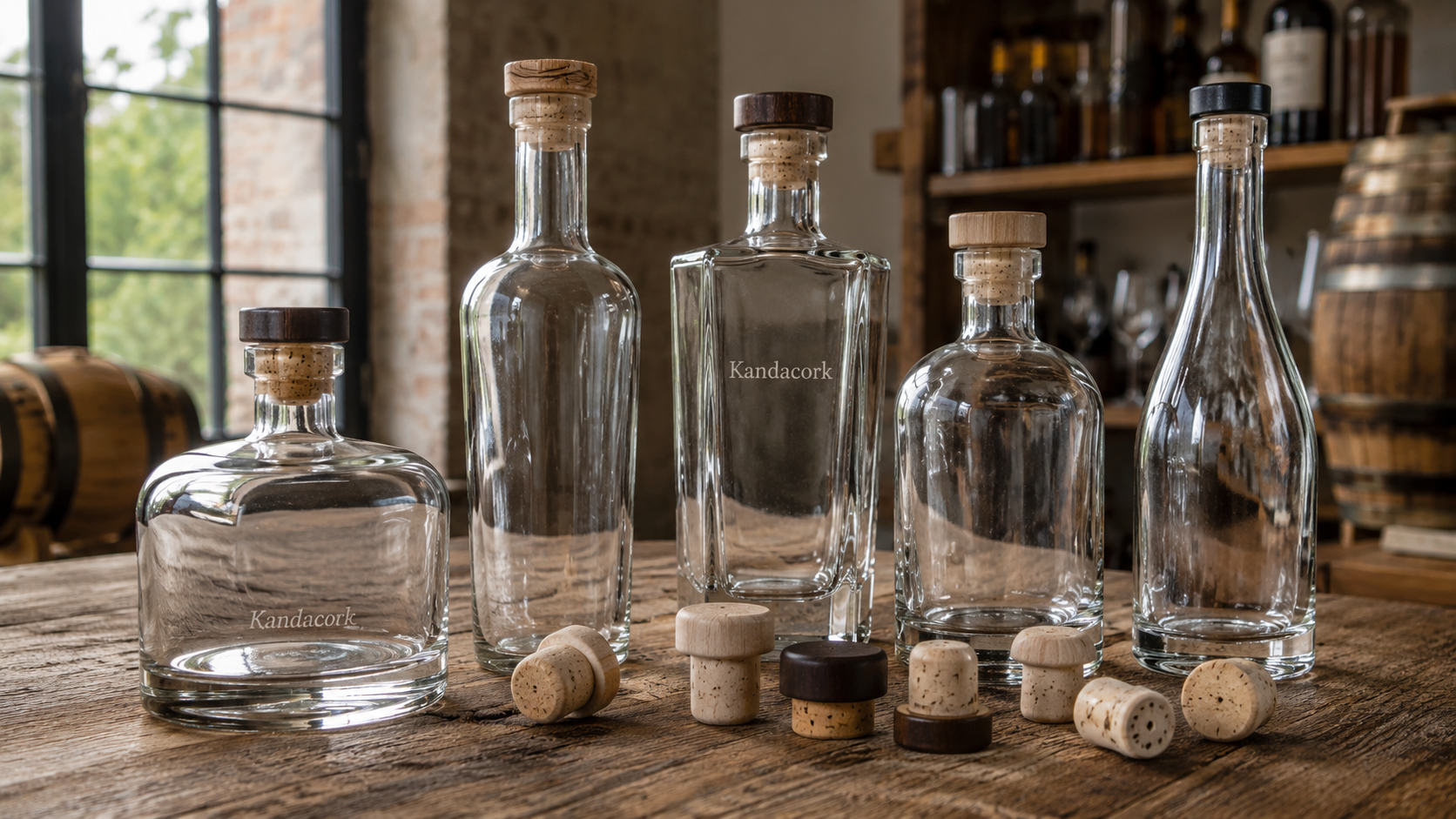
A bar-top stopper is often selected because it creates a premium opening experience. It supports shelf appeal, custom branding, reclosability, and a stronger hand feel for whisky, rum, gin, vodka, tequila, brandy, liqueurs, and other distilled spirits.
However, the stopper is not only a decorative component. It must protect the liquid, maintain a clean bottle neck, avoid carton staining, and survive the distribution route before the bottle reaches the importer, distributor, retailer, or consumer.
In export spirits packaging, even minor leakage can create serious commercial problems. Wet necks, alcohol odor, stained dividers, damaged labels, rejected cartons, distributor claims, and delayed market launch can all result from poor closure compatibility.
Kandacork Closures supports spirits packaging buyers with stopper-neck fit review, shank material comparison, sample preparation, and export-ready closure production for custom wooden bar-top stoppers and other branded spirits closure projects.
Bar-Top Stopper Basics: Head, Shank, Bottle Neck Finish, and Neck Bore
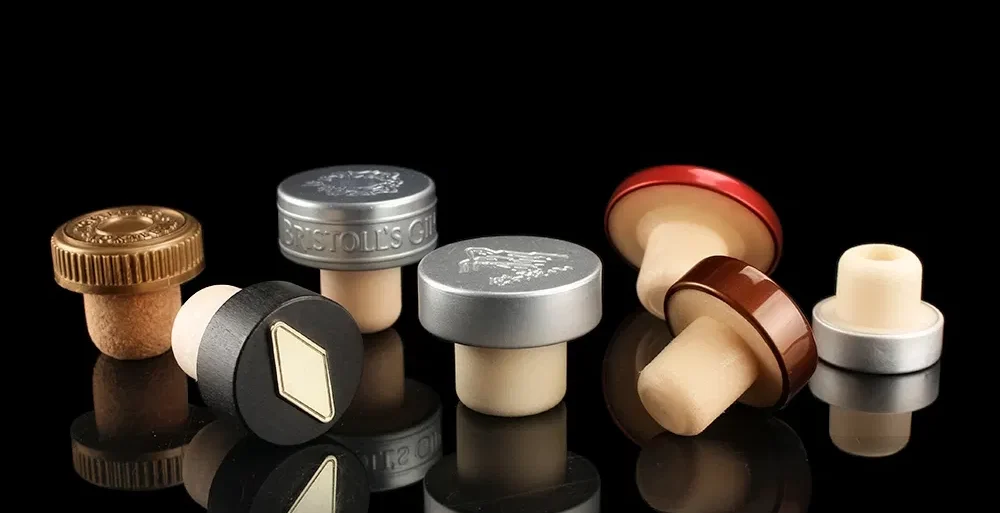
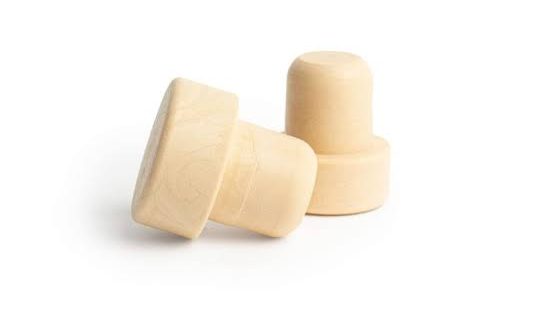
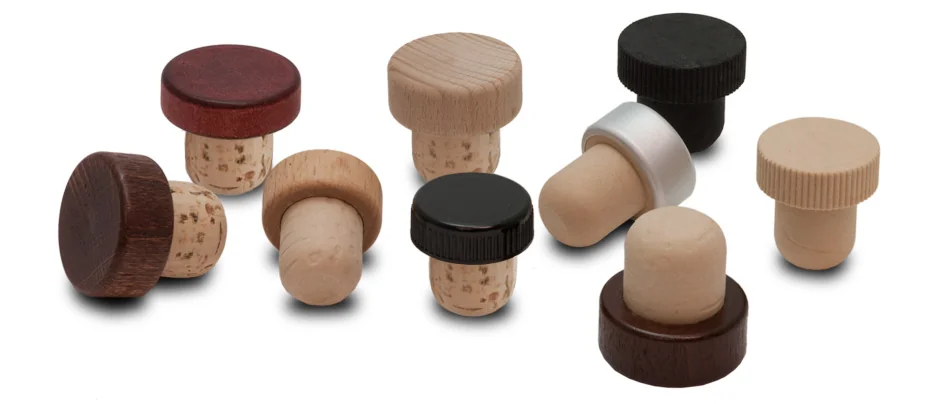
A bar-top stopper, also called a T-top stopper or bartop cork, usually has two main parts.
The head is the visible top component. It may be made from wood, aluminium, plastic, zinc alloy, glass, ceramic, resin, or other decorative materials.
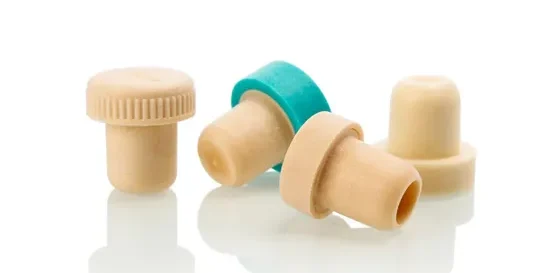
The shank is the sealing part inserted into the bottle neck. It may be made from natural cork, micro-agglomerated cork, synthetic cork, polymer, or other engineered sealing materials.
The bottle neck finish refers to the structural area of the bottle opening that interacts with the closure. The inner neck bore, also called the internal bore diameter or bottle neck bore, is the inner opening where the stopper shank creates sealing contact.
This distinction matters. A bottle may have a named neck finish, but the actual stopper fit depends heavily on the internal bore diameter, bore consistency, neck roundness, surface smoothness, and insertion depth. For brands still developing the bottle itself, coordinated bottle design and closure matching through spirits bottle development and closure fit can reduce mismatch before tooling or mass production begins.
A premium stopper head cannot solve a poor shank fit. If the shank does not create stable compression inside the neck bore, leakage may appear during storage, handling, vibration, or export transport.
Leakage Risk Matrix for Export Spirits Packaging
| Leakage Risk Factor | Typical Cause | Possible Result | Prevention Method |
|---|---|---|---|
| Wrong shank diameter | Shank too small or too large | Loose fit, difficult insertion, seepage | Confirm inner neck bore and test physical bottles |
| Neck finish mismatch | Bottle finish does not match closure design | Poor seating or micro-leakage | Review bottle drawing and actual neck tolerance |
| Weak material recovery | Shank cannot maintain compression | Leakage after storage or transport | Compare cork, synthetic, and polymer shanks |
| Insufficient insertion depth | Contact area is too short | Weak sealing surface | Define target insertion depth during sampling |
| Heavy stopper head | Side pressure or vibration movement | Stopper displacement | Improve carton divider and test packed bottles |
| Temperature change | Expansion, contraction, or pressure variation | Wet neck or alcohol odor | Run filled-bottle temperature-cycle tests |
| Poor carton protection | Closure receives direct impact | Head loosening or shank movement | Test the full packed bottle system |
Most leakage problems come from several small mismatches working together. The buyer should check the stopper, bottle, liquid, and export packaging as one system.
Why Export Shipping Increases Leakage Risk
Export routes expose bottles to longer and harsher conditions than a short warehouse check. Bottles may pass through filling lines, storage warehouses, trucks, ports, containers, vessels, customs zones, distribution centers, and retail warehouses.
During this process, the package may face vibration, heat, humidity, pressure variation, pallet compression, and carton-level handling stress.
A stopper that looks secure during a short upright test may move after long-distance vibration. A bottle that works with one sample stopper may behave differently when the full glass batch has wider neck bore tolerance. A heavy stopper head may look premium but create leverage on the shank if carton dividers press against the closure.
For air shipments, buyers should also confirm whether the product’s alcohol strength, packaging format, and destination route trigger dangerous goods documentation or carrier-specific requirements. IATA Dangerous Goods Regulations are a useful reference point for classification, marking, packing, labeling, and transport documentation.
This is why export spirits packaging should be tested as a complete system: bottle, stopper, liquid, headspace, carton, dividers, pallet, and shipping route.
Main Causes of Bar-Top Stopper Leakage
Wrong Shank Diameter
Shank diameter is one of the most important factors in leakage control.
If the shank is too small, it may not create enough compression inside the bottle neck bore. The stopper may feel loose, rotate easily, or allow seepage around the neck.
If the shank is too large, insertion may become difficult. This can lead to inconsistent closure height, poor bottling efficiency, excessive pull-out force, or stress on the bottle neck.
Some standard spirits bottles may use neck openings such as 18.5mm or 21.5mm. In many projects, the stopper shank is selected slightly larger than the bottle neck opening to create controlled compression. For example, an 18.5mm neck opening may be tested with a 19.5mm shank, while a 21.5mm opening may be tested with a 22.5mm shank. These are only starting references, not universal rules.
The final size should be confirmed through actual bottle samples, inner neck tolerance, insertion force, pull-out force, and filled-bottle leakage testing.
Inconsistent Bottle Neck Bore Tolerance
Glass bottles are made within tolerances. Even bottles from the same series may show small differences in inner neck bore, roundness, or surface finish.
These variations affect closure compatibility. One bottle may hold the stopper tightly, while another bottle from the same production batch may feel looser.
For large export orders, buyers should test multiple bottles from the intended production batch instead of approving a closure based on one display sample.
Poor Compression and Recovery
A bar-top stopper must compress during insertion and maintain sealing pressure after storage. This is known as compression recovery.
Natural cork offers a traditional premium image, but it may show natural variation. Micro-agglomerated cork provides a more controlled cork-based structure. Synthetic cork and engineered polymer shanks can offer more repeatable dimensions and stable compression.
The best material depends on bottle neck bore tolerance, brand positioning, product type, export route, target price, and test results.
Insufficient Insertion Depth
Insertion depth affects the stopper-neck contact area between the shank and the bottle neck.
If insertion is too shallow, the stopper may not resist vibration or pressure changes well. If insertion is too deep, the bottle may look inconsistent, and consumer opening feel may become too tight.
Buyers should define the target insertion depth during sampling and verify it before bulk production.
Heavy Stopper Head Movement
Luxury spirits packaging often uses heavy wood, metal, glass, ceramic, or custom decorative heads. These materials improve shelf impact, but they can also change closure behavior during shipping.
A heavy head may create leverage on the shank during vibration or carton compression. If the carton presses against the head, the stopper may move slightly inside the neck over time. For premium projects using metal or weighted heads, reviewing custom metal bottle stoppers as part of the full closure system can help buyers balance luxury appearance with secure fit and export packing requirements.
Export cartons should protect the closure area and avoid direct side pressure on the stopper head.
Fill Level, Headspace, and Alcohol Strength
Leakage risk is also affected by the liquid inside the bottle.
Fill level and headspace influence pressure behavior during temperature changes. Alcohol strength can affect material compatibility, odor performance, and long-term sealing stability.
A stopper that works well for one spirit may not automatically work for another. Gin, rum, whisky, vodka, tequila, brandy, liqueurs, and flavored spirits may have different ABV levels, aromas, oils, sugars, or additives.
How to Diagnose Bar-Top Stopper Leakage
When leakage appears during sample testing or after shipment, buyers should diagnose the issue step by step instead of immediately blaming one component.
| Diagnosis Step | What to Check | Why It Matters |
|---|---|---|
| Locate the leakage area | Neck, shank contact area, carton, label, or bottle body | Confirms whether the issue is closure fit, bottle defect, or packing damage |
| Measure inner neck bore | Check actual internal bore diameter on several bottles | Identifies tolerance variation and fit inconsistency |
| Compare shank diameter | Check stopper shank size and surface consistency | Confirms whether compression is too weak or too tight |
| Review insertion depth | Check closure height and sealing contact area | Finds shallow insertion or inconsistent bottling setup |
| Check shank recovery | Compare cork, synthetic, or polymer behavior after storage | Reveals material compression weakness |
| Test production bottles | Use several bottles from the real production batch | Avoids approving fit based on one sample bottle |
| Review liquid and logistics | Check ABV, fill level, headspace, temperature, and vibration | Connects leakage to export transport conditions |
| Re-test packed bottles | Test filled bottles inside the intended carton | Confirms full packaging system performance |
This workflow helps packaging buyers move from symptoms to root causes. It also gives suppliers clearer information for sample adjustment. Buyers comparing broader cap, cork, and stopper options can use a liquor bottle closure solutions guide to understand how bottle neck review, sample matching, closure recommendation, and bulk production coordination work together.
Natural Cork vs Synthetic Cork vs Micro-Agglomerated Cork
| Shank Material | Advantages | Possible Concerns | Best-Fit Use Cases |
|---|---|---|---|
| Natural cork | Traditional look, premium perception, natural feel | Natural variation and density differences | Heritage spirits, craft spirits, premium packaging |
| Micro-agglomerated cork | More controlled cork structure, consistent appearance | Requires quality control on density and bonding | Mid-to-premium spirits needing cork identity and better consistency |
| Synthetic cork | Repeatable dimensions, stable appearance, controlled compression | May feel less traditional than natural cork | High-volume spirits, private label projects, consistency-focused export orders |
| Polymer or TPE-style shank | Engineered sealing behavior and dimensional control | Must be checked for product compatibility | Technical projects, demanding neck tolerance, modern closure systems |
| Hybrid shank | Balances appearance, compression, and performance | Requires supplier development and testing | Custom premium spirits packaging |
The best material is not always the most expensive one. It is the one that matches the bottle neck bore, protects the product, supports the brand image, and passes export testing.
Export Leakage Testing Checklist Before Bulk Orders
Filled-bottle testing is more reliable than empty component checks. It helps buyers understand how the stopper performs with real liquid, headspace, alcohol strength, and packaging stress.
| Test Item | Purpose | What to Check |
|---|---|---|
| Upright storage test | Simulates normal storage | Wet neck, odor, seepage, stopper movement |
| Inverted leakage test | Checks seal under direct liquid contact | Liquid escape, staining, shank swelling |
| Horizontal storage test | Simulates non-ideal handling | Neck leakage, label damage, carton wetness |
| Temperature-cycle test | Simulates hot and cold logistics environments | Material recovery, pressure behavior, stopper movement |
| Vibration test | Simulates truck, parcel, or sea freight movement | Closure movement, carton staining, head impact |
| Drop or handling test | Checks carton protection | Stopper displacement, leakage after impact |
| Pull-out force test | Reviews opening resistance and seal strength | Too loose or too hard to open |
| Insertion force test | Reviews bottling line compatibility | Difficult insertion or inconsistent height |
| Post-test inspection | Reviews final performance after stress | Odor, seepage, closure tilt, dust, head separation |
For leakage evaluation, ASTM D5094 container and closure system integrity is useful because it focuses on container and closure system performance in distribution environments, including upright, inverted, and side storage or transport conditions. These standards should not replace project-specific testing, but they help packaging teams think more systematically about leakage, closure integrity, and export distribution risk.
Pre-Sampling and Quotation Checklist
Before requesting samples or a quotation, buyers should prepare the information needed for technical review.
| Information Needed | Why It Matters |
|---|---|
| Bottle drawing | Helps review neck finish, opening size, and insertion depth |
| Physical bottle samples | Confirms real fit beyond drawing data |
| Inner neck bore diameter and tolerance | Determines possible shank size range |
| Bottle capacity and fill level | Affects headspace and pressure behavior |
| Product category and ABV | Helps review material compatibility |
| Target export market | Affects documentation and testing expectations |
| Preferred head material | Influences weight, appearance, and carton protection |
| Preferred shank material | Affects compression, recovery, and sealing behavior |
| Logo artwork and decoration method | Supports custom branding development |
| Order quantity and launch schedule | Helps plan sampling, tooling, and production |
| Bottling method | Affects insertion force and line efficiency |
| Carton and pallet design | Influences transport leakage risk |
| Previous leakage issues | Helps identify root causes earlier |
To speed up sample development, send your bottle drawing, inner neck bore range, product ABV, fill level, preferred stopper materials, and target export market to Kandacork Closures for a stopper fit review and sample recommendation.
Supplier Capability Checklist
A capable bar-top stopper supplier should provide both design support and technical closure guidance.
Buyers should ask:
- Can you review bottle drawings and physical bottle samples?
- Can you measure or evaluate inner neck bore tolerance?
- Can you recommend shank diameter based on actual bottle fit?
- Can you compare natural cork, micro-agglomerated cork, synthetic cork, and polymer shanks?
- Can you support custom heads in wood, aluminium, plastic, glass, metal, or resin?
- Can you provide logo decoration such as printing, engraving, embossing, debossing, or hot stamping?
- Can you prepare pre-production samples?
- Can you check insertion feel and pull-out force?
- Can you support filled-bottle leakage review?
- Can you inspect shank diameter, head bonding, surface finish, and packing quality?
- Can you adjust the stopper if leakage appears during testing?
These questions help buyers identify whether a supplier is only selling stock closures or can support a custom export packaging project.
Kandacork Closures Project Support Process
Kandacork Closures supports export spirits packaging projects through a structured closure development process.
Fit Review
The project starts with bottle drawings, physical bottle samples, inner neck bore dimensions, neck finish details, product information, and export requirements. This helps identify possible stopper-neck fit issues before sample production.
Material and Design Selection
Based on the bottle, brand position, alcohol strength, and export route, suitable shank materials can be compared. Buyers can review natural cork, micro-agglomerated cork, synthetic cork, polymer, or hybrid options. Stopper head materials and decoration methods can also be developed around the brand concept.
Sample and Leakage Testing
Pre-production samples can be prepared for appearance review, insertion testing, pull-out feel, filled-bottle leakage checks, and carton compatibility review. If leakage appears, the shank diameter, material, insertion depth, or packing method can be adjusted. A related custom bar-top closure project checklist can help buyers compare materials, sizing, logo options, samples, MOQ, and bulk supply support before confirming production.
Bulk Production and Export Packing Support
After sample approval, Kandacork Closures supports dimensional inspection, head bonding control, surface finish review, packing checks, and export packaging coordination. This helps buyers move from research to sample request, quotation, and bulk order with lower technical uncertainty.
Practical Example: Why a Good-Looking Stopper May Still Leak
A private label spirits buyer may choose a heavy wood bar-top stopper because it looks premium. The sample looks excellent on one display bottle, so the buyer approves the design for bulk production.
After export shipment, several cartons arrive with alcohol odor and stained dividers. The stopper heads still look attractive, but some shanks have moved slightly during vibration. The carton divider pressed against the heavy heads, and the bottle neck bore tolerance was wider than expected.
The issue was not only the stopper. It was the combination of shank diameter, bottle neck tolerance, head weight, carton protection, and insufficient filled-bottle testing.
This type of problem can often be reduced by testing several production bottles, checking pull-out force, reviewing carton protection, and simulating export handling before mass production.
FAQ
Why do bar-top stoppers leak during shipping?
Bar-top stoppers may leak during shipping because the shank does not fit the bottle neck correctly, the material does not maintain compression, the bottle neck tolerance varies, or the packed bottle faces vibration, temperature change, pressure change, or side pressure during export handling.
How do I choose the right stopper shank diameter?
Start with the bottle inner neck bore diameter and tolerance range. Then test physical bottle samples with different shank materials and sizes. The final decision should consider insertion force, pull-out force, leakage results, and consumer opening feel.
What is the difference between bottle neck finish and inner neck bore?
Bottle neck finish refers to the structural design of the bottle opening that works with the closure. Inner neck bore refers to the internal opening where the stopper shank actually seals. For bar-top stoppers, the inner bore diameter and consistency are critical for stopper fit and leakage control.
Is synthetic cork better than natural cork for export spirits packaging?
Synthetic cork can offer more consistent dimensions, while natural cork provides a traditional premium feel. Micro-agglomerated cork can balance cork identity with improved consistency. The best choice depends on bottle fit, brand positioning, export route, and filled-bottle test results.
What tests should be done before approving bar-top stoppers?
Buyers should test upright storage, inverted leakage, horizontal storage, temperature cycling, vibration, drop or handling stress, insertion force, pull-out force, and post-test visual inspection.
What information should I send for a sample review or quotation?
Send the bottle drawing, bottle sample, inner neck bore diameter, product ABV, fill level, export market, preferred stopper materials, logo artwork, order quantity, bottling method, and packing requirements. This helps the supplier recommend suitable samples and prepare a practical quotation.
Recommended Structured Data
For SEO and search understanding, the page can use Article schema, FAQPage schema, Organization schema, Product or Service schema, and BreadcrumbList schema.
FAQPage schema should only mark up questions and answers that are visible on the page. Product or Service schema should be used only if the page clearly presents a custom bar-top stopper service or product inquiry module.
Structured data should match the visible page content and should not include hidden claims, unrelated keywords, or unsupported service descriptions. This helps search engines understand the page without creating quality or eligibility risks.
Suggested Image ALT Text
- bar-top stopper shank diameter and bottle neck bore fit
- bar-top stopper leakage diagnosis workflow for export spirits packaging
- filled-bottle leakage testing checklist for bar-top spirits closures
- natural cork vs synthetic cork stopper shank comparison
- custom bar-top stopper sample review for export spirits packaging
Conclusion: Treat the Stopper as an Export Packaging System
Bar-top stopper leakage risks are rarely caused by one single issue. They usually come from the interaction between stopper shank diameter, bottle neck finish, inner neck bore, material compression, insertion depth, alcohol strength, export logistics, carton design, and supplier quality control.
For spirits brands, distilleries, private label buyers, importers, distributors, bottlers, and packaging buyers, the best strategy is to test the stopper as part of the complete export packaging system.
A premium bar-top stopper should look attractive, fit securely, open smoothly, reseal reliably, and survive the distribution environment.
Kandacork Closures helps spirits packaging buyers evaluate custom bar-top stopper options, review stopper-neck fit, prepare samples, and move toward quotation and bulk production with greater confidence.