Knowing how to send bottle samples for closure matching helps spirits brands reduce fit problems, leakage risk, capping issues, sample approval delays, and bulk order mistakes. A closure may look correct in a catalog image, but final performance depends on the real bottle neck, bore diameter, thread profile, sealing surface, liner structure, cork compression, tamper-evident area, filling method, and brand presentation.
For spirits packaging buyers, bottle sample submission is the practical starting point for a reliable closure project. It allows the supplier to move from assumptions to physical review before sample development, quotation, and bulk closure production.
This guide explains what bottle samples to send, how many bottles are needed, how to pack and label them, what project data to include, what a supplier checks after receiving samples, and how the process supports safer bulk ordering.
Who This Guide Is For
This guide is designed for spirits brands, distilleries, private label buyers, importers, distributors, bottlers, packaging engineers, purchasing teams, and product development managers preparing to send physical bottle samples for closure review before bulk orders.
It is especially useful if you are comparing cork stoppers, bar-top closures, ROPP caps, screw caps, non-refillable closures, capsules, shrink sleeves, or custom decorated spirits closures. Buyers who are also developing the bottle structure can coordinate closure decisions with custom spirits bottle development so the bottle finish, stopper style, decoration zone, and carton plan support the same launch goal.
Quick Answer: What Should You Send?
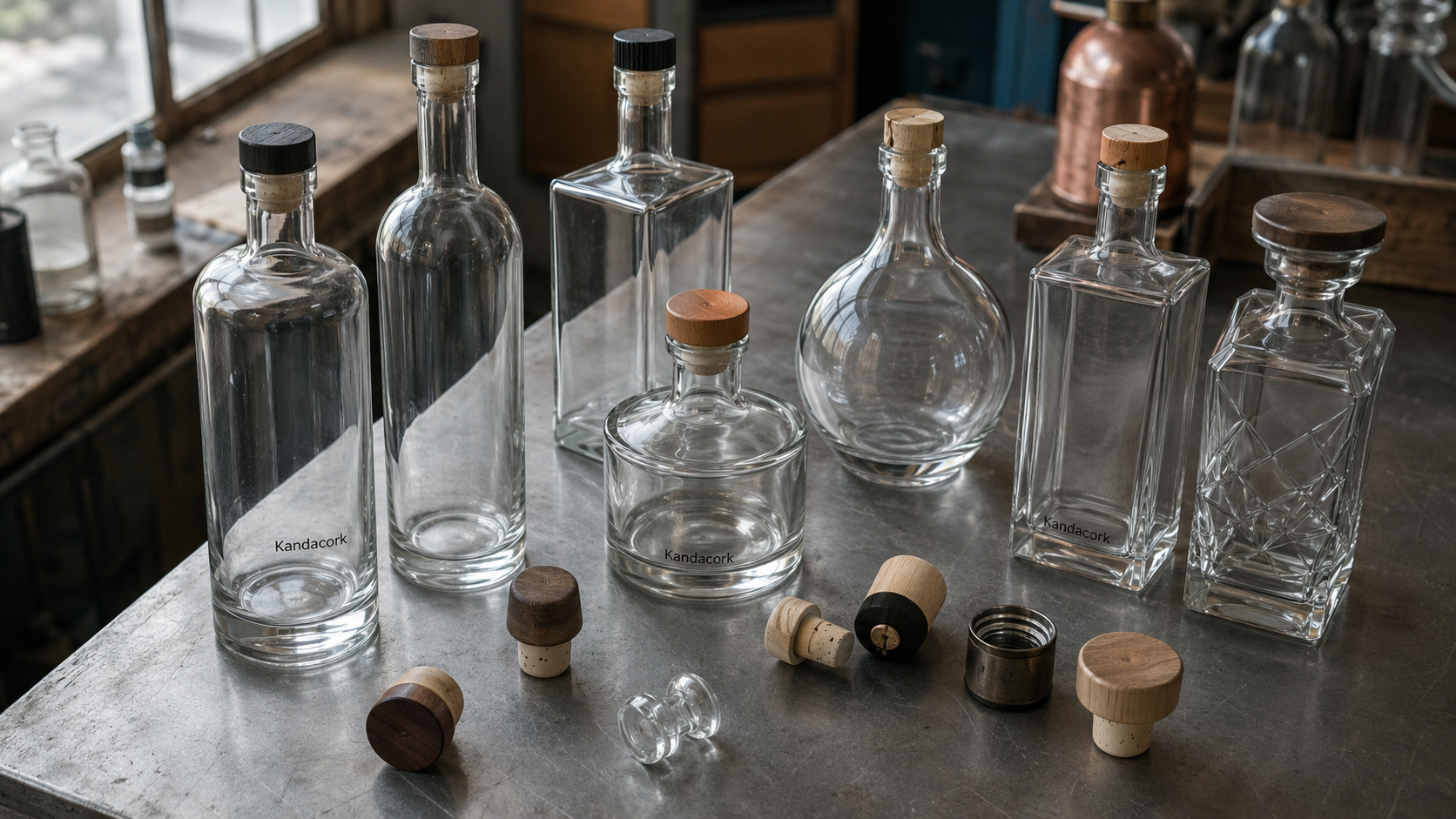
Send 3–6 clean, empty finished bottle samples, together with the bottle drawing, neck finish details, bore diameter, target closure type, product category, alcohol strength, filling method, decoration requirements, estimated order quantity, destination market, and launch timeline.
If your project includes different molds, multiple glass suppliers, coated bottles, decorated bottles, or several closure options, send additional samples and label each version clearly.
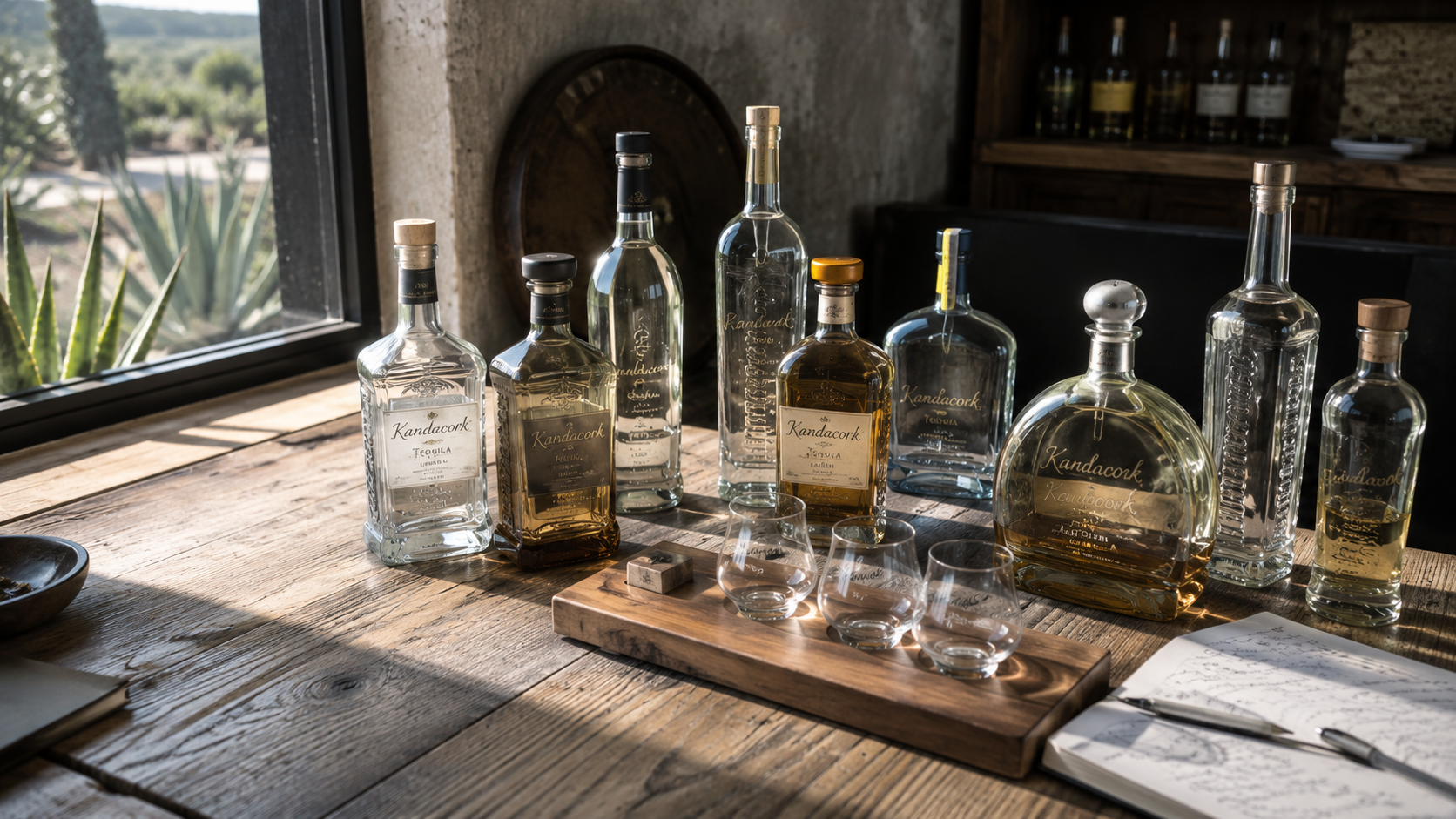
A complete sample package allows Kandacork Closures to review technical fit, appearance, material suitability, production feasibility, and quotation requirements before recommending a closure from its broader range of custom spirits bottle closures and stoppers.
Need a Preliminary Review Before Shipping Samples?
If your physical bottle samples are not ready yet, send bottle photos, drawings, neck finish details, bore diameter, and target closure requirements to Kandacork Closures for an early compatibility check.
A preliminary review can help narrow the closure direction before you ship samples. Physical bottles should still be reviewed before final sample approval, custom tooling, decoration confirmation, or bulk closure production.
Why Physical Bottle Samples Matter Before Bulk Closure Orders
Physical bottle samples matter because drawings and photos do not always represent real production conditions. Glass bottles may vary slightly between mold cavities, production batches, decoration processes, or suppliers. Even small differences can affect cork insertion, liner compression, torque, leak resistance, cap alignment, and opening feel.
Sample bottles help a closure supplier check the real package instead of relying only on nominal dimensions. This is especially important for premium spirits bottles, which may use heavy glass, custom shoulders, sprayed coatings, embossing, non-standard necks, or branded closure tops.
A physical review can confirm whether the closure sits straight, whether the cork insertion and pull-out feel are acceptable, whether cap torque is consistent, whether the liner or gasket compresses correctly, whether the tamper-evident band works properly, and whether the final bottle-and-closure combination looks balanced.
Photos and drawings are useful for early communication. Physical samples are recommended before final bulk closure approval.
Can Photos and Drawings Replace Bottle Samples?
Photos and drawings can support early screening, but they should not replace physical samples for final closure matching. A photo cannot show inner bore variation. A drawing may not reveal production tolerance. A neck finish code may not show the actual thread condition, sealing land quality, or coating build-up on the finished bottle.
This matters because spirits closures depend on real contact points. A cork stopper must compress properly inside the bore. A screw cap must match the thread and sealing surface. A ROPP cap must form correctly during application. A non-refillable closure may require precise fit between the insert, bottle neck, and tamper-evident structure.
For urgent projects, buyers can send photos, drawings, and project data first. Physical bottle samples should follow before sample approval or bulk production.
How Many Bottle Samples Should You Send?
For most spirits closure projects, send 3–6 bottle samples. This quantity usually allows the supplier to measure the bottle, test possible closure options, compare sample variation, and keep one bottle as a project reference.
Send more samples when:
- The bottle is made from a new custom mold
- The bottle comes from multiple mold cavities
- The bottle is supplied by different glass factories
- The bottle has spraying, frosting, coating, screen printing, or metallization
- Several closure types need to be compared
- Capping-line testing is required
- Leak testing or transport simulation is planned
- The launch is high volume or export focused
- Several internal teams need sample approval
Sending only one bottle creates risk. If that bottle does not represent normal production, the selected closure may not fit future batches consistently.
Should Bottle Samples Be Empty or Filled?
For initial closure matching, send clean, empty, dry bottles. Empty bottles are safer to ship, easier to inspect, and suitable for most first-stage fit checks.
Filled samples may be required later if the project needs alcohol compatibility testing, liner resistance testing, leakage testing with actual liquid, aroma interaction review, storage simulation, temperature-cycle review, or transport testing with liquid weight.
Spirits packaging can expose the closure to alcohol vapor, liquid contact, temperature changes, and long shipping routes. For premium or export projects, material compatibility should be reviewed before bulk approval.
Bottle Sample Submission Checklist
Use this checklist before shipping bottles to a closure supplier.
| Item | Why It Matters | Buyer Action |
|---|---|---|
| 3–6 clean empty bottles | Confirms real fit and tolerance variation | Pack each bottle separately |
| Bottle drawing | Speeds up technical review | Send PDF, CAD, or supplier specification |
| Neck finish code | Identifies the possible closure family | Include if available |
| Bore diameter | Critical for cork and bar-top stoppers | Measure or request from bottle supplier |
| Existing closure sample | Helps compare fit, feel, and proportion | Label as current reference |
| Target closure type | Guides recommendation | Specify cork, ROPP, screw cap, or other type |
| Product type and ABV | Supports material compatibility review | Add to project sheet |
| Filling method | Affects application and performance | State manual, semi-auto, or automatic |
| Decoration requirements | Affects appearance and clearance | Include artwork or finish notes |
| Estimated order quantity | Helps quotation accuracy | Provide first order and forecast if available |
| Destination market | Supports compliance and packing review | List country or region |
| Launch timeline | Helps plan samples and production | Provide target approval date |
After this checklist, add a page button or form CTA: Request Closure Matching Review.
Bottle Sample Submission Form: Copy This Before Shipping
Use the following form when preparing a shipment for closure matching. Include a printed copy inside the carton and send a digital copy by email.
| Field | Information to Provide |
|---|---|
| Company name | Buyer, brand owner, bottler, importer, or distributor |
| Contact person | Name, email, phone, and role |
| Project name | Brand name or internal project code |
| Bottle capacity | 50 ml, 100 ml, 375 ml, 500 ml, 700 ml, 750 ml, 1 L, or custom size |
| Bottle supplier | Glass supplier name, if available |
| Mold or batch number | Mold cavity, batch reference, or trial production number |
| Bottle finish | Neck finish, bore diameter, thread type, or finish drawing |
| Existing closure | Current cap, cork, stopper, or reference closure |
| Target closure type | Bar-top cork, synthetic cork, ROPP cap, screw cap, non-refillable closure, capsule, or sleeve |
| Spirit type | Whiskey, vodka, gin, rum, tequila, brandy, liqueur, or RTD |
| ABV | Alcohol by volume |
| Filling method | Manual, semi-automatic, or automatic |
| Decoration needs | Top material, logo, color, engraving, hot stamping, printing, coating, or plating |
| Destination market | Domestic market or export country |
| First order quantity | Expected first bulk order |
| Annual forecast | Estimated yearly demand, if available |
| Required sample date | Date when closure samples are needed |
| Target bulk order date | Expected production or launch timeline |
| Special notes | Gift box requirements, tamper evidence, retail channel, or compliance concerns |
This form can also be used as a downloadable bottle sample submission sheet for internal purchasing, supplier comparison, and shipment preparation.
Key Bottle Dimensions Checked During Closure Matching
A professional closure review is more than a visual check. Important dimensions and contact areas include the bore, neck finish, thread profile, sealing surface, tamper-evident band area, neck height, and shoulder clearance.
For broader bottle-to-closure fit principles, buyers can also review a dedicated glass bottle neck closure matching guide.
Bore Diameter
Bore diameter is the inner mouth diameter of the bottle. It is one of the most important measurements for cork stoppers and bar-top closures.
If the bore is too small, the cork shank may be difficult to insert or may create excessive opening force. If the bore is too large, the stopper may feel loose or create leakage risk.
Neck Finish
The neck finish defines the upper part of the bottle where the closure is applied. For screw caps and ROPP caps, the neck finish must match the cap structure. For cork stoppers, the mouth opening and internal finish are more important.
In glass packaging projects, finish documentation from organizations such as the Glass Packaging Institute helps buyers, bottle suppliers, and closure suppliers communicate dimensions, profiles, and tolerances more consistently.
Thread Profile
Thread profile affects screw cap and ROPP cap performance. Thread height, pitch, start position, and finish quality can influence torque, sealing, and capping-line stability.
For a deeper review of threaded cap applications, buyers can review a dedicated screw cap thread finish matching guide before confirming cap samples.
Sealing Surface
The sealing surface is where the liner, gasket, cork, or cap contacts the bottle. Chips, uneven glass, mold marks, coating build-up, or poor surface flatness can reduce sealing performance.
Tamper-Evident Band Area
For ROPP caps, tamper-evident caps, and non-refillable closures, the lower neck area must be checked. The band should engage properly without breaking too early, sitting too loose, or interfering with decoration.
For distilled spirits sold in regulated markets, tamper-evident closure requirements should be checked early with the destination market’s alcohol packaging rules. In the U.S. market, buyers commonly review TTB packaging guidance during compliance planning.
Spirits Closure Matching by Closure Type
Different spirits closures require different sample review priorities. This section gives a quick overview. Detailed technical selection should be handled in closure-specific guides or direct supplier review.
Bar-Top Cork Stoppers
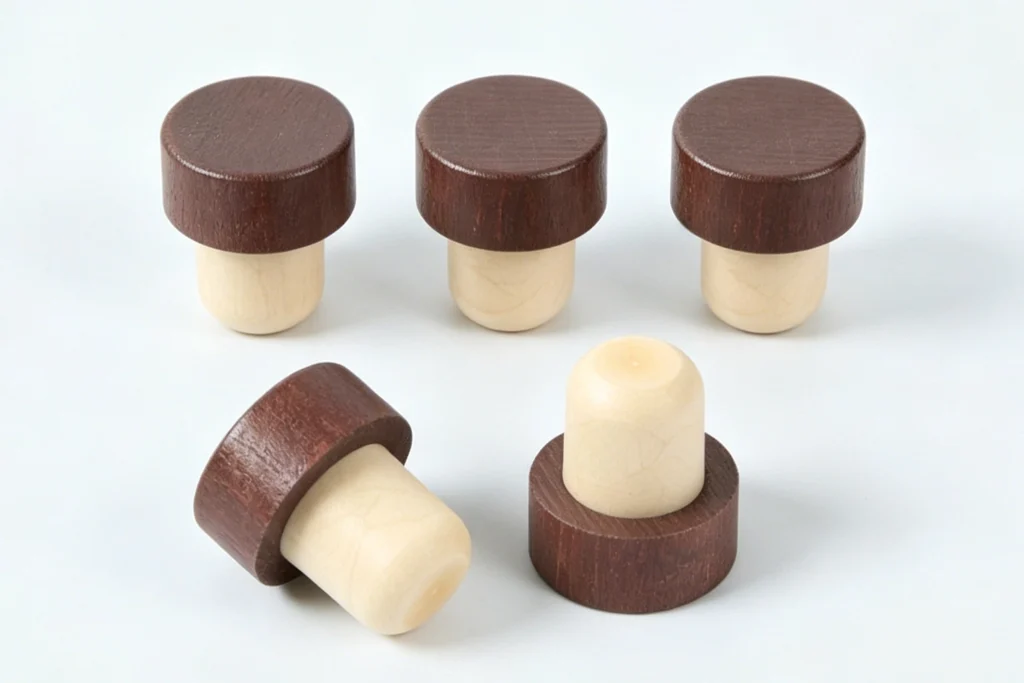
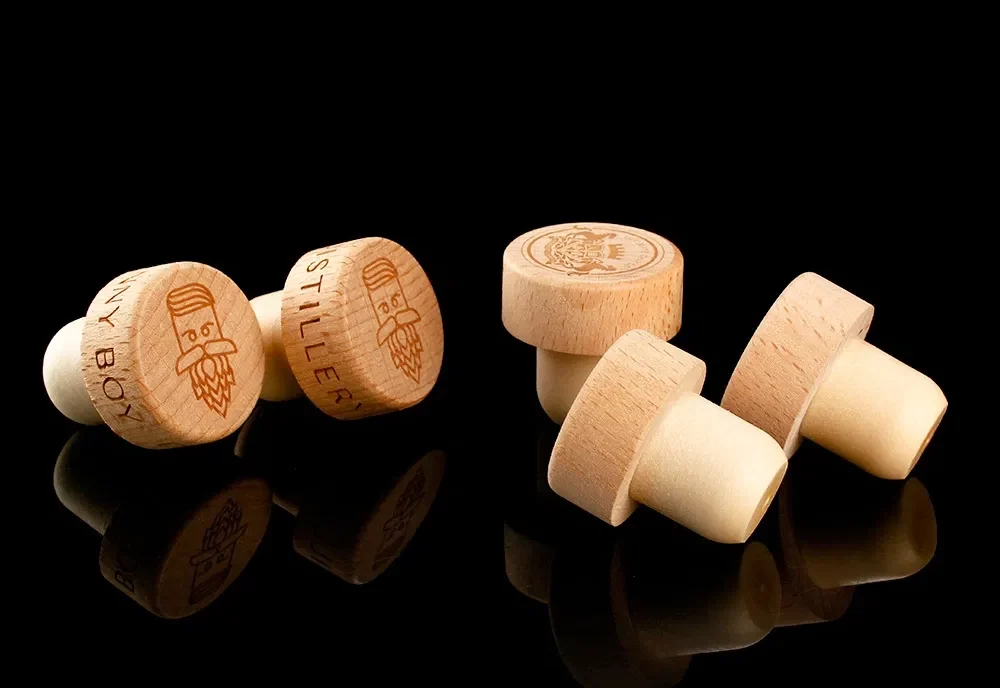
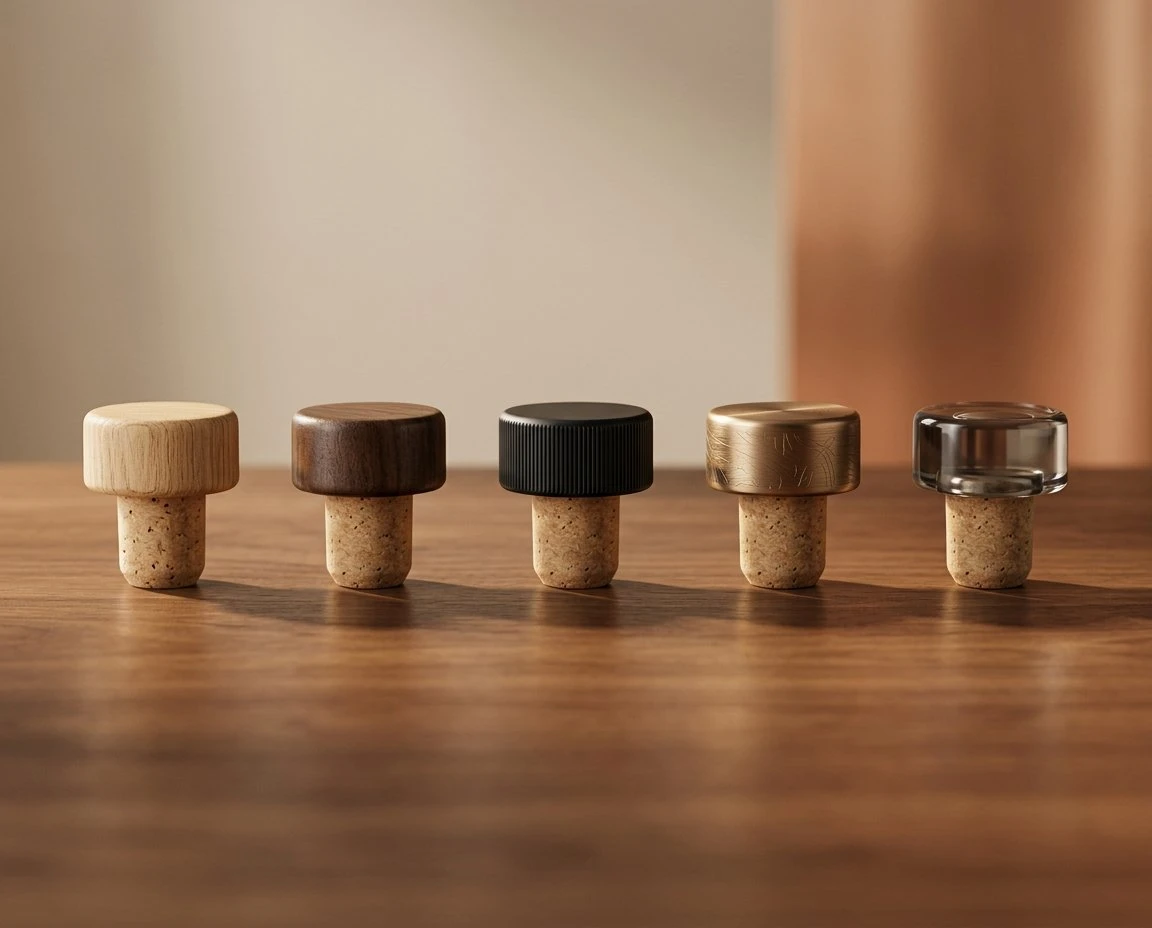
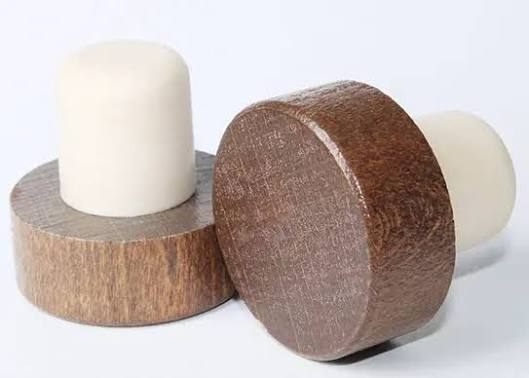
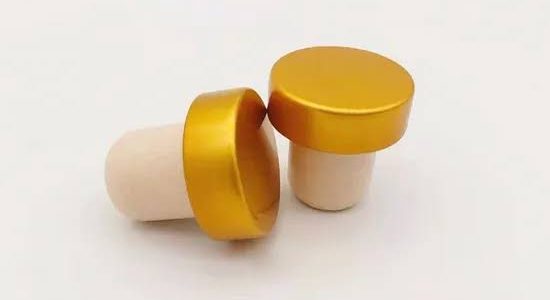
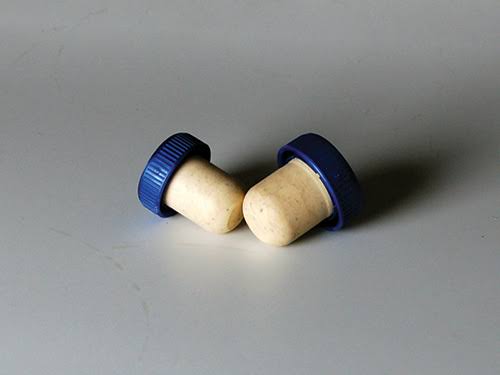
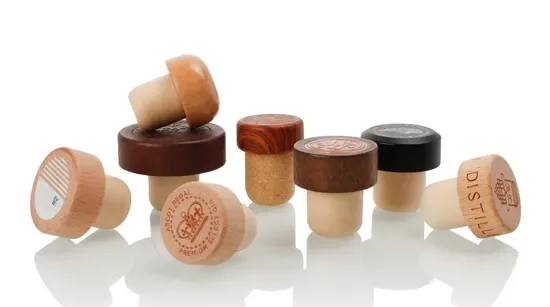
Bar-top cork stoppers are common for whiskey, rum, tequila, brandy, gin, and premium liqueurs. Matching focuses on bore diameter, cork shank size, insertion depth, pull-out feel, top diameter, and visual proportion.
Cork and Synthetic Stoppers
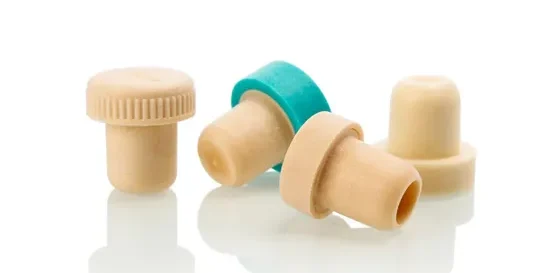
Natural cork, micro-agglomerated cork, and synthetic cork can support different brand positions and performance needs. Matching focuses on shank diameter, compression, density, surface quality, extraction feel, alcohol compatibility, and long-term sealing behavior.
ROPP Caps
ROPP caps are used for spirits projects that need tamper evidence, consistent application, and efficient production. Matching focuses on thread profile, cap skirt height, liner type, pilfer-proof band area, rolling performance, and capping equipment.
Screw Caps
Screw caps are practical for vodka, gin, liqueur, RTD spirits, and high-volume projects. Matching focuses on thread compatibility, torque, liner compression, cap height, and decorative finish.
Non-Refillable Closures
Non-refillable closures are used when brands need anti-refill protection, controlled pouring, or market-specific packaging requirements. Matching focuses on bottle neck compatibility, insert fit, tamper evidence, pourer function, and sealing behavior.
Capsules and Shrink Sleeves
Capsules and shrink sleeves may be used with cork stoppers or other closure systems to improve appearance and tamper evidence. Matching focuses on shoulder clearance, top diameter, heat shrink performance, and decoration alignment.
How to Pack and Label Bottle Samples
The neck area is the most important part of the bottle for closure matching. If the neck chips, cracks, or rubs during shipping, the sample may no longer be useful.
Follow these steps:
- Clean and dry each bottle
- Remove liquid unless filled samples are requested
- Remove loose caps unless they are reference closures
- Wrap each bottle individually
- Add extra protection around the neck and shoulder
- Use dividers or inner cartons
- Prevent bottle-to-bottle contact
- Fill empty carton space with cushioning material
- Place the project data sheet inside the carton
- Mark the carton as fragile
- Send tracking details to the supplier
Label each bottle clearly. Examples include:
- Sample A: 750 ml whiskey bottle, bar-top cork target
- Sample B: 700 ml gin bottle, ROPP cap target
- Sample C: decorated frosted bottle
- Sample D: new mold trial bottle
- Sample E: current market reference
- Sample F: alternative glass supplier sample
Do not place labels over the mouth, thread, bore, or sealing surface. These areas must remain clean and visible for measurement.
Before You Ship Bottle Samples
Before shipping, confirm that the supplier has enough information to start the review. This avoids delays after the carton arrives.
Use this pre-shipment process:
- Send bottle photos from the front, side, top, and neck area
- Send the bottle drawing or finish specification
- Confirm the target closure type
- Confirm the number of bottle samples being shipped
- Complete the sample submission form
- Label each bottle version clearly
- Protect the neck and shoulder during packing
- Email the tracking number after shipment
If some information is missing, do not delay the first discussion. Kandacork Closures can begin a preliminary review from available photos, drawings, and project details while waiting for physical samples.
After the Supplier Receives Samples
After the supplier receives the bottle samples, the review should follow a clear technical and commercial process.
Typical steps include:
- Confirm sample identity and project data
- Check the bottle neck, bore, thread, and sealing surface
- Compare suitable closure types
- Select existing sample closures or prepare test samples
- Review appearance and brand proportion
- Check material, liner, cork, gasket, or insert suitability
- Identify possible fit or production risks
- Recommend next steps for sample approval
- Prepare quotation details when the closure direction is clear
For projects that require leakage, torque, pull-out, packing, or approval review, Kandacork Closures can support closure quality and testing before buyers move into bulk production.
What a Closure Supplier Checks During Technical Review
A qualified closure supplier should check both technical fit and commercial feasibility. The review should not stop at “the cap fits.”
Important review points include:
- Actual bottle neck dimensions
- Bore diameter and internal mouth condition
- Thread profile and cap engagement
- Sealing surface quality
- Cork or insert compression
- Liner or gasket suitability
- Tamper-evident band fit
- Closure height and shoulder clearance
- Decoration feasibility
- Capping method
- Packing and export requirements
- Sample development and bulk production feasibility
For spirits buyers, this review helps reduce the risk of approving a closure that looks acceptable but fails during filling, storage, shipment, or consumer use. Food-contact expectations should also be checked where liners, inserts, coatings, or other closure components may contact the product.
Common Closure Matching Mistakes to Avoid
Sending Only Photos
Photos can start the conversation, but they cannot confirm final fit. Physical samples should be reviewed before bulk production.
Sending Only One Bottle
One bottle may not represent normal production variation. Send 3–6 samples whenever possible.
Forgetting Bore Diameter
Bore diameter is critical for cork and bar-top stopper matching. A small difference can change insertion force, sealing performance, and opening feel.
Ignoring the Filling Line
A closure that works by hand may not work on automatic equipment. Always tell the supplier how the closure will be applied.
Approving Decoration Before Fit
Logo decoration, hot stamping, engraving, plating, or custom top tooling should be approved after technical fit is confirmed.
How to Evaluate a Spirits Closure Supplier
A reliable spirits closure supplier should do more than provide a unit price. Before sending bottle samples, ask whether the supplier can support technical review, sample development, and commercial production.
Evaluate whether the supplier can:
- Measure neck finish and bore diameter
- Compare cork, screw cap, ROPP, and non-refillable closure options
- Recommend suitable liner or gasket structures
- Support cork shank sizing
- Review tamper-evident requirements
- Provide custom top materials and decoration
- Prepare sample closures
- Explain failure risks clearly
- Support pre-production approval
- Coordinate export packing
- Provide realistic lead times and MOQ information
- Support reorder consistency
This is especially important for spirits brands that need premium appearance, stable supply, and reliable performance across multiple shipments.
Why Physical Sample Review Reduces Bulk Order Risk
Physical sample review reduces risk because it gives the supplier a real bottle to measure, fit, and evaluate. It helps identify dimensional problems, closure compatibility issues, decoration conflicts, and production concerns before the buyer approves a bulk order.
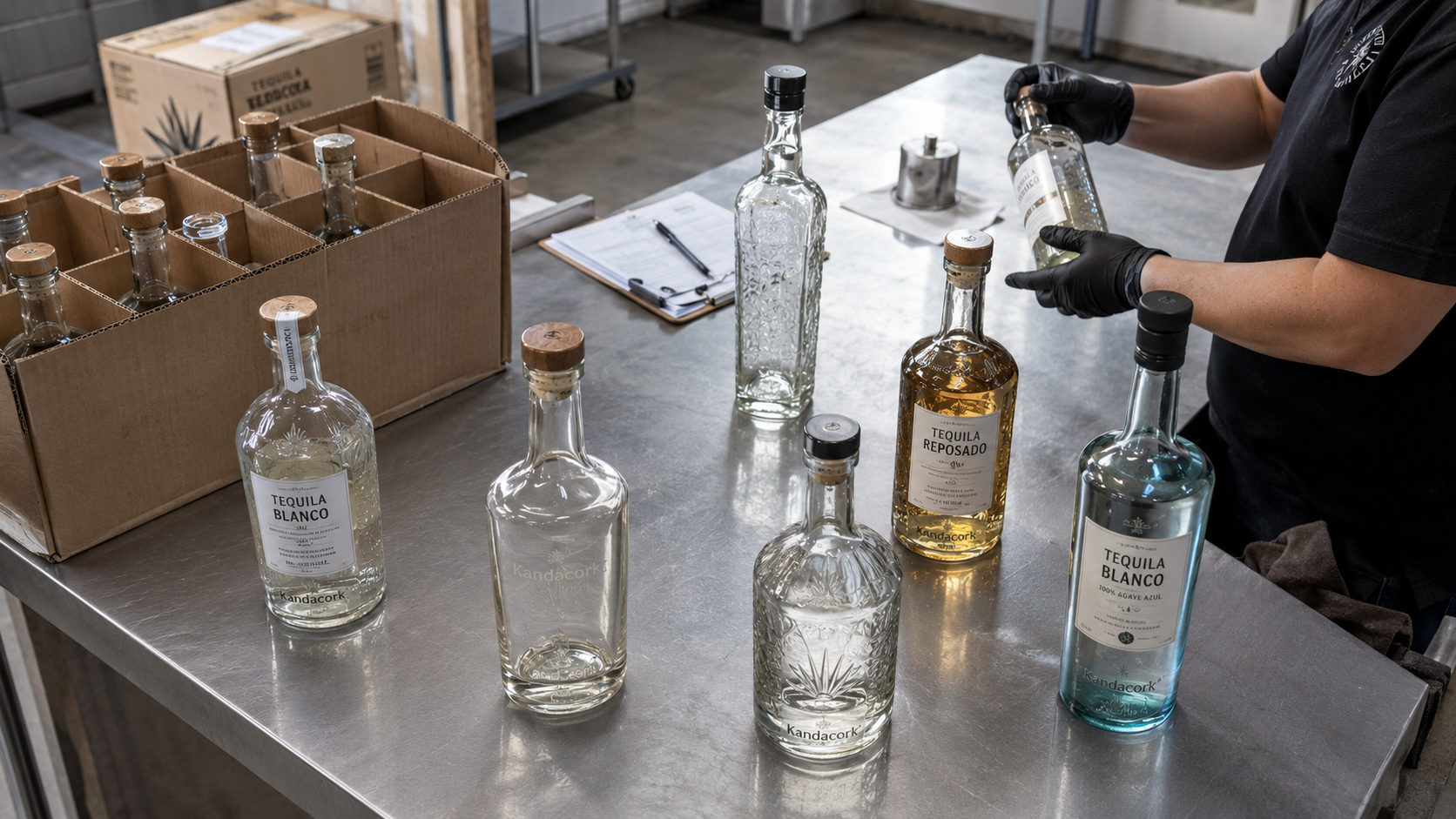
Kandacork Closures reviews sample bottles to compare closure options, check technical fit, evaluate branding feasibility, and prepare more accurate sample or quotation recommendations.
For buyers, the value is a clearer development path: send bottle samples, confirm fit, compare materials, review appearance, approve samples, and then move toward bulk quotation with lower risk.
From Sample Review to Quotation and Bulk Production
A professional closure matching workflow usually follows this path:
- Buyer sends bottle photos, drawings, and project information
- Buyer ships physical bottle samples
- Supplier receives and identifies the samples
- Technical team checks neck dimensions and closure requirements
- Suitable closure options are recommended
- Sample closures are prepared or selected
- Buyer reviews fit, appearance, and opening experience
- Adjustments are made if needed
- Quotation is prepared
- Pre-production samples are approved
- Bulk production begins
- Quality inspection and export packing are arranged
This process helps purchasing teams make decisions based on real samples rather than assumptions.
FAQ
How many bottle samples should I send for closure matching?
Send 3–6 clean, empty bottle samples for most closure matching projects. Send more if the bottle comes from multiple molds, different batches, different suppliers, or several decoration finishes.
What is the best way to send bottle samples for closure matching?
Clean and dry each bottle, wrap every bottle separately, protect the neck and shoulder, label each sample clearly, include a project data sheet, and send tracking information to the closure supplier.
Can closure matching be done without physical bottle samples?
A preliminary recommendation can be made from photos, drawings, and measurements. However, physical bottle samples are recommended before bulk production because real bottles reveal tolerance, surface, and fit issues.
Should I send empty or filled bottles?
Send empty bottles for initial closure matching. Filled samples may be needed later for leakage, liner compatibility, alcohol resistance, storage, or transport testing.
What bottle dimensions are needed for closure matching?
Important dimensions include bore diameter, neck finish, thread profile, sealing surface, neck height, and tamper-evident band area. For cork stoppers, bore diameter is especially important.
Should I send the existing closure?
Yes, if available. An existing closure helps the supplier compare fit, liner structure, cork shank size, top proportion, opening feel, and brand style.