Introduction: Why Bottle Neck Compatibility Matters
Bottle neck compatibility is one of the most important technical decisions in spirits packaging. If the bottle neck finish and closure do not match, the final package may suffer from leakage, loose fit, difficult opening, unstable capping, poor shelf appearance, or shipment failure.
This bottle neck compatibility guide for spirits closures is written for spirits brands, distilleries, private label buyers, importers, distributors, bottlers, and packaging procurement teams. It helps buyers compare closure types, confirm key dimensions, evaluate materials, test samples, and prepare a clear request for samples or quotation from Kandacork Closures.
For premium spirits, the closure is more than a sealing part. It affects product protection, production efficiency, consumer experience, tamper-evident design, and brand presentation. A reliable closure project should treat the bottle, neck finish, stopper or cap, material, decoration, and testing plan as one complete packaging system. For buyers building a complete bottle and closure package, coordinated bottle development from Kandacork Spirits can also help align glass structure, neck finish, filling requirements, and final closure fit.
Best Answer: How to Match a Spirits Closure to a Bottle Neck
A spirits closure fits correctly when the neck finish, bore diameter, shank or cap size, sealing surface, material, and tolerance match. For bar-top closures, 18.5 mm and 21.5 mm bores are common, and the stopper shank is often slightly larger than the bore. Final approval should come from sample testing, extraction force checks, leakage testing, alcohol-contact review, and capping-line trials.
Buyers should not choose a spirits closure by appearance alone. The closure must match the bottle technically, perform reliably during filling and shipping, and support the brand’s final shelf presentation.
Bottle Neck Finish Types Used in Spirits Packaging
A bottle neck finish is the engineered top section of the bottle that controls which closure system can be used. It includes the opening, inner bore, sealing surface, thread profile, bead, lip, neck height, and shoulder transition.
Different spirits bottles may look similar but require different closures. A smooth bar-top neck, a ROPP finish, and a continuous thread finish are not interchangeable. Buyers comparing multiple stopper and cap options can start from Kandacork Closures’ custom spirits bottle closures and stoppers range to understand how bar-top stoppers, screw caps, ROPP closures, capsules, and tamper-evident systems fit different packaging routes.
| Neck finish / closure system | Common closure type | Typical spirits use | Key compatibility risk |
|---|---|---|---|
| Bar-top / T-top neck | Cork, synthetic cork, or TPE shank with wood, aluminum, plastic, glass, or metal top | Whisky, rum, gin, tequila, brandy, mezcal, craft spirits | Loose stopper, high extraction force, leakage, inconsistent bore tolerance |
| ROPP neck finish | Roll-on pilfer-proof aluminum cap | Vodka, gin, liqueur, value spirits, export spirits | Wrong thread profile, liner mismatch, poor capping setup |
| CT / GPI continuous thread finish | Screw cap with liner | Mini bottles, liqueurs, samples, specialty spirits | Incorrect torque, thread mismatch, liner incompatibility |
| BVS finish | Aluminum screw closure | Wine, beverage, and selected spirits crossover projects | Torque inconsistency, cap format mismatch, liner selection issues |
| Custom private mold neck | Custom stopper or cap system | Premium private label and luxury spirits bottles | Closure not confirmed before mold approval, tooling changes, launch delay |
A well-matched closure should support sealing, filling-line efficiency, shelf presentation, transport safety, and market requirements.
Key Dimensions Buyers Must Confirm
Bottle neck compatibility depends on more than the nominal neck size. Buyers should confirm both the bottle drawing and physical bottle samples before approving closure production. For projects where the bottle-neck data is incomplete or unclear, a dedicated glass bottle neck closure matching guide can help buyers move from rough measurements to a clearer closure specification for sampling and bulk production.
| Dimension / term | What it means | Why it matters |
|---|---|---|
| Inner bore diameter | Internal opening of the bottle neck | Controls stopper shank compression and sealing |
| Outer neck diameter | Outside width of the neck finish | Affects caps, capsules, shrink bands, and sleeve fit |
| Insertion depth | How far the stopper enters the neck | Influences sealing stability and extraction force |
| Shank diameter | Diameter of cork, synthetic cork, or TPE insert | Determines grip, compression, and leakage resistance |
| Shank length | Length of the insert section | Affects stopper stability and bottle shoulder clearance |
| T dimension | Outer diameter over the thread or finish | Important for cap diameter matching |
| E dimension | Neck diameter excluding thread | Helps define thread depth and cap engagement |
| I dimension | Inner diameter at bottle opening | Important for filling, pouring, and stopper fit |
| S dimension | Distance from top sealing surface to thread start | Important for thread engagement |
| H dimension | Height of the neck finish | Affects cap height, liner contact, and visual proportion |
| Ovality | How round or oval the neck opening is | Poor roundness can cause inconsistent fit |
| Conicity | Change in bore diameter through the neck depth | Can make a stopper tight in one area and loose in another |
For bar-top stoppers, the most important measurements are inner bore diameter, insertion depth, shank diameter, shank length, and bore tolerance. For ROPP and screw-cap closures, the key factors are thread profile, cap height, sealing surface, liner contact, and torque control.
Bar-Top Stopper Sizing Rules for Spirits Bottles
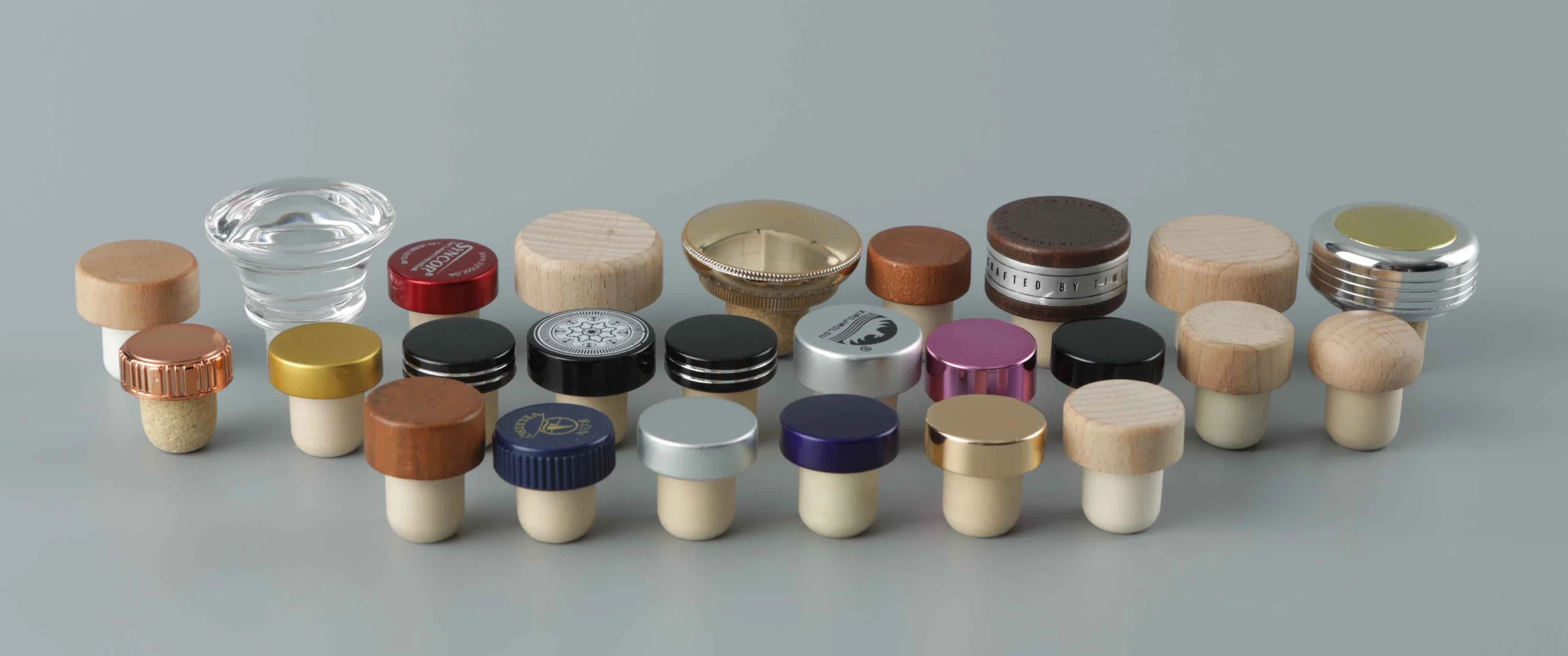
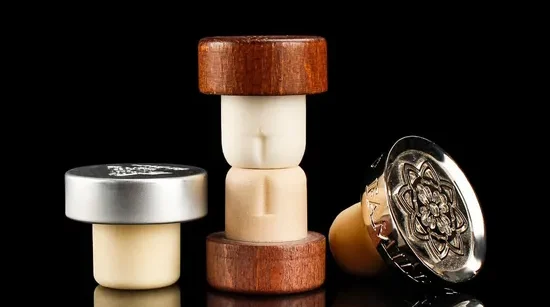
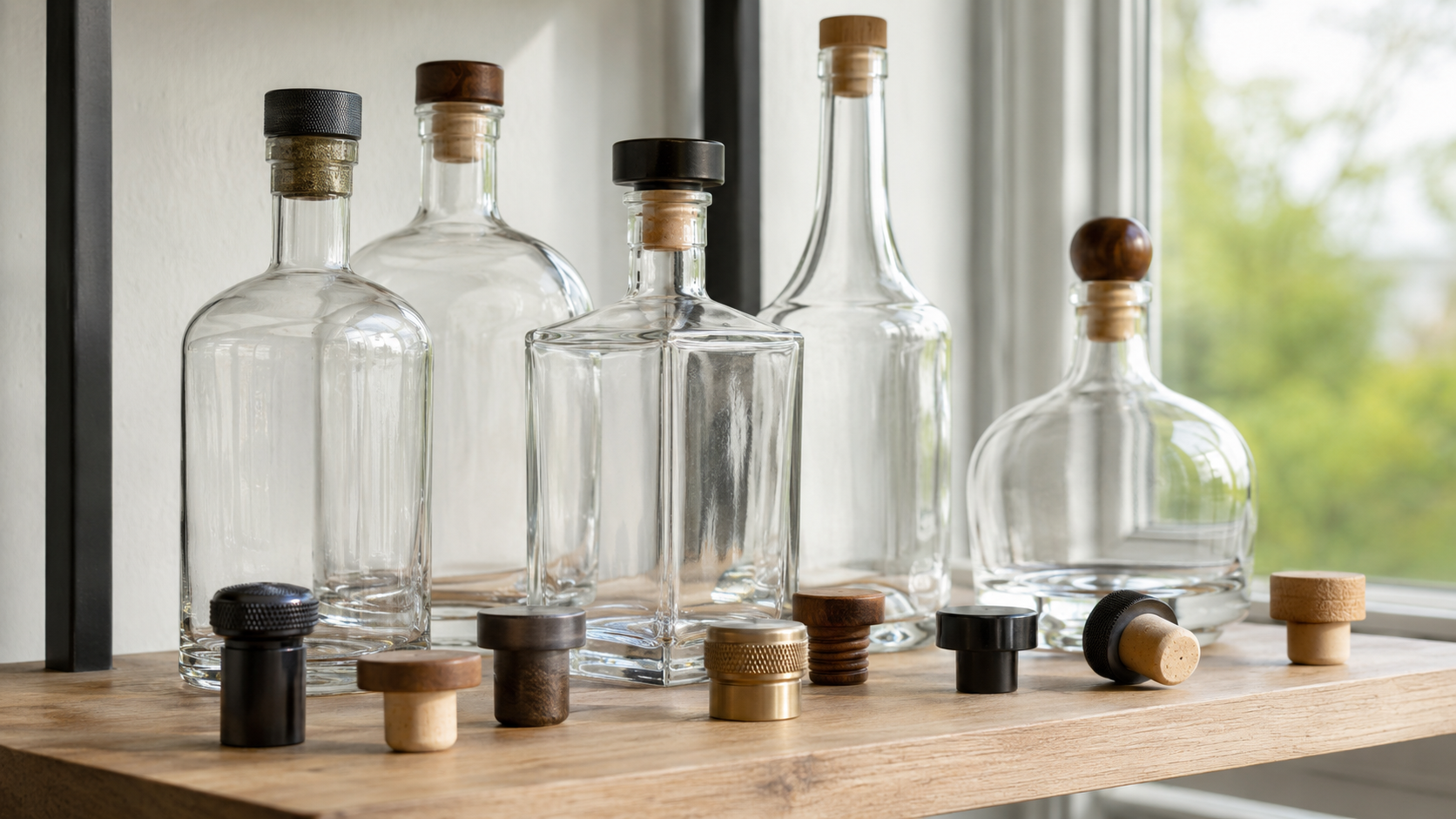
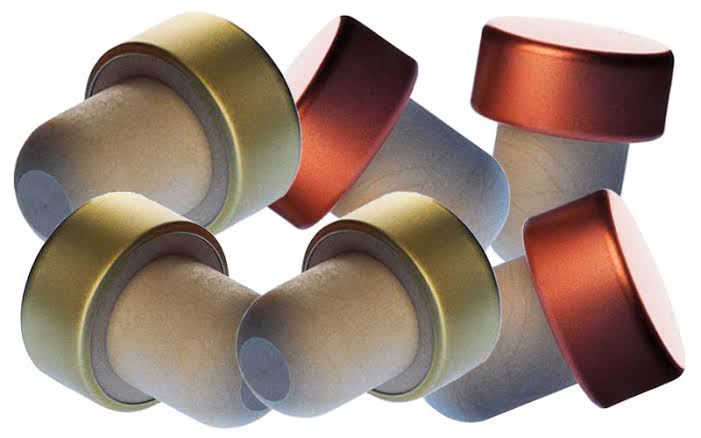
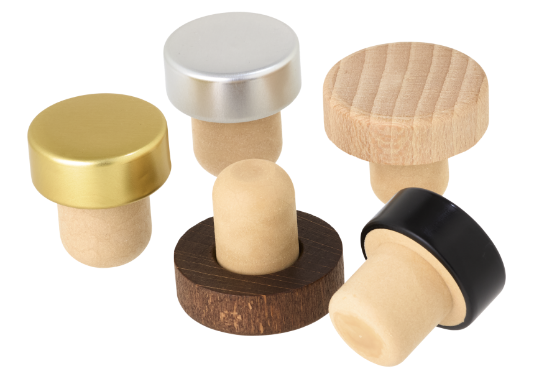
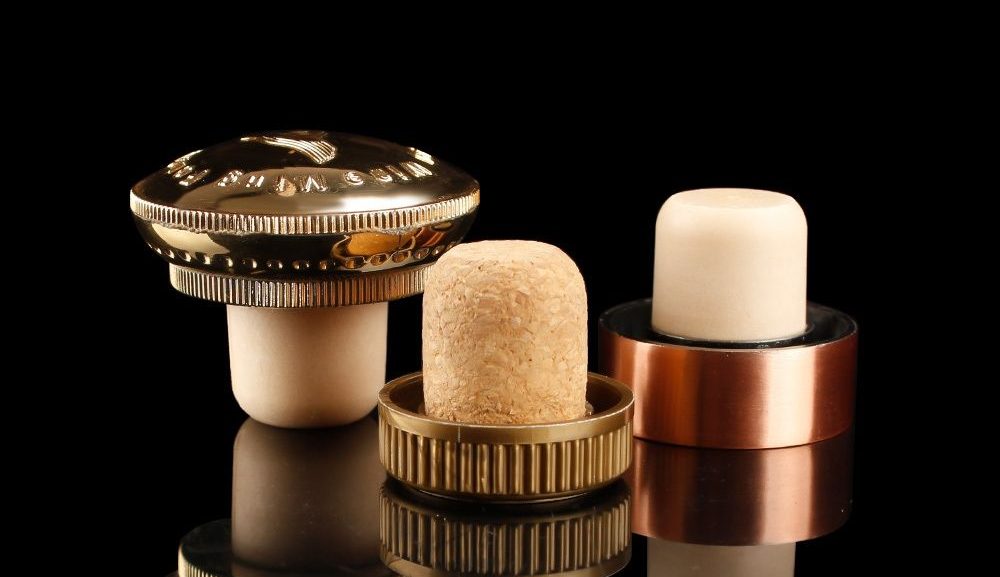
Bar-top stoppers are widely used for premium spirits because they combine sealing function with brand expression. They can use natural cork, micro-agglomerated cork, synthetic cork, or TPE shanks, with decorative tops made from wood, aluminum, plastic, glass, metal, or composite materials.
A common practical rule is to select a stopper shank slightly larger than the bottle opening. For example, a bottle with an 18.5 mm bore may require a shank around 19.5 mm, depending on material, tolerance, and desired extraction force. However, this rule is only a starting point. Buyers comparing materials, sizing, logo options, and sampling routes can review Kandacork Closures’ custom bar-top closure project guide before narrowing sample choices.
Natural cork, micro-agglomerated cork, synthetic cork, and TPE compress differently. A dimension that works for one shank material may not work for another. For this reason, Kandacork Closures recommends sample testing before bulk production.
When evaluating a bar-top stopper, buyers should check shank diameter, shank length, material compression, insertion feel, extraction force, leakage resistance, bottle neck tolerance, top alignment, and storage position during shipping.
The best stopper is not simply the most premium-looking option. It is the closure that fits the bottle correctly, protects the liquid, supports production, and matches the brand image.
Closure Selection by Spirits Category
Different spirits categories often require different closure priorities. Use the table below as a starting point before sample testing.
| Spirits category | Common closure options | Main packaging priorities | Key risk to check |
|---|---|---|---|
| Whisky / Whiskey | Bar-top cork, wood top, synthetic shank | Premium feel, controlled extraction, shelf value | Loose stopper, cork breakage, high pull force |
| Rum | Bar-top stopper, synthetic cork, TPE shank | Export durability, brand identity, sealing | Leakage during shipping, high-ABV material contact |
| Gin | ROPP cap, bar-top stopper, aluminum top | Clean design, aroma protection, consistent sealing | Cap torque, stopper fit, botanical oil interaction |
| Vodka | ROPP cap, screw cap, aluminum top | High-speed bottling, clean appearance, tamper evidence | Thread mismatch, liner compression, torque control |
| Tequila / Mezcal | Bar-top stopper, wood top, synthetic shank | Craft identity, premium presentation, strong retention | Stopper looseness, long-distance transport leakage |
| Brandy / Cognac-style spirits | Natural cork, wood top, premium bar-top | Luxury feel, traditional opening experience | Extraction force, cork quality, neck tolerance |
| Liqueur | Screw cap, ROPP, bar-top stopper | Sugar content, viscosity, aroma retention | Liner compatibility, sticky residue, leakage |
| Mini spirits bottles | Screw cap, small ROPP, plastic closure | Cost control, speed, compact packaging | Small thread tolerance, cap alignment, torque |
This table helps buyers narrow the closure direction. Final selection should still be based on real bottle samples, actual filling conditions, and transport testing.
Closure Material Selection Guide
Closure material affects sealing, appearance, cost, decoration, production speed, and consumer experience.
| Material | Best for | Advantages | Points to verify |
|---|---|---|---|
| Natural cork | Premium and traditional spirits | Authentic feel, natural texture, luxury association | Batch consistency, extraction force, sealing performance |
| Micro-agglomerated cork | Premium and mid-premium spirits | More controlled structure with cork-based appearance | Density, bonding quality, dimensional consistency |
| Synthetic cork | High-volume spirits and private label | Stable dimensions, predictable compression | Alcohol contact, long-term sealing, brand feel |
| TPE shank | Consistent fit and technical sealing | Controlled flexibility and repeatable performance | Odor, material compatibility, insertion force |
| Wood top | Whisky, rum, tequila, craft spirits | Premium touch, engraving, natural look | Moisture stability, finishing quality, color consistency |
| Aluminum top | Vodka, gin, modern premium spirits | Clean appearance, metallic finish, color control | Surface treatment, corrosion resistance, decoration durability |
| Plastic top | Private label and scalable programs | Cost control, color flexibility, mold options | Strength, surface quality, color consistency |
| Glass or metal top | Luxury and collectible spirits | High-end weight and shelf impact | Assembly strength, shipping protection, cost |
For high-ABV spirits, buyers should also review whether the shank, liner, adhesive, coating, ink, and colorant are suitable for alcohol contact.
Compatibility Testing and QC Before Bulk Orders
A closure may look correct in a catalog but perform poorly with the actual bottle. Testing is the safest way to prevent leakage, rework, and launch delays.
| Test item | What to check | Why it matters |
|---|---|---|
| Dimensional inspection | Bore ID, outer neck, thread, insertion depth, shank size | Confirms technical fit before production |
| Insertion test | Manual or machine insertion feel | Prevents excessive force or loose assembly |
| Extraction force test | Pull-out force required to remove stopper | Balances retention and consumer opening comfort |
| Leakage test | Upright, inverted, side storage, vibration, temperature change | Reduces shipping and warehouse risk |
| Alcohol contact review | Shank, liner, adhesive, coating, ink, colorant | Helps confirm material suitability |
| Capping line trial | Insertion pressure, torque, roll-on quality, line speed | Confirms production compatibility |
| Visual inspection | Top alignment, capsule fit, decoration position | Protects brand presentation |
| Pre-production approval | Final samples before bulk order | Reduces rework and launch delay |
For barrel-strength whisky, overproof rum, high-proof gin, tequila, mezcal, and botanical liqueurs, testing is especially important because alcohol, oils, sugar, and aroma compounds may interact differently with closure components.
If your project involves a new bottle mold, leakage complaint, supplier replacement, or export shipment, send Kandacork Closures your bottle drawing, physical samples, ABV, closure style, and target quantity before confirming bulk closure production.
Troubleshooting: Closure Fit Problems and Fixes
Many closure problems appear only after filling, shipping, or storage. The table below helps buyers diagnose common issues before they become bulk-order failures.
| Problem | Likely cause | What buyers should check | Kandacork Closures support |
|---|---|---|---|
| Stopper leaks during shipping | Shank too small, poor bore tolerance, weak compression | Bore ID, shank diameter, side-storage leakage test | Sample matching and shank adjustment |
| Stopper feels loose | Low compression, short shank, inconsistent neck bore | Shank diameter, insertion depth, bottle tolerance | Alternative shank size or material recommendation |
| Stopper is too hard to open | Shank oversized, cork density too high, excessive insertion depth | Extraction force, cork density, bore conicity | Natural cork, synthetic cork, or TPE sample options |
| Cap feels loose | Wrong thread profile, liner mismatch, poor torque control | T/E/H/S dimensions, liner contact, removal torque | Cap and neck finish review |
| Leakage under screw cap | Weak liner compression or thread mismatch | Sealing surface, thread finish, liner material | Closure structure and liner review |
| Tamper band fails unevenly | Neck bead and tamper band mismatch | Neck bead, cap bridge, capping setup | Tamper-evident closure review |
| Top separates from shank | Weak assembly or excessive pull force | Adhesion, extraction force, material selection | Assembly and material recommendation |
| Capsule or shrink band does not fit | Outer neck diameter or top size mismatch | Neck OD, top diameter, capsule size | Closure and decoration coordination |
If your bottle supplier and closure supplier are different, request a closure compatibility review before confirming bulk orders.
Regulatory and Quality References Buyers Should Know
Spirits packaging buyers should consider market requirements, food-contact suitability, and quality-control references before approving closure materials.
For the U.S. market, the Alcohol and Tobacco Tax and Trade Bureau guidance on tamper-evident closures is an important reference for distilled spirits packaging. Brands, distilleries, and importers should confirm whether capsules, shrink bands, strip seals, ROPP caps, or other tamper-evident devices are required for their target market.
Food-contact suitability is also important. For spirits closures, buyers should pay attention to materials such as cork treatments, polymer shanks, liners, coatings, adhesives, inks, and colorants.
ISO standards related to cork stopper physical testing are useful references when discussing extraction force, dimensions, and stopper performance. Industry terms such as GPI, ROPP, CT finish, BVS finish, bore ID, liner compression, capping torque, extraction force, and leakage testing should be clearly stated in technical drawings, RFQs, and supplier communication.
Closure Compatibility Review Process
A clear review process helps buyers reduce sample rounds, avoid launch delays, and make quotation discussions more accurate.
| Step | What happens | Buyer output |
|---|---|---|
| Send bottle information | Provide bottle drawing, photos, and physical samples if available | Technical file and bottle samples |
| Confirm neck finish | Identify bar-top, ROPP, CT, GPI, BVS, or custom finish | Confirmed closure direction |
| Measure key dimensions | Check bore ID, outer neck, insertion depth, thread, and tolerance | Compatibility measurement data |
| Select closure type and material | Compare cork, synthetic cork, TPE, aluminum, wood, plastic, glass, or metal options | Recommended sample options |
| Test fit and performance | Review insertion, extraction force, leakage, alcohol contact, and line performance | Approved sample direction |
| Confirm quotation and production details | Confirm quantity, decoration, lead time, packing, and inspection standard | Quotation and production plan |
This process is especially useful for new bottle projects, private label spirits, supplier replacement, export packaging, and leakage problem solving. For threaded cap projects, buyers can also review screw cap thread finish matching before confirming cap diameter, thread engagement, liner contact, and torque targets.
Supplier Capability and RFQ Checklist
A good spirits closure supplier should help buyers reduce technical risk, shorten sample rounds, and support production approval.
Before choosing a supplier, ask whether it can review bottle drawings, test physical bottle samples, recommend shank diameter and material, support natural cork, synthetic cork, TPE, wood, aluminum, plastic, glass, or metal tops, provide material documentation, support leakage testing, review extraction force, assist with decoration, provide pre-production samples, and document bulk inspection standards.
Before requesting samples or a quotation from Kandacork Closures, buyers should prepare:
Bottle capacity
Bottle shape
Bottle neck finish type
Inner bore diameter
Outer neck diameter
Insertion depth
Bottle drawing or technical file
Physical bottle samples
Spirit category
Alcohol by volume
Closure type preference
Shank material preference
Top material preference
Logo or decoration requirements
Tamper-evident requirement
Destination market
Target order quantity
Launch schedule
Packing and shipping requirements
Current closure problem, if any
When buyers provide these details early, Kandacork Closures can recommend a more accurate closure structure, reduce unnecessary sample rounds, and shorten the path from technical review to quotation.
How Kandacork Closures Supports Compatibility Projects
Kandacork Closures supports spirits brands, distilleries, bottlers, private label buyers, importers, and distributors throughout the closure selection process.
For new packaging projects, Kandacork Closures can support bottle drawing review, physical sample matching, stopper shank sizing, closure material recommendation, decoration coordination, and pre-production sample approval. When closure appearance is part of the technical brief, the custom branding for spirits closures service helps align top surface design, sidewall details, colors, finishes, artwork, and manufacturability with the selected closure structure.
For existing packaging projects, Kandacork Closures can help investigate leakage, loose stoppers, inconsistent extraction force, poor neck fit, decoration mismatch, cap torque issues, or supplier replacement problems.
For private label and export projects, Kandacork Closures can help buyers compare bar-top stoppers, cork closures, synthetic stoppers, TPE shanks, ROPP caps, aluminum tops, wood tops, plastic tops, glass tops, and custom decorative closures before bulk ordering.
Kandacork Closures can also help buyers prepare clearer RFQ information, confirm sample directions, review bulk inspection expectations, and reduce the risk of ordering closures that look correct but fail during production, storage, or shipping.
The goal is simple: match the bottle neck, closure structure, material, decoration, and testing plan before the buyer commits to mass production.
When Should You Request Samples or a Quotation?
You should request samples when you are developing a new spirits bottle, changing closure suppliers, switching from cork to synthetic cork, switching from screw cap to bar-top stopper, designing a custom bottle mold, preparing private label packaging, solving leakage problems, adding a capsule or shrink band, preparing export packaging, or scaling from pilot production to bulk production.
Samples are especially important when bottle drawings are incomplete or when the bottle comes from a supplier with limited technical documentation.
Send Kandacork Closures your bottle drawing, physical samples, ABV, closure style, decoration requirements, destination market, and target order quantity through the custom closure quote page to receive a more accurate recommendation.
FAQ
How do you match a spirits closure to a bottle neck?
Match the closure by confirming the neck finish, inner bore diameter, outer neck diameter, insertion depth, thread profile, and tolerance. Then test real bottle and closure samples for insertion feel, extraction force, leakage, alcohol contact, and production-line performance.
What size cork fits a spirits bottle?
The correct cork size depends on the bottle bore, stopper material, shank length, and desired compression. Common bar-top spirits bottle bores may include 18.5 mm and 21.5 mm, but final sizing should be confirmed with real samples and leakage testing.
What is the difference between ROPP and bar-top closures?
A ROPP closure is an aluminum cap formed onto a threaded neck to create a pilfer-proof opening system. A bar-top closure uses a stopper shank inserted into a smooth bottle bore and is often chosen for premium spirits presentation.
Why do liquor bottles leak?
Liquor bottles may leak because of loose stopper fit, wrong shank diameter, poor neck tolerance, incorrect thread profile, weak liner compression, poor capping torque, material incompatibility, or insufficient transport testing.
How can I prevent leakage before shipment?
Use real bottle and closure samples. Test insertion, extraction force, upright storage, side storage, inverted storage, vibration, temperature change, and carton packing before approving bulk production.
What should I send to Kandacork Closures for a closure recommendation?
Send bottle drawings, physical bottle samples, neck measurements, spirit type, ABV, closure style, decoration requirements, destination market, target order quantity, and launch timeline.